Phenylhydrazine from TCI (product code P0183) is an aromatic hydrazine derivative that carries a single phenyl group. It has a long history in organic chemistry and biochemistry. Emil Fischer used it to identify sugars through osazone formation and to develop the indole synthesis now known as the Fischer indole synthesis. In modern laboratories, phenylhydrazine is still an important non-heterocyclic building block. Chemists use it to build nitrogen-containing heterocyclic frameworks such as indoles, pyrazoles and indazoles, which makes it a standard reagent in synthetic and teaching laboratories.
Chemists choose phenylhydrazine because its hydrazine group is strongly nucleophilic. It reacts readily with aldehydes and ketones to form phenylhydrazones, and these intermediates can then be cyclised into a range of heterocyclic products. The same reactivity toward carbonyl groups is useful in qualitative analysis. For example, different sugars can be told apart by the crystal form of their osazones. As a free base, phenylhydrazine is a liquid, so it is easy to measure out for reactions. However, it tends to darken when exposed to air and light, so careful storage is needed to keep its quality consistent.
In Indonesia, phenylhydrazine is widely used in university organic chemistry laboratories, especially for indole synthesis and related heterocycle preparations. It also appears in teaching practicals that show classical carbonyl chemistry, such as hydrazone and osazone formation. Research groups working on nitrogen heterocycles for synthetic or medicinal chemistry use it as a dependable starting material. Analytical and teaching laboratories value it for demonstrating how sugars can be identified by derivatisation. Because it is a reagent from an established brand, it is a sensible choice for laboratories that need reproducible results across repeated experiments.
- Fischer indole synthesis: phenylhydrazine condenses with aldehydes or ketones to form phenylhydrazones, which can then be cyclised into substituted indoles in this classic route.
- Pyrazole and indazole construction: the nucleophilic hydrazine group gives the nitrogen atoms needed to build these nitrogen-containing heterocyclic frameworks from suitable carbonyl precursors.
- Phenylhydrazone formation from carbonyl compounds: its fast reaction with aldehydes and ketones makes it useful for preparing hydrazone intermediates for further synthetic steps.
- Qualitative sugar identification by osazone formation: different sugars give osazones with distinct crystal forms, so the method shown by Fischer is still useful for teaching and analysis.
- Teaching practicals in organic chemistry: its well-documented carbonyl chemistry and historical importance make it a good reagent for showing nucleophilic addition and cyclisation to students.
| Brand | TCI (product code P0183) |
|---|---|
| CAS number | 100-63-0 |
| Molecular formula | — |
| Purity | — |
| Category | Chemistry > Building Blocks > Non-Heterocyclic Building Blocks |
| Pack sizes | please check the product listing for the pack sizes currently offered |
| Physical form | liquid (free base) |
| Storage | darkens on exposure to air and light, so store protected from both |
Phenylhydrazine darkens when exposed to air and light, so keep it in its original tightly closed container. Store it in a cool, dry and dark place, away from direct sunlight and heat sources. Amber glass or other light-protective containers are suitable, and purging the headspace with an inert gas after each use can help slow discolouration. Store it away from oxidising agents and incompatible materials. Handle the reagent in a well-ventilated fume hood and wear suitable gloves, safety glasses and a laboratory coat. Avoid skin contact and inhaling vapours. Before use, read the supplier's Safety Data Sheet and follow its hazard and disposal guidance.
—
Produk Terkait
-
TCI B5774 5,10-Bis(4,4,5,5-tetramethyl-1,3,2-dioxaborolan-2-yl)naphtho[1,2-c:5,6-c']bis([1,2,5]oxadiazole)
Regular price Rp 10.255.350,00Regular price -
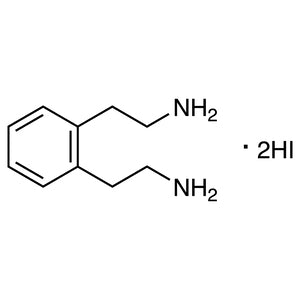
Dihydroiodide TCI B6569
Regular price From Rp 1.936.200,00Regular price -
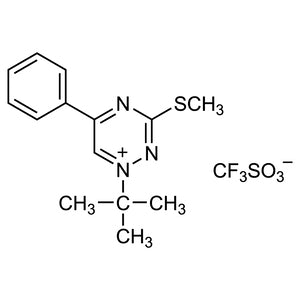
Trifluoromethanesulfonate TCI B7003
Regular price From Rp 1.936.200,00Regular price
![5,10-Bis(4,4,5,5-tetramethyl-1,3,2-dioxaborolan-2-yl)naphtho[1,2-c:5,6-c']bis([1,2,5]oxadiazole) - TCI B5774 - AMI Scientific](http://amiscientific.com/cdn/shop/files/TCI2510B5774.jpg?v=1769180228&width=533)