


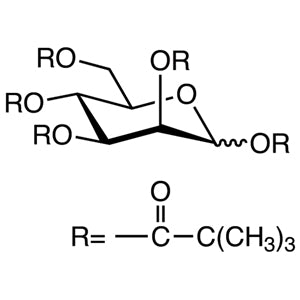
1,2,3,4,6-Penta-O-pivaloyl-D-mannopyranose is a chemical compound widely used in laboratory research, particularly in the field of glycoscience. This compound serves as a key reagent in biochemical studies, offering versatility in chemical reactions involving glycosylation enzymes. Its role extends to molecular synthesis and structural analysis, making it an essential tool for researchers exploring complex carbohydrate structures. As a derivative of mannoside, it provides a stable and reactive platform for various experimental applications in chemical biology.
The compound's unique properties make it a preferred choice for high-precision research. Its pivaloyl groups enhance detectability through spectroscopic and chromatographic methods, ensuring accurate identification and modification of molecular structures. The controlled reactivity and stability of this compound facilitate efficient manipulation in laboratory settings. These characteristics are particularly valuable in studies requiring precise control over molecular interactions and enzymatic reactions, supporting advanced research in glycoscience.
In Indonesian laboratories, this compound is commonly used in chemical biology research, especially in enzyme mechanism studies and molecular interaction analyses. It is a staple in academic and research institutions focused on carbohydrate chemistry, contributing to the understanding of glycosidic structures and their biological functions. Its reliability and analytical advantages make it a go-to material for scientists working on complex molecular systems.
TCI brochures (PDF)
Related TCI products
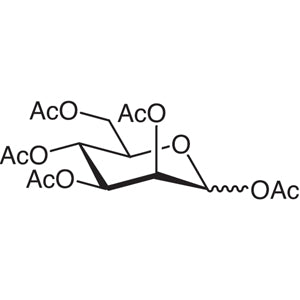
- TCI P1514 25941-03-1 1,2,3,4,6-Penta-O-acetyl-D-mannopyranose
- TCI T2568 2,3,4,6-Tetra-O-pivaloyl-D-mannopyranosyl Fluoride
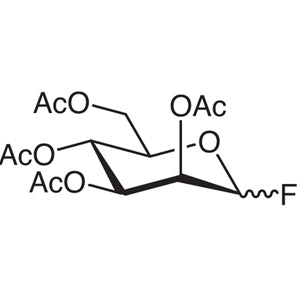
- TCI T2567 174511-17-2 2,3,4,6-Tetra-O-acetyl-D-mannopyranosyl Fluoride
- TCI M2102 Methyl 2,3,4,6-Tetra-O-pivaloyl-D-mannopyranoside
- TCI T2307 92051-23-5 1,3,4,6-Tetra-O-acetyl-2-O-(trifluoromethanesulfonyl)-beta-D-mannopyranose
- TCI D4372 3868-03-9 1,6:2,3-Dianhydro-beta-D-mannopyranose
- Glycosylation Enzyme Studies: This compound is ideal for investigating enzyme mechanisms as it serves as a substrate or inhibitor in glycosylation reactions, allowing researchers to analyze enzyme activity and specificity.
- Molecular Structure Analysis: Its pivaloyl groups enhance detectability in spectroscopic and chromatographic techniques, making it suitable for detailed structural characterization of complex carbohydrates.
- Carbohydrate Chemistry Research: It is used in the synthesis of glycosidic compounds, supporting studies on the structural and functional properties of carbohydrates in biological systems.
- Enzyme-Substrate Interactions: The compound's stability and reactivity allow for controlled experiments to study how enzymes interact with and modify carbohydrate substrates.
- Advanced Glycoscience Investigations: It is employed in research requiring precise molecular manipulation, aiding in the development of new analytical methods and biochemical applications.
| Brand | TCI |
|---|---|
| CAS number | 220017-47-0 |
| Molecular formula | — |
| Purity | — |
| Category | Chemistry > Chemical Biology > Glycoscience |
| Pack sizes | — |
| Physical form | — |
| Storage | Store in a cool, dry place away from light |
Data from the TCI brochure
| Purity | >98.0%(GC) |
|---|---|
| mp | 169℃ |
Source: TCI brochure reagent_for_glyco_chemistry_&_biology_5th_ed ()
This compound should be stored in a cool, dry environment, away from direct sunlight and sources of heat. It is recommended to use airtight containers to prevent moisture absorption, which could affect its stability. As a chemical reagent, it should be handled with appropriate laboratory safety measures, including the use of personal protective equipment such as gloves and goggles. It is important to ensure proper ventilation in the workspace to minimize exposure to vapors. Due to its chemical nature, it should be stored separately from incompatible substances to prevent any potential reactions. Regular monitoring of storage conditions is advised to maintain the compound's integrity and effectiveness for research purposes.
—
Product Categories
Produk Terkait
-
1,2,3,4,6-Penta-O-acetyl-D-mannopyranose TCI P1514
Regular price Rp 1.856.400,00Regular priceRp 1.313.550,00Sale price Rp 1.856.400,00 -
Fluoride TCI T2568
Regular price Rp 5.777.100,00Regular priceRp 4.055.100,00Sale price Rp 5.777.100,00 -
2,3,4,6-Tetra-O-acetyl-D-mannopyranosylFluoride TCI T2567
Regular price From Rp 5.512.500,00Regular priceRp 3.870.300,00Sale price From Rp 5.512.500,00 -
Methyl2,3,4,6-Tetra-O-pivaloyl-D-mannopyranoside TCI M2102
Regular price Rp 5.352.900,00Regular priceRp 3.759.000,00Sale price Rp 5.352.900,00 -
1,3,4,6-Tetra-O-acetyl-2-O-(trifluoromethanesulfonyl)-beta-D-mannopyranose TCI T2307
Regular price Rp 1.378.650,00Regular priceRp 979.650,00Sale price Rp 1.378.650,00 -
1,6:2,3-Dianhydro-beta-D-mannopyranose TCI D4372
Regular price Rp 4.823.700,00Regular priceRp 3.388.350,00Sale price Rp 4.823.700,00 -
1,6-Di-O-acetyl-2,3,4-tri-O-benzyl-alpha-D-mannopyranose TCI D5294
Regular price Rp 4.399.500,00Regular priceRp 3.092.250,00Sale price Rp 4.399.500,00 -
4-Nitrophenylalpha-D-Mannopyranoside[Substrateforalpha-Mannosidase] TCI N0619
Regular price Rp 4.954.950,00Regular priceRp 3.480.750,00Sale price Rp 4.954.950,00





![TCI N0619 10357-27-4 4-Nitrophenyl alpha-D-Mannopyranoside [Substrate for alpha-Mannosidase]](http://amiscientific.com/cdn/shop/files/TCI2510N0619_ccdfb4b6-ca95-4d73-b0a2-45b6d882ac35.jpg?v=1792650622&width=533)
![10357-27-4 4-Nitrophenyl alpha-D-Mannopyranoside [Substrate for alpha-Mannosidase] - AMI Scientific](http://amiscientific.com/cdn/shop/files/TCI2510N0619.jpg?v=1767130142&width=533)