(S)-4-Phenylthiazolidine-2-thione is the (S)-enantiomer of the chiral auxiliary 4-phenylthiazolidine-2-thione, supplied by TCI under product code P1960. It is a thiazolidinethione, a five-membered heterocycle that contains a sulfur atom, a nitrogen atom and a thiocarbonyl group, with a phenyl substituent on the stereogenic centre at position 4. In the laboratory, the auxiliary is attached to the acyl group of a substrate so that it controls the stereochemistry of newly formed bonds. When the reaction is complete, the auxiliary is cleaved off, leaving an enantiomerically enriched product.
Chemists choose this auxiliary because it gives the opposite stereochemical induction to its (R)-enantiomer, so the other product enantiomer can be made by the same procedure. The thiocarbonyl group chelates well with Lewis acids such as titanium, which lets aldol reactions run with high diastereoselectivity. The N-acyl bond is also relatively easy to cleave, so the product can be converted directly into a range of functional groups. This direct conversion shortens synthetic routes and makes it easier to recover the auxiliary for later use, which helps in multistep work where efficiency matters.
In Indonesia, this auxiliary is useful to organic synthesis laboratories at universities and research institutions that work on asymmetric synthesis. Graduate research groups developing stereoselective methods, natural product synthesis programmes and medicinal chemistry teams preparing chiral building blocks can all use it in their routine work. It is also a good teaching example for advanced courses on stereocontrol, because students can compare how its (S) configuration and the matching (R) enantiomer lead to opposite outcomes under the same reaction conditions.
- Asymmetric aldol reactions: the thiocarbonyl group forms effective chelates with titanium Lewis acids, which allows aldol additions to proceed with high diastereoselectivity on the N-acylated auxiliary.
- Accessing the complementary product enantiomer: the (S)-auxiliary gives the opposite stereochemical induction to its (R)-enantiomer, so researchers can obtain the other product enantiomer with the same procedure.
- Stereocontrolled bond formation on acyl substrates: when attached to a substrate's acyl group, the auxiliary directs the stereochemistry of new bonds and yields enantiomerically enriched products after cleavage.
- Direct conversion to diverse functional groups: the relatively labile N-acyl bond can be cleaved straight into various functional groups, which shortens synthetic routes and avoids extra transformation steps.
- Auxiliary recovery in multistep synthesis: because the N-acyl bond cleaves easily, the auxiliary can be released and recovered, which supports more efficient use of material over repeated synthetic campaigns.
| Brand | TCI (product code P1960) |
|---|---|
| CAS number | 185137-29-5 |
| Molecular formula | — |
| Purity | — |
| Category | Chemistry > Asymmetric Synthesis > Chiral Auxiliaries |
| Pack sizes | please check the product listing for available TCI pack sizes |
| Physical form | refer to the manufacturer's product documentation |
| Storage | follow the conditions on the TCI label and Safety Data Sheet |
Store (S)-4-Phenylthiazolidine-2-thione in its original, tightly closed manufacturer's container, in a cool, dry, well-ventilated place away from direct light, heat sources and incompatible substances such as strong oxidising agents. Always check the TCI label and Safety Data Sheet for the recommended storage conditions. Reseal the container promptly after each use to limit exposure to moisture and air. Handle the material in a fume hood. Wear suitable personal protective equipment, including a lab coat, chemical-resistant gloves and safety glasses. Avoid breathing in dust and avoid contact with skin and eyes. Label any aliquots clearly with the product name and CAS number. Dispose of waste according to institutional and local chemical waste regulations.
—
Produk Terkait
-
TCI B5774 5,10-Bis(4,4,5,5-tetramethyl-1,3,2-dioxaborolan-2-yl)naphtho[1,2-c:5,6-c']bis([1,2,5]oxadiazole)
Regular price Rp 10.255.350,00Regular price -
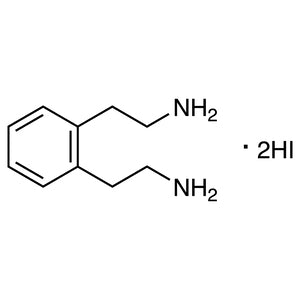
Dihydroiodide TCI B6569
Regular price From Rp 1.936.200,00Regular price -
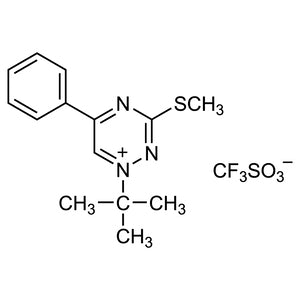
Trifluoromethanesulfonate TCI B7003
Regular price From Rp 1.936.200,00Regular price
![5,10-Bis(4,4,5,5-tetramethyl-1,3,2-dioxaborolan-2-yl)naphtho[1,2-c:5,6-c']bis([1,2,5]oxadiazole) - TCI B5774 - AMI Scientific](http://amiscientific.com/cdn/shop/files/TCI2510B5774.jpg?v=1769180228&width=533)