![TCI P2471 112247-65-1 N-[2-(2-Pyridyldithio)ethyl]biotinamide](http://amiscientific.com/cdn/shop/files/TCI2510P2471_3865abf2-6755-49dc-a91a-67acc432a861.jpg?v=1792653570&width=1946)
![112247-65-1 N-[2-(2-Pyridyldithio)ethyl]biotinamide - AMI Scientific](http://amiscientific.com/cdn/shop/files/TCI2510P2471.jpg?v=1767136238&width=1946)
![TCI P2471 112247-65-1 N-[2-(2-Pyridyldithio)ethyl]biotinamide](http://amiscientific.com/cdn/shop/files/TCI2510P2471_3865abf2-6755-49dc-a91a-67acc432a861.jpg?v=1792653570&width=1445)
![112247-65-1 N-[2-(2-Pyridyldithio)ethyl]biotinamide - AMI Scientific](http://amiscientific.com/cdn/shop/files/TCI2510P2471.jpg?v=1767136238&width=1445)
N-[2-(2-Pyridyldithio)ethyl]biotinamide from TCI is a thiol-reactive biotinylation reagent that targets sulfhydryl groups. The molecule combines biotin, which binds avidin and streptavidin with very high affinity, with a pyridyl disulfide group that reacts with free cysteine residues on proteins and peptides. In biochemistry and chemical biology laboratories, it is used to label biomolecules with biotin. The labelled biomolecules can then be detected, purified or immobilised with streptavidin-based systems, which makes the reagent a practical tool for bioconjugation work.
Its main advantage is the disulfide bond that forms between the biotin label and the target molecule. Reducing agents such as DTT or TCEP can cleave this bond, so a biomolecule captured by streptavidin can be released in a relatively intact state. The thiol–disulfide exchange reaction also releases pyridine-2-thione, which can be monitored spectrophotometrically and gives a convenient way to estimate the degree of biotinylation. Because the reaction is selective for thiols, labelling can be directed to specific cysteine residues rather than spread randomly across the molecule.
In Indonesia, this reagent is relevant to proteomics, molecular biology and biochemistry laboratories in universities, research institutes and life-science research groups. These labs need reliable ways to label, capture and recover proteins and peptides. Researchers who study protein interactions, run affinity purification or build streptavidin-based detection assays can use this TCI reagent for cysteine-directed biotinylation. They also benefit from being able to release captured material under mild reducing conditions, which supports flexible and reproducible experimental workflows.
TCI brochures (PDF)
- Streptavidins and Related Reagents 2025-02-28 · p. 4
- Biotinylation Reagents and Avidins 2025-06-26 · p. 1
- Bioconjugation Reagents 2026-07-07 · p. 3
- Reagents for Biological Research 2025-03-11 · p. 15
Related TCI products
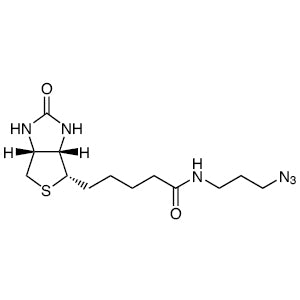
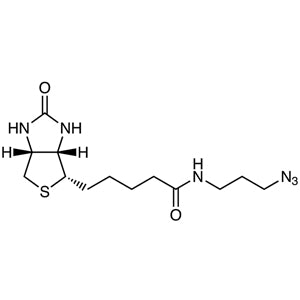
- TCI A3420 908007-17-0 N-(3-Azidopropyl)biotinamide (2mg*5)
- TCI A2524 908007-17-0 N-(3-Azidopropyl)biotinamide
- TCI B2433 72040-64-3 6-Biotinamidohexanoic Acid
- TCI S0956 89889-52-1 N-Succinimidyl N-[6-(Biotinamido)hexanoyl]-6-aminohexanoate
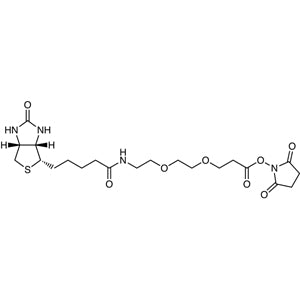
- TCI S0955 596820-83-6 N-Succinimidyl 9-(Biotinamido)-4,7-dioxanonanoate
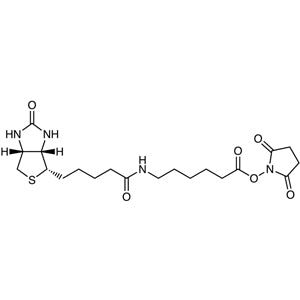
- TCI S0490 72040-63-2 N-Succinimidyl 6-Biotinamidohexanoate
- Cysteine-directed protein biotinylation: the pyridyl disulfide group reacts selectively with free thiols, so biotin can be attached to specific cysteine residues in proteins or peptides.
- Reversible affinity purification: captured biomolecules can be released from streptavidin or avidin supports by cleaving the disulfide linkage with DTT or TCEP, which preserves the recovered material.
- Estimating the degree of labelling: the release of pyridine-2-thione during thiol–disulfide exchange can be monitored spectrophotometrically, giving a simple way to track how far biotinylation has progressed.
- Streptavidin-based detection assays: biotin-labelled biomolecules can be detected with streptavidin conjugates, which supports sensitive identification in a wide range of biochemical and analytical formats.
- Immobilisation on streptavidin surfaces: thiol-containing peptides or proteins can be biotinylated and then anchored to streptavidin-coated supports for binding studies, and released later under reducing conditions.
| Brand | TCI (product code P2471) |
|---|---|
| CAS number | 112247-65-1 |
| Molecular formula | — |
| Purity | — |
| Category | Chemistry > Chemical Biology > Bioconjugation |
| Pack sizes | available in TCI's standard pack sizes; please contact AMI Scientific to confirm what is currently offered |
| Physical form | refer to the TCI product specification and certificate of analysis |
| Storage | follow the conditions on the TCI label and safety data sheet |
Store N-[2-(2-Pyridyldithio)ethyl]biotinamide in its original, tightly closed container, following the storage conditions on the TCI label and safety data sheet. As a general practice for disulfide-containing reagents, keep it away from moisture, heat, direct light and reducing agents, because these could degrade the reactive pyridyl disulfide group. Allow the container to reach room temperature before opening to limit condensation. When handling, wear gloves, safety glasses and a lab coat, avoid inhaling dust and avoid skin contact, and work in a well-ventilated area. Dispose of waste according to local laboratory regulations.
—
Produk Terkait
-
N-(3-Azidopropyl)biotinamide(2mg*5) TCI A3420
Regular price Rp 4.636.800,00Regular priceRp 3.258.150,00Sale price Rp 4.636.800,00 -
N-(3-Azidopropyl)biotinamide TCI A2524
Regular price Rp 10.069.500,00Regular priceRp 7.057.050,00Sale price Rp 10.069.500,00 -
6-BiotinamidohexanoicAcid TCI B2433
Regular price Rp 3.365.250,00Regular priceRp 2.368.800,00Sale price Rp 3.365.250,00 -
N-SuccinimidylN-[6-(Biotinamido)hexanoyl]-6-aminohexanoate TCI S0956
Regular price From Rp 3.815.700,00Regular priceRp 2.683.800,00Sale price From Rp 3.815.700,00 -
N-Succinimidyl9-(Biotinamido)-4,7-dioxanonanoate TCI S0955
Regular price From Rp 3.419.850,00Regular priceRp 2.406.600,00Sale price From Rp 3.419.850,00 -
N-Succinimidyl6-Biotinamidohexanoate TCI S0490
Regular price From Rp 1.431.150,00Regular priceRp 1.016.400,00Sale price From Rp 1.431.150,00 -
StreptavidinR-PEConjugate TCI T3885
Regular price Rp 2.942.100,00Regular priceRp 2.072.700,00Sale price Rp 2.942.100,00 -
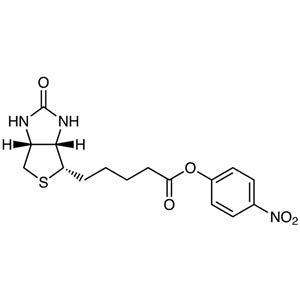
(+)-Biotin4-NitrophenylEster TCI B4009
Regular price Rp 1.510.950,00Regular priceRp 1.072.050,00Sale price Rp 1.510.950,00




![TCI S0956 89889-52-1 N-Succinimidyl N-[6-(Biotinamido)hexanoyl]-6-aminohexanoate](http://amiscientific.com/cdn/shop/files/TCI2510S0956_4f9bbc08-c611-4ab4-84eb-fe6fbfdcc2f5.jpg?v=1792655142&width=533)
![89889-52-1 N-Succinimidyl N-[6-(Biotinamido)hexanoyl]-6-aminohexanoate - AMI Scientific](http://amiscientific.com/cdn/shop/files/TCI2510S0956.jpg?v=1767139205&width=533)