Ethyl Cyanoacetate from TCI is an ester that contains an active methylene group. In this compound, the CH2 group sits between two electron-withdrawing groups: a nitrile and an ethyl ester. Because of this structure, the methylene protons are fairly acidic and readily form a stabilized carbanion. This makes Ethyl Cyanoacetate one of the oldest and most widely used building blocks in organic synthesis laboratories. Chemists use it to form carbon-carbon bonds and to build many kinds of heterocyclic rings, from small exploratory reactions to multi-step synthetic routes.
Researchers choose Ethyl Cyanoacetate because one small molecule offers three reactive sites: the active methylene carbon, the nitrile group and the ester group. The active carbon takes part in Knoevenagel condensations, alkylations and Michael additions. The nitrile and ester groups can join cyclization reactions that form pyrimidines, pyridones, thiophenes (through the Gewald reaction) and other heterocyclic frameworks that matter in medicinal chemistry. These reactions usually need only simple, easy-to-obtain base catalysts, so the reagent is practical for both research and teaching.
In Indonesia, Ethyl Cyanoacetate is in steady demand at organic chemistry and pharmacy laboratories in universities. There it supports undergraduate practical courses, final-year projects and graduate research on synthetic methods and heterocyclic compounds. Research groups working on bioactive molecules use it as a dependable starting material for building compound libraries. Its well-documented reactivity also makes it a good choice for showing students the basic ideas of carbanion chemistry. AMI Scientific supplies this TCI reagent to help these laboratories run their synthesis work smoothly.
TCI brochures (PDF)
- Cyanation Reagents 2024-09-17 · p. 2
- C-N Bond Formation Reactions 2025-08-07 · p. 3
- Knoevenagel condensation: the acidic active methylene group condenses easily with aldehydes and ketones under mild base catalysis, giving dependable access to substituted alkenes for further synthesis.
- Alkylation reactions: the stabilized carbanion formed at the methylene carbon reacts with suitable electrophiles, so chemists can add new carbon substituents in a controlled way.
- Michael addition: as a soft, stabilized nucleophile, the carbanion adds to activated alkenes and builds new carbon-carbon bonds that are useful in longer synthetic sequences.
- Heterocycle synthesis: the nitrile and ester groups take part in cyclization reactions that form pyrimidines, pyridones and related frameworks that are important in medicinal chemistry research.
- Gewald reaction and teaching laboratories: it is a classic component for making thiophenes, and its simple base-catalyzed chemistry makes it a strong choice for showing students how carbanion reactions work.
From the TCI brochure
- Pd-catalyzed Cyanation of Aryl Halides
- Pd(OAc)2 (cat.), DPPE, TMEDA, DMF
| Brand | TCI (product code C0441) |
|---|---|
| CAS number | 105-56-6 |
| Molecular formula | — |
| Purity | — |
| Category | Chemistry > Building Blocks > Non-Heterocyclic Building Blocks |
| Pack sizes | please confirm the available pack sizes with AMI Scientific when you order |
| Physical form | liquid |
| Storage | keep the container tightly closed in a cool, dry, well-ventilated area and follow the TCI label and Safety Data Sheet |
Data from the TCI brochure
| Kemasan | 25g / 500g |
|---|
Source: TCI brochure RR030 (2024-09-17)
Store Ethyl Cyanoacetate in its original tightly closed container, such as the supplier's glass bottle, in a cool, dry and well-ventilated place. Keep it away from heat, ignition sources, direct sunlight, and strong acids, bases and oxidizing agents. Handle it in a fume hood and wear suitable personal protective equipment, including chemical-resistant gloves, safety glasses and a laboratory coat. Do not inhale vapors and avoid contact with skin and eyes. Before use, read the Safety Data Sheet supplied with the product for hazard details, first-aid measures and disposal guidance, and dispose of waste according to your institution's rules and local regulations.
References cited in the TCI brochure
- Shuyan Zheng. Ethyl Cyanoacetate: A New Cyanating Agent for the Palladium-Catalyzed Cyanation of Aryl Halides Organic Letters, 2012. doi:10.1021/ol3014914
Produk Terkait
-
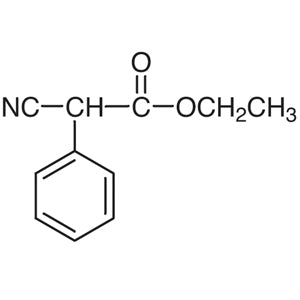
EthylPhenylcyanoacetate TCI P1255
Regular price From Rp 1.405.950,00Regular priceRp 998.550,00Sale price From Rp 1.405.950,00 -
Ethyl2-(Ethoxymethylene)-2-cyanoacetate TCI E0341
Regular price From Rp 928.200,00Regular priceRp 664.650,00Sale price From Rp 928.200,00 -
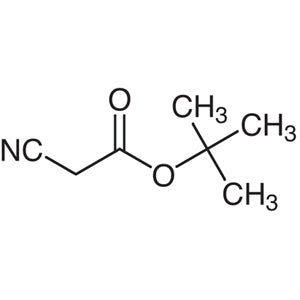
tert-ButylCyanoacetate TCI C1441
Regular price From Rp 3.603.600,00Regular priceRp 2.535.750,00Sale price From Rp 3.603.600,00 -
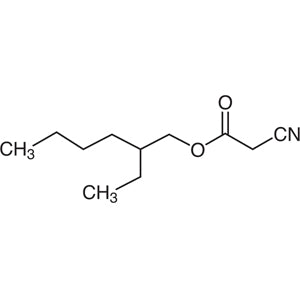
2-EthylhexylCyanoacetate TCI C1384
Regular price From Rp 1.298.850,00Regular priceRp 924.000,00Sale price From Rp 1.298.850,00 -
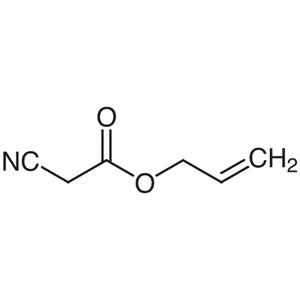
AllylCyanoacetate TCI C1039
Regular price From Rp 1.378.650,00Regular priceRp 979.650,00Sale price From Rp 1.378.650,00 -
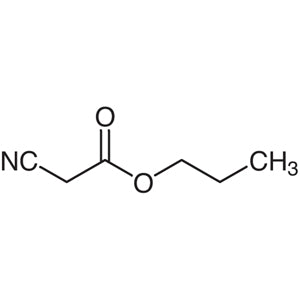
PropylCyanoacetate TCI C1016
Regular price From Rp 955.500,00Regular priceRp 683.550,00Sale price From Rp 955.500,00 -
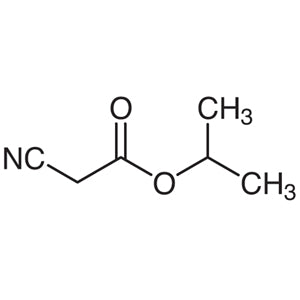
IsopropylCyanoacetate TCI C1001
Regular price From Rp 928.200,00Regular priceRp 664.650,00Sale price From Rp 928.200,00 -
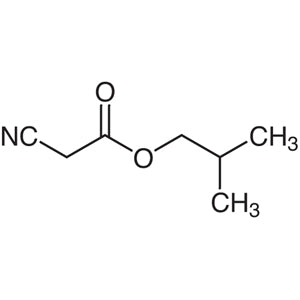
IsobutylCyanoacetate TCI C1000
Regular price From Rp 557.550,00Regular priceRp 405.300,00Sale price From Rp 557.550,00