TCI C2920 is 1,2,3,4-Cyclopentanetetracarboxylic Dianhydride, an alicyclic dianhydride monomer built on a five-membered cyclopentane framework. In the laboratory it serves as the acid component in polyimide synthesis, where it is reacted with a diamine to form a poly(amic acid) that is subsequently converted into the polyimide through either thermal or chemical imidization. Its rigid yet non-conjugated saturated framework makes this monomer an important choice for researchers pursuing polymers with high optical clarity, specific surface orientation behaviour, and a relatively low refractive index compared with conventional aromatic polyimides.
The properties that drive its selection are the combination of the alicyclic structure and the level of purity achieved through purification by sublimation. The non-planar cyclopentane ring interrupts conjugation along the polymer chain, which suppresses the formation of the charge-transfer complexes responsible for yellow discolouration. Sublimation, meanwhile, removes non-volatile impurities as well as partial hydrolysis products that can disturb the balance of functional groups. Because step-growth polymerization is highly sensitive to molar ratio, high purity translates directly into more reliable control over the polymerization and the properties of the resulting film.
In Indonesian laboratories this monomer is typically encountered in polymer chemistry and materials science research settings, where poly(amic acid) solutions are prepared and cast into films for characterization. It suits university research groups, polymer and materials laboratories, and research institutes developing transparent or optically demanding polyimide systems. Work is normally carried out on a small research scale, using dry solvents and controlled handling, so that the purity delivered by sublimation is preserved through to the polymerization step.
- Polyimide synthesis: reacted with aromatic or aliphatic diamines to build poly(amic acid) precursors, with the sublimation-grade purity supporting the precise stoichiometric balance that step-growth polymerization demands.
- Transparent polyimide film development: the non-planar, non-conjugated cyclopentane framework suppresses charge-transfer complex formation, making it suitable for research targeting films with high optical clarity and minimal yellowing.
- Low refractive index polymer research: its saturated alicyclic backbone gives access to polyimides with refractive indices lower than conventional aromatic systems, useful for optical materials investigations.
- Surface orientation and alignment studies: the rigid but non-aromatic ring structure imparts specific orientation behaviour, which researchers exploit when studying alignment properties in polyimide layers.
- Monomer reference material for polymerization studies: because sublimation removes non-volatile impurities and partial hydrolysis products, it serves well as a controlled acid component in reproducible comparative polymerization experiments.
| Brand | TCI |
|---|---|
| CAS number | 6053-68-5 |
| Molecular formula | — |
| Purity | — |
| Category | Materials Science > High Purity Compounds > Compounds Purified by Sublimation |
| Pack sizes | available in standard TCI research-scale packaging; please confirm the currently offered size when ordering. |
| Physical form | — |
| Storage | store in a tightly closed container in a cool, dry place, protected from moisture. |
- Grade: purified by sublimation
Store the dianhydride in a tightly closed original container in a cool, dry, well-ventilated place, away from moisture, since anhydride functional groups are susceptible to hydrolysis that produces the corresponding tetracarboxylic acid and degrades monomer performance. Glass containers with tight-fitting closures are appropriate, and storage in a desiccator or under dry inert gas is advisable for opened packs. Handle the solid in a fume hood using gloves, safety glasses, and a laboratory coat, avoiding dust generation and contact with skin, eyes, and the respiratory tract. Weigh and transfer the material quickly to limit atmospheric moisture uptake, keep it separated from water and strong bases, and always consult the manufacturer's safety data sheet before use.
—
Produk Terkait
-
Bicyclo[2.2.2]octane-1,4-dicarboxylicAcid TCI B5595
Regular price Rp 4.957.050,00Regular price -
Bicyclo[2.2.2]octane-2,3,5,6-tetracarboxylic2,3:5,6-Dianhydride TCI B6198
Regular price From Rp 2.995.650,00Regular price -
Bicyclo[1.1.1]pentane-1,3-dicarboxylicAcid TCI B6522
Regular price Rp 4.797.450,00Regular price -
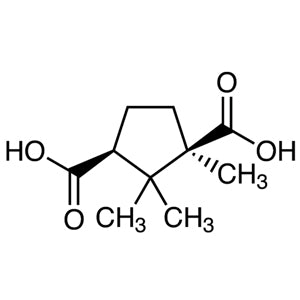
(+)-CamphoricAcid TCI C0012
Regular price From Rp 1.220.100,00Regular price -
cis-1,2-CyclohexanedicarboxylicAcid TCI C0458
Regular price From Rp 1.008.000,00Regular price -
trans-1,2-CyclohexanedicarboxylicAcid TCI C0474
Regular price From Rp 2.199.750,00Regular price -
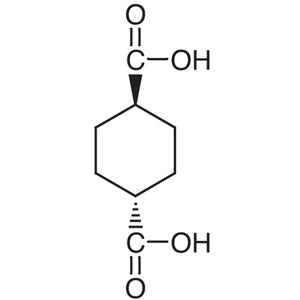
trans-1,4-CyclohexanedicarboxylicAcid TCI C0475
Regular price From Rp 1.881.600,00Regular price -
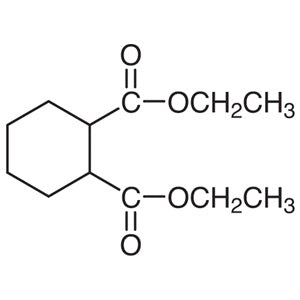
Diethylcis-1,2-Cyclohexanedicarboxylate(containsDiethyltrans-1,2-Cyclohexanedicarboxylate) TCI C0476
Regular price From Rp 1.749.300,00Regular price
![Bicyclo[2.2.2]octane-1,4-dicarboxylic Acid (CAS 711-02-4) - TCI B5595 - AMI Scientific](http://amiscientific.com/cdn/shop/files/TCI2510B5595.jpg?v=1767092548&width=533)
![Bicyclo[2.2.2]octane-2,3,5,6-tetracarboxylic 2,3:5,6-Dianhydride (CAS 2754-40-7) - TCI B6198 - AMI Scientific](http://amiscientific.com/cdn/shop/files/TCI2510B6198.jpg?v=1768816002&width=533)
![Bicyclo[1.1.1]pentane-1,3-dicarboxylic Acid (CAS 56842-95-6) - TCI B6522 - AMI Scientific](http://amiscientific.com/cdn/shop/files/TCI2510B6522.jpg?v=1767093799&width=533)