TCI D2102 1,2-Diamino-2-methylpropane (CAS 811-93-8) is a short-chain aliphatic diamine that carries two primary amine groups on adjacent carbon atoms, with one of those carbons made quaternary by an additional methyl substituent. In materials science and polymer laboratories, this liquid compound is classified as a monomer, that is, a building block that reacts to form macromolecular chains or networks. Its two primary amine groups make the molecule bifunctional, so it can react with diacids, diesters, diisocyanates, and epoxy resins to construct polyamides, polyureas, or cross-linked thermoset networks.
The characteristics that make this reagent a preferred choice begin with its 1,2-diamine geometry, which is very well suited to forming five-membered chelate rings when binding metal ions. Added to this is the steric hindrance contributed by the methyl group on the quaternary carbon. That steric hindrance creates a difference in reactivity between the primary amine on the tertiary carbon and the amine on the primary carbon, which opens up opportunities for selective functionalization that symmetrical diamines do not offer. Because the material is a liquid, it is easy to measure with a micropipette or syringe and dissolves quickly in many polar solvents, which simplifies the preparation of standard solutions.
In Indonesian laboratories, this monomer is typically used in university and institutional research groups working on polymer synthesis, coordination chemistry, and coatings development, as well as in industrial R&D units formulating epoxy curing systems. Its liquid form and ready solubility in polar solvents make it convenient for bench-scale work where small volumes are dispensed by syringe or micropipette, and where reproducible standard solutions must be prepared routinely for reaction screening and ligand studies.
- Polyamide synthesis — the two primary amine groups react with diacids or diesters to build amide-linked polymer chains, making it a direct bifunctional monomer for step-growth polymerization studies.
- Polyurea preparation — reaction with diisocyanates joins the diamine into urea-linked macromolecular chains, and the liquid form allows accurate stoichiometric dosing by syringe during formulation trials.
- Epoxy resin curing — the bifunctional primary amines open epoxide rings to generate cross-linked thermoset networks, suiting the compound to hardener development and network-density investigations in coatings research.
- Metal-ion chelation and coordination chemistry — the 1,2-diamine geometry forms stable five-membered chelate rings with metal ions, making the reagent useful as a ligand in complex synthesis and binding studies.
- Selective functionalization chemistry — steric hindrance from the methyl group on the quaternary carbon differentiates the two primary amines in reactivity, enabling mono-selective derivatization routes unavailable with symmetrical diamines.
| Brand | TCI |
|---|---|
| CAS number | 811-93-8 |
| Molecular formula | — |
| Purity | — |
| Category | Materials Science > Polymer/Macromolecule Reagents > Monomers |
| Pack sizes | available in TCI catalogue pack sizes; please confirm the required quantity when ordering |
| Physical form | liquid |
| Storage | keep tightly closed in the original container, protected from moisture and air |
Store the container tightly closed in a cool, dry, well-ventilated area away from heat, ignition sources, and direct sunlight. Because primary amines readily absorb moisture and carbon dioxide from the air, keep the bottle sealed between uses and consider handling under an inert atmosphere when preparing sensitive reactions. Use the original manufacturer container or compatible chemically resistant glassware for transfer and short-term storage, and label all prepared solutions clearly. Handle the liquid inside a fume hood, wear chemical-resistant gloves, safety goggles, and a laboratory coat, and avoid contact with skin, eyes, and clothing. Keep the material separated from acids, oxidizing agents, and isocyanates unless deliberate reaction is intended. Always consult the manufacturer's safety data sheet before use and follow the disposal procedures applicable to your institution.
—
Produk Terkait
-
1,4-DiaminobutaneDihydrochloride TCI D0081
Regular price From Rp 1.538.250,00Regular price -
1,10-Diaminodecane TCI D0085
Regular price From Rp 2.279.550,00Regular price -
3,3'-Diaminodipropylamine TCI D0090
Regular price From Rp 664.650,00Regular price -
1,12-Diaminododecane TCI D0091
Regular price From Rp 1.670.550,00Regular price -
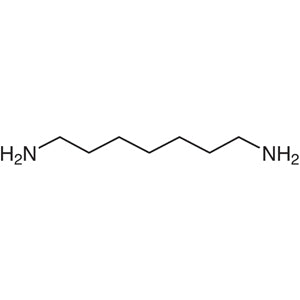
1,7-Diaminoheptane TCI D0094
Regular price From Rp 2.227.050,00Regular price -
1,5-DiaminopentaneDihydrochloride TCI D0099
Regular price From Rp 1.458.450,00Regular price -
1,8-Diaminooctane TCI D0107
Regular price From Rp 1.538.250,00Regular price -
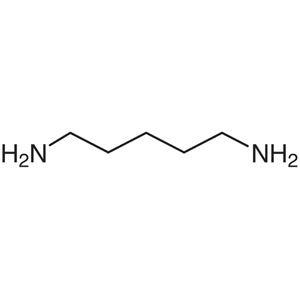
1,5-Diaminopentane TCI D0108
Regular price From Rp 2.227.050,00Regular price