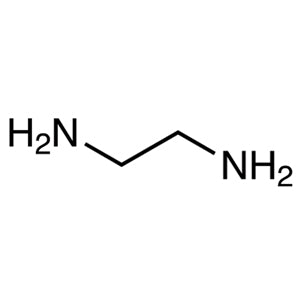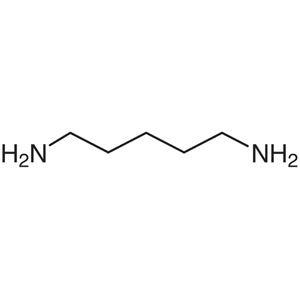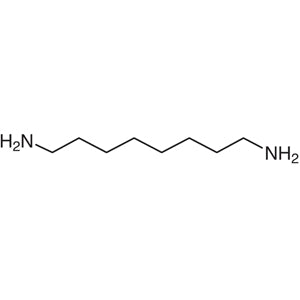
1,8-Diaminooctane is a chemical compound widely used as a building block in the synthesis of complex molecules. It is a versatile reagent that plays a crucial role in organic chemistry laboratories, where it is employed to construct new molecular structures through various chemical reactions. Its unique structure, featuring two amino groups at the terminal ends of an eight-carbon chain, makes it an essential component in the development of heterocyclic compounds and long-chain molecules. This compound is particularly valuable for its ability to participate in coupling and cross-linking reactions, enabling the formation of more complex chemical entities.
The reactivity of 1,8-Diaminooctane stems from its two active amino groups, which can engage in a wide range of chemical transformations. These include condensation reactions, chain extension processes, and functional group modifications. Its high reactivity and compatibility with various reaction conditions make it a preferred choice for researchers aiming to synthesize compounds with intricate structures. The compound's versatility allows it to be used in multiple stages of chemical synthesis, making it an indispensable tool in both academic and industrial research settings.
In Indonesian laboratories, 1,8-Diaminooctane is extensively utilized in chemical, pharmaceutical, and materials research. It is a key reagent in the development of new compounds, supporting both academic studies and industrial applications. Its role in the synthesis of heterocyclic compounds and long-chain polymers highlights its importance in advancing chemical innovation. The compound’s widespread use underscores its significance in modern laboratory practices across various scientific disciplines.
TCI brochures (PDF)
- Polyamines 2025-10-21 · p. 3
- Colloidal Quantum Dot (QD) Research Reagents 2026-05-21 · p. 8
- Biomaterials Research Reagents 2025-02-19 · p. 18
- Monomers 2025-05-28 · p. 30
- Synthesis of heterocyclic compounds for the development of new pharmaceuticals due to its ability to form stable ring structures through amino group participation.
- Production of long-chain polymers by extending molecular chains through coupling reactions, leveraging its eight-carbon backbone.
- Coupling reactions in the synthesis of complex molecules, where its amino groups enable efficient bond formation between different chemical entities.
- Modification of molecular chains to create functionalized compounds, utilizing its reactivity for introducing new functionalities.
- Research in materials science for creating advanced polymers with tailored properties, benefiting from its structural versatility.
| Brand | TCI |
|---|---|
| CAS number | 373-44-4 |
| Molecular formula | — |
| Purity | — |
| Category | Chemistry > Building Blocks > Non-Heterocyclic Building Blocks |
| Pack sizes | Available in various quantities as per standard laboratory supply |
| Physical form | Liquid |
| Storage | Store in a cool, dry place away from direct sunlight and incompatible materials |
1,8-Diaminooctane should be stored in a cool, dry environment to maintain its chemical integrity. It is recommended to keep the compound in a sealed container to prevent exposure to moisture and air, which could lead to degradation. The storage area should be free from incompatible substances such as strong oxidizers or acids to avoid potential chemical reactions. Proper labeling of containers is essential for safe handling and identification. Laboratory personnel should wear appropriate personal protective equipment, including gloves and safety goggles, when handling this compound. Regular monitoring of storage conditions ensures that the material remains stable and safe for use in research applications.
—
Product Categories
- Electronic MaterialsColloidal Quantum Dot (QD) Research ReagentsCapping Agents [Colloidal Quantum Dot (QD) Research Reagents]
- Polymer/Macromolecule ReagentsMonomersDiamine Monomers
- Biomaterials/Biocompatible Materials Research ReagentsMonomers and Macromonomers [Biomaterials/Biocompatible Materials Research Reagents]Diamine Monomers [Biomaterials/Biocompatible Materials Research Reagents]
Produk Terkait
-
1,3-Phenylenediamine TCI P1911
Regular price From Rp 1.193.850,00Regular priceRp 834.750,00Sale price From Rp 1.193.850,00 -
1,3-Phenylenediamine TCI P1892
Regular price From Rp 505.050,00Regular priceRp 352.800,00Sale price From Rp 505.050,00 -
1,4-Phenylenediamine TCI P0170
Regular price From Rp 557.550,00Regular priceRp 389.550,00Sale price From Rp 557.550,00 -
EthylenediamineAnhydrous TCI E0077
Regular price From Rp 505.050,00Regular priceRp 352.800,00Sale price From Rp 505.050,00 -
1,11-Diaminoundecane TCI D2075
Regular price From Rp 2.147.250,00Regular priceRp 1.501.500,00Sale price From Rp 2.147.250,00 -
1,4-Diaminobutane TCI D0239
Regular price From Rp 505.050,00Regular priceRp 352.800,00Sale price From Rp 505.050,00 -
1,3-Diaminopropane TCI D0114
Regular price From Rp 477.750,00Regular priceRp 333.900,00Sale price From Rp 477.750,00 -
1,5-Diaminopentane TCI D0108
Regular price From Rp 2.227.050,00Regular priceRp 1.557.150,00Sale price From Rp 2.227.050,00