TCI D3508 2,4-Dichloro-5-methoxypyrimidine is a heterocyclic building block based on a pyrimidine ring, carrying two chlorine atoms at positions 2 and 4 together with a methoxy group at position 5. Pyrimidine is one of the most important cores in medicinal chemistry, since it is present in the nucleic acid bases and in many classes of active compounds, including kinase inhibitors. The role of this compound in the laboratory is to serve as a central scaffold with two sequentially addressable reaction points, allowing researchers to attach two different fragments to the ring in a stepwise and controlled manner within a divergent synthetic route.
The property that makes this material so sought after is its reaction selectivity. In 2,4-dichloropyrimidines, the chlorine atom at position 4 is generally more reactive toward nucleophilic aromatic substitution than the one at position 2, so the addition of an amine at low temperature tends to be directed to position 4 first, while position 2 is then reacted in a subsequent step under harsher conditions. The methoxy group at position 5 is electron-donating, so it modulates the rate of that substitution while also giving the final product a characteristic electronic and steric profile. Both chlorine atoms can additionally be used in palladium-catalysed cross-coupling reactions.
In Indonesian laboratories, this building block is typically used in university and institutional research groups working on medicinal chemistry and organic synthesis, as well as in R&D laboratories developing new heterocyclic compounds. It is normally handled at bench scale for exploratory route development, small library preparation, and method optimisation, where a scaffold offering predictable, stepwise functionalisation helps researchers reach a target structure with fewer trial reactions.
Related TCI products
- TCI D4723 5018-38-2 4,6-Dichloro-5-methoxypyrimidine
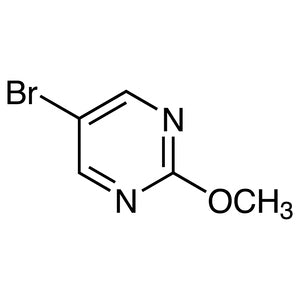
- TCI B3521 14001-66-2 5-Bromo-2-methoxypyrimidine
- TCI B1920 56686-16-9 5-Bromo-2,4-dimethoxypyrimidine
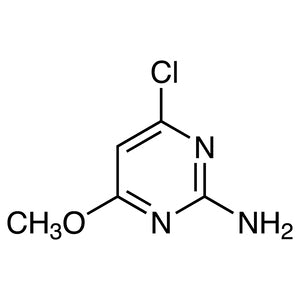
- TCI A1520 5734-64-5 2-Amino-4-chloro-6-methoxypyrimidine
- TCI I0531 52522-99-3 5-Iodo-2,4-dimethoxypyrimidine
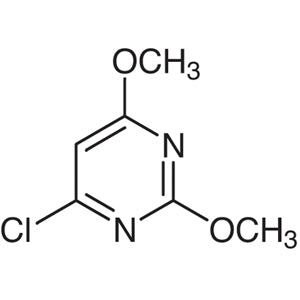
- TCI D1385 6320-15-6 6-Chloro-2,4-dimethoxypyrimidine
- Medicinal chemistry scaffold construction — the pyrimidine core is present in many classes of active compounds, so it provides a starting framework that is directly relevant to drug discovery programmes.
- Stepwise nucleophilic aromatic substitution — the difference in reactivity between positions 4 and 2 lets researchers install two different nucleophiles sequentially without needing protecting group strategies.
- Kinase inhibitor route development — pyrimidine-based structures feature prominently among kinase inhibitors, making this scaffold a practical entry point for analogue exploration in that class.
- Palladium-catalysed cross-coupling — both chlorine atoms can serve as coupling positions, so carbon–carbon and carbon–heteroatom bonds can be formed on the same ring system.
- Divergent library synthesis — a single central scaffold with two addressable sites allows one intermediate to be branched into several structurally related analogues for comparison.
| Brand | TCI (Tokyo Chemical Industry) |
|---|---|
| CAS number | 19646-07-2 |
| Molecular formula | — |
| Purity | — |
| Category | Chemistry > Building Blocks > Heterocyclic Building Blocks |
| Pack sizes | available in standard research-scale packaging; please refer to the current catalogue listing for the sizes offered |
| Physical form | — |
| Storage | keep in the tightly closed original container in a cool, dry place as indicated on the product label |
- Chemical name: 2,4-Dichloro-5-methoxypyrimidine
- Catalogue code: D3508
Store the material in its original tightly closed container in a cool, dry, well-ventilated area, away from moisture, direct sunlight, and sources of heat or ignition, and follow the storage conditions stated on the manufacturer's label and safety data sheet. Keep it separated from strong bases, strong oxidising agents, and incompatible reagents. Handle the compound in a fume hood using appropriate personal protective equipment, including safety goggles, chemical-resistant gloves, and a laboratory coat, and avoid inhalation of dust and contact with skin and eyes. Weigh and transfer with clean, dry glassware or spatulas to prevent moisture ingress and cross-contamination, reseal the container immediately after use, and collect chemical waste in labelled containers for disposal according to institutional and local regulations.
—
Produk Terkait
-
4,6-Dichloro-5-methoxypyrimidine TCI D4723
Regular price From Rp 928.200,00Regular priceRp 664.650,00Sale price From Rp 928.200,00 -
5-Bromo-2-methoxypyrimidine TCI B3521
Regular price From Rp 689.850,00Regular priceRp 497.700,00Sale price From Rp 689.850,00 -
5-Bromo-2,4-dimethoxypyrimidine TCI B1920
Regular price From Rp 557.550,00Regular priceRp 405.300,00Sale price From Rp 557.550,00 -
2-Amino-4-chloro-6-methoxypyrimidine TCI A1520
Regular price From Rp 530.250,00Regular priceRp 386.400,00Sale price From Rp 530.250,00 -
5-Iodo-2,4-dimethoxypyrimidine TCI I0531
Regular price From Rp 2.411.850,00Regular priceRp 1.702.050,00Sale price From Rp 2.411.850,00 -
6-Chloro-2,4-dimethoxypyrimidine TCI D1385
Regular price Rp 875.700,00Regular priceRp 627.900,00Sale price Rp 875.700,00 -
2-Chloro-5-methoxypyrimidine TCI C2693
Regular price From Rp 1.060.500,00Regular priceRp 757.050,00Sale price From Rp 1.060.500,00 -
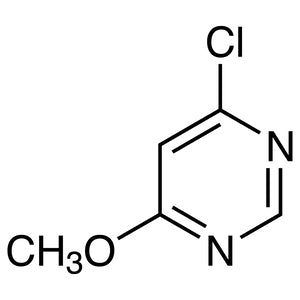
4-Chloro-6-methoxypyrimidine TCI C2369
Regular price From Rp 1.431.150,00Regular priceRp 1.016.400,00Sale price From Rp 1.431.150,00