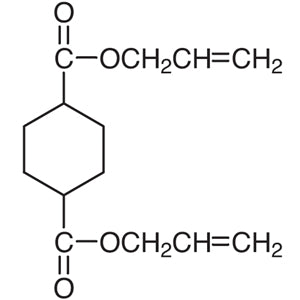
TCI D3768 Diallyl 1,4-Cyclohexanedicarboxylate (cis- and trans- mixture), CAS 20306-22-3, is the diallyl ester of 1,4-cyclohexanedicarboxylic acid, positioned as a monomer for polymer chemistry work. The molecule carries two polymerizable allyl groups at either end of the cyclohexane skeleton, which allows it to act both as a bifunctional monomer and as a crosslinking agent. In materials synthesis laboratories, a compound of this type serves as a starting point for building thermoset polymer networks, allyl resins, and copolymer systems that require crosslink junctions distributed evenly throughout the matrix.
The characteristics that make this monomer a preferred choice lie in the combination of two allyl double bonds reactive toward radical polymerization and a cyclohexane skeleton that is aliphatic in nature. Unlike aromatic analogues such as phthalate diesters, the cyclohexane ring does not absorb ultraviolet light strongly, so the networks formed are generally valued in applications that demand optical clarity and resistance to light-induced ageing. The cis- and trans- mixture also introduces geometric diversity that influences how densely the chains pack within the cured network.
In Indonesian laboratories, this monomer is typically handled in academic and industrial research settings working on polymer and coating formulation. It is used at small to moderate scale for network formulation trials, crosslink density studies, and the preparation of specimens for characterization. Because the material functions as a reactive crosslinker rather than a routine analytical reagent, it is usually ordered per project requirement and consumed within a defined series of synthesis experiments.
- Thermoset network synthesis: the two allyl end groups let a single molecule bridge growing chains, producing crosslinked networks whose density can be tuned by adjusting monomer loading.
- Allyl resin preparation: as a diallyl ester it belongs to the same chemical family as established allyl resin monomers, making it a direct candidate for casting and curing studies.
- Crosslinking agent in copolymer systems: added in small proportions to a comonomer mixture, it distributes crosslink junctions evenly through the matrix rather than concentrating them locally.
- Optically clear coating and cured-film research: the aliphatic cyclohexane skeleton avoids strong ultraviolet absorption, so it suits formulations where clarity and light-ageing resistance are evaluated.
- Structure–property investigations: the cis- and trans- mixture supplies geometric variation useful for studying how ring configuration affects chain packing and cured network behaviour.
| Brand | TCI (Tokyo Chemical Industry) |
|---|---|
| CAS number | 20306-22-3 |
| Molecular formula | — |
| Purity | — |
| Category | Materials Science > Polymer/Macromolecule Reagents > Monomers |
| Pack sizes | available in standard TCI research-scale packaging; please confirm the currently offered size when ordering |
| Physical form | — |
| Storage | keep in the closed original container, cool and away from light and heat sources |
- Chemical class: diallyl ester of 1,4-cyclohexanedicarboxylic acid; cis- and trans- isomer mixture
Store the container tightly closed in a cool, well-ventilated area, away from direct sunlight, heat, and sources of ignition, and separated from oxidizing agents. Because the material carries polymerizable allyl double bonds, avoid prolonged exposure to elevated temperature or light that could initiate unintended reaction. Keep it in the original supplier container or in a compatible, clearly labelled glass or chemically resistant vessel with a secure closure. Handle in a fume hood using safety glasses, gloves, and a laboratory coat, avoid skin and eye contact and inhalation of vapour, and close the container promptly after dispensing. Consult the manufacturer's safety data sheet before first use and follow institutional chemical waste procedures for disposal.
—
Produk Terkait
-
Bicyclo[2.2.2]octane-1,4-dicarboxylicAcid TCI B5595
Regular price Rp 4.957.050,00Regular price -
Bicyclo[2.2.2]octane-2,3,5,6-tetracarboxylic2,3:5,6-Dianhydride TCI B6198
Regular price From Rp 2.995.650,00Regular price -
Bicyclo[1.1.1]pentane-1,3-dicarboxylicAcid TCI B6522
Regular price Rp 4.797.450,00Regular price -
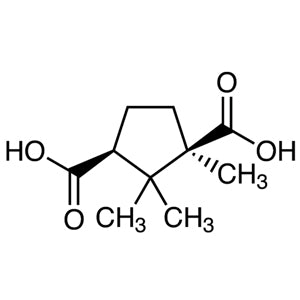
(+)-CamphoricAcid TCI C0012
Regular price From Rp 1.220.100,00Regular price -
cis-1,2-CyclohexanedicarboxylicAcid TCI C0458
Regular price From Rp 1.008.000,00Regular price -
trans-1,2-CyclohexanedicarboxylicAcid TCI C0474
Regular price From Rp 2.199.750,00Regular price -
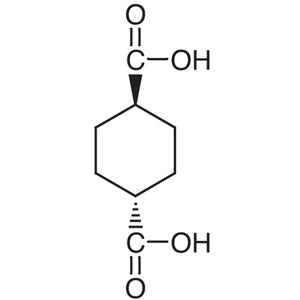
trans-1,4-CyclohexanedicarboxylicAcid TCI C0475
Regular price From Rp 1.881.600,00Regular price -
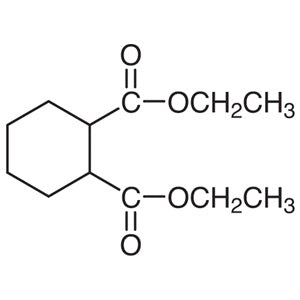
Diethylcis-1,2-Cyclohexanedicarboxylate(containsDiethyltrans-1,2-Cyclohexanedicarboxylate) TCI C0476
Regular price From Rp 1.749.300,00Regular price
![Bicyclo[2.2.2]octane-1,4-dicarboxylic Acid (CAS 711-02-4) - TCI B5595 - AMI Scientific](http://amiscientific.com/cdn/shop/files/TCI2510B5595.jpg?v=1767092548&width=533)
![Bicyclo[2.2.2]octane-2,3,5,6-tetracarboxylic 2,3:5,6-Dianhydride (CAS 2754-40-7) - TCI B6198 - AMI Scientific](http://amiscientific.com/cdn/shop/files/TCI2510B6198.jpg?v=1768816002&width=533)
![Bicyclo[1.1.1]pentane-1,3-dicarboxylic Acid (CAS 56842-95-6) - TCI B6522 - AMI Scientific](http://amiscientific.com/cdn/shop/files/TCI2510B6522.jpg?v=1767093799&width=533)