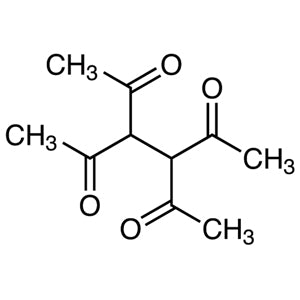
TCI D4826 is 3,4-Diacetyl-2,5-hexanedione, an aliphatic tetraketone also known as tetraacetylethane. The molecule carries four ketone carbonyl groups within a single short-chain framework, making it one of the most functional-group-dense non-heterocyclic building blocks available to the synthetic chemist. In organic synthesis laboratories, polycarbonyl compounds of this type serve as starting materials for constructing heterocyclic rings, because the 1,4-dicarbonyl motif they contain is a classical feedstock for five-membered ring formation reactions with nitrogen, sulfur, or oxygen nucleophiles.
The characteristic that makes this compound genuinely valuable is its symmetrical density of functional groups. The arrangement of four acetyl groups allows two heterocyclic units to be formed simultaneously within a single molecule, so the compound becomes a shortcut toward bis-heterocyclic structures that would normally demand many separate synthetic steps. In addition, the protons positioned between the carbonyl groups are acidic and therefore readily deprotonated, generating stabilized anions that are useful for condensation reactions and for complex formation. The chelating behaviour of this polycarbonyl system is likewise of interest to coordination chemistry.
In Indonesian laboratories, this material is typically used in university and institutional organic synthesis groups, in medicinal chemistry and heterocycle-focused research programmes, and in coordination chemistry work where polycarbonyl ligands are required. It is generally purchased in research-scale quantities for methodology development, ring-formation studies, and the preparation of intermediates that feed into longer synthetic sequences, rather than in bulk process volumes.
- Heterocycle synthesis — the 1,4-dicarbonyl units make it a classical precursor for building five-membered rings with nitrogen, sulfur, or oxygen nucleophiles.
- Bis-heterocyclic compound preparation — the symmetrical four-acetyl arrangement lets two heterocyclic units form in one molecule, shortening otherwise multi-step routes.
- Condensation reaction studies — the acidic protons between carbonyl groups deprotonate readily and give stabilized anions suitable for controlled condensation chemistry.
- Coordination chemistry and ligand work — the chelating character of the polycarbonyl system makes it attractive for preparing and studying metal complexes.
- Medicinal chemistry intermediate synthesis — as a dense non-heterocyclic building block, it provides rapid access to heterocyclic scaffolds used in exploratory research.
| Brand | TCI (Tokyo Chemical Industry) |
|---|---|
| CAS number | 5027-32-7 |
| Molecular formula | — |
| Purity | — |
| Category | Chemistry > Building Blocks > Non-Heterocyclic Building Blocks |
| Pack sizes | available in standard research-scale catalogue pack sizes; please confirm the currently listed options when ordering |
| Physical form | — |
| Storage | store in a tightly closed container in a cool, dry, well-ventilated area away from incompatible materials |
- Chemical name: 3,4-Diacetyl-2,5-hexanedione (tetraacetylethane)
Store the container tightly closed in a cool, dry, well-ventilated place, protected from direct sunlight and away from heat sources, ignition sources, and strong oxidizing agents. The original manufacturer packaging is the most suitable container; if transfer is required, use clean, dry, chemically compatible glass or an approved solvent-resistant vessel, and label it clearly with the chemical name and CAS number. Handle in a fume hood using safety glasses, chemical-resistant gloves, and a laboratory coat. Avoid generating or inhaling dust, avoid skin and eye contact, and keep the container closed when not in active use to limit moisture uptake. Always consult the manufacturer's safety data sheet before first use, and dispose of residues and contaminated materials through your institution's chemical waste procedures.
—
Produk Terkait
-
2,6-Dimethyl-4-heptanone TCI D0733
Regular price From Rp 502.950,00Regular price -
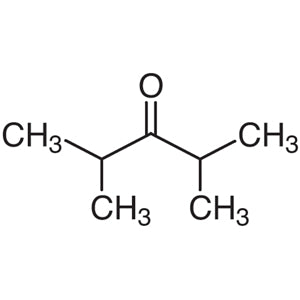
2,4-Dimethyl-3-pentanone TCI D0770
Regular price From Rp 709.800,00Regular price -
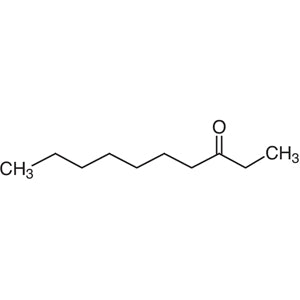
3-Decanone TCI D1162
Regular price Rp 2.303.700,00Regular price -
5-Dodecanone TCI D1536
Regular price Rp 1.859.550,00Regular price -
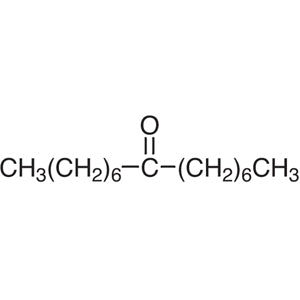
8-Pentadecanone TCI D1545
Regular price From Rp 2.745.750,00Regular price -
7-Tridecanone TCI D1546
Regular price From Rp 1.800.750,00Regular price -
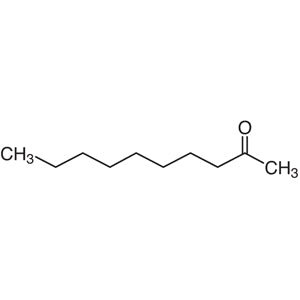
2-Decanone TCI D1643
Regular price Rp 1.593.900,00Regular price -
Dipivaloylmethane TCI D1678
Regular price From Rp 1.240.050,00Regular price