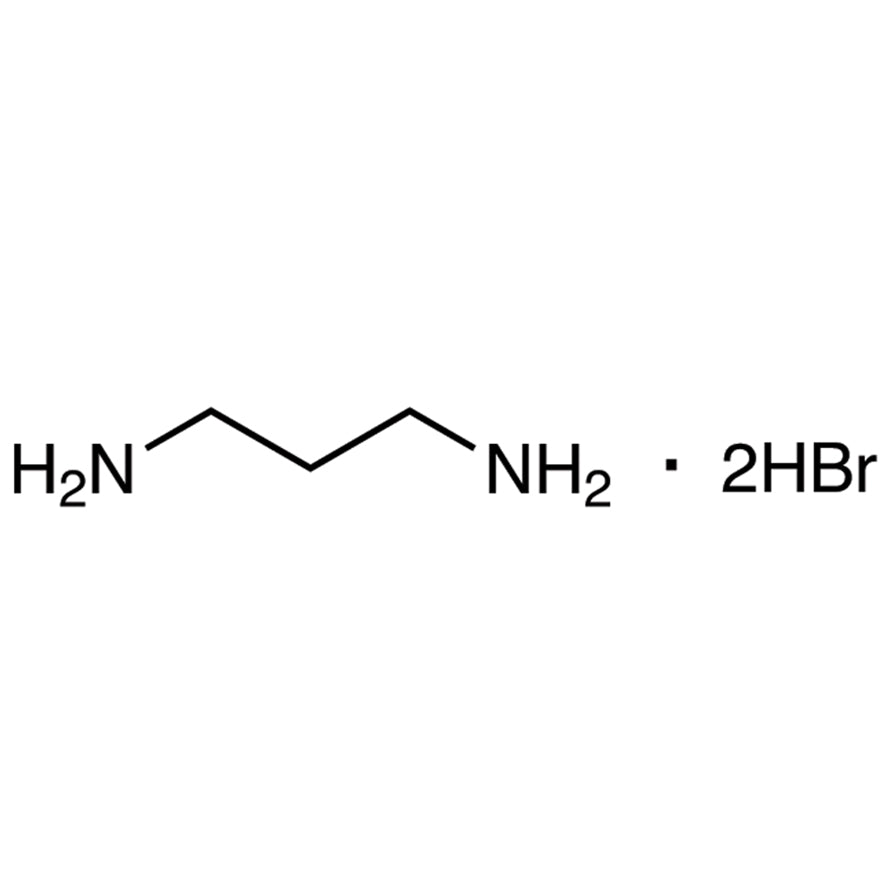
1,3-Diaminopropane Dihydrobromide is a chemical compound widely used in scientific research, particularly in the field of electronic materials and energy. This compound plays a crucial role in the development of perovskite solar cell materials, where it serves as a key precursor in the synthesis of high-performance electronic materials. Its unique molecular structure, featuring two amino groups at positions 1 and 3 of the propane chain, enables it to interact effectively with metal ions, making it an essential component in the fabrication of perovskite layers. Due to its chemical versatility and functional properties, it is frequently utilized in advanced material research.
The compound is valued for its ability to form stable complexes with alkali metals such as cesium and rubidium, which are critical in the creation of efficient perovskite solar cells. Its chemical stability under controlled conditions and ease of storage further enhance its appeal for laboratory use. These characteristics ensure that it remains a reliable and consistent material for researchers working on next-generation photovoltaic technologies. Its compatibility with various synthetic methods also contributes to its widespread application in material science.
In Indonesian laboratories, 1,3-Diaminopropane Dihydrobromide is commonly used by researchers in renewable energy and electronic materials. It is a preferred choice for institutions and universities engaged in the development of perovskite-based solar cell technologies. Its availability in the local market supports ongoing research efforts, making it an essential reagent for scientific innovation in the region.
- Perovskite Solar Cell Fabrication: This compound is essential for creating perovskite layers due to its ability to form stable metal complexes, which are crucial for efficient charge transport in solar cells.
- Electronic Material Synthesis: It serves as a key precursor in the synthesis of various electronic materials, offering versatility in chemical reactions and compatibility with different synthetic protocols.
- Research in Renewable Energy: It is widely used in studies focused on improving the efficiency and stability of perovskite-based photovoltaic devices, contributing to advancements in sustainable energy solutions.
- Material Characterization Studies: Its chemical properties make it suitable for experiments involving spectroscopic and electrochemical analyses, aiding in the understanding of material behavior.
- Academic and Industrial R&D: It is a fundamental reagent in both academic and industrial research settings, supporting the development of new materials and technologies.
| Brand | TCI |
|---|---|
| CAS number | 18773-03-0 |
| Molecular formula | — |
| Purity | — |
| Category | Materials Science > Electronic Materials > Perovskite Solar Cell (PSC) Materials |
| Pack sizes | Available in various quantities as per standard laboratory supply |
| Physical form | Solid powder |
| Storage | Store in a cool, dry place away from moisture and direct sunlight |
This compound should be stored in a cool, dry environment, away from moisture and direct sunlight to maintain its chemical integrity. It is recommended to use airtight containers to prevent exposure to humidity, which could affect its stability. Due to its bromide content, it should be handled with care, using appropriate personal protective equipment such as gloves and safety goggles. It is not flammable but should be kept away from incompatible substances. In laboratory settings, it should be stored in a designated chemical storage area with proper ventilation. Regular monitoring of storage conditions ensures the material remains in optimal condition for use in research applications.
—
Produk Terkait
-
1,4-DiaminobutaneDihydrochloride TCI D0081
Regular price From Rp 1.538.250,00Regular price -
1,10-Diaminodecane TCI D0085
Regular price From Rp 2.279.550,00Regular price -
3,3'-Diaminodipropylamine TCI D0090
Regular price From Rp 664.650,00Regular price -
1,12-Diaminododecane TCI D0091
Regular price From Rp 1.670.550,00Regular price -
1,7-Diaminoheptane TCI D0094
Regular price From Rp 2.227.050,00Regular price -
1,5-DiaminopentaneDihydrochloride TCI D0099
Regular price From Rp 1.458.450,00Regular price -
1,8-Diaminooctane TCI D0107
Regular price From Rp 1.538.250,00Regular price -
1,5-Diaminopentane TCI D0108
Regular price From Rp 2.227.050,00Regular price