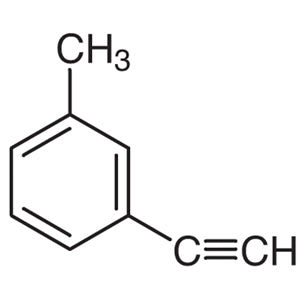
3-Ethynyltoluene from TCI is an aromatic hydrocarbon carrying a terminal ethynyl group positioned meta to a methyl substituent. Beneath this simple structure lies one of the most versatile functional groups in modern organic chemistry: the terminal alkyne. The relatively acidic acetylenic proton can be removed to generate metal acetylides, while the carbon–carbon triple bond readily participates in cross-coupling reactions, cycloadditions, hydrofunctionalisation, and polymerisation. Its principal role in the laboratory is to serve as the alkyne partner that installs a tolyl fragment into a molecular framework under construction.
The characteristic that makes this compound a preferred building block is the high reactivity of the terminal alkyne combined with minimal steric hindrance around the reacting centre. In Sonogashira reactions it couples with aryl halides under palladium and copper catalysis to form conjugated arylalkyne systems. In copper-catalysed click chemistry it reacts rapidly and with excellent selectivity toward azides to give 1,4-substituted triazoles. The methyl group at the meta position contributes a mild electron-donating effect while also altering molecular packing behaviour, a factor that matters in the design of optoelectronic materials and liquid crystals.
In Indonesian laboratories this reagent is drawn upon by synthetic and materials chemistry groups building conjugated frameworks, triazole libraries, and functional aromatic scaffolds. It is typically requisitioned by university research groups, graduate synthesis programmes, and industrial R&D units working on organic electronic materials or medicinal chemistry intermediates. Because it belongs to the non-heterocyclic building block family, it is generally ordered alongside other coupling partners as part of a broader synthetic reagent inventory rather than as a standalone consumable.
- Sonogashira cross-coupling: the terminal alkyne couples with aryl halides under palladium and copper catalysis, delivering conjugated arylalkyne products with the tolyl fragment installed in a single step.
- Copper-catalysed azide–alkyne click chemistry: reacts rapidly and with high regioselectivity with organic azides to furnish 1,4-substituted triazoles suitable for bioconjugation and library synthesis work.
- Metal acetylide preparation: the acidic acetylenic proton is readily deprotonated to form metal acetylides that then serve as nucleophiles in carbon–carbon bond forming sequences.
- Cycloaddition and heterocycle construction: the triple bond acts as a two-carbon component in cycloaddition strategies that assemble ring systems bearing a pendant tolyl substituent.
- Optoelectronic and liquid crystal material design: the meta methyl group provides mild electron donation and modifies molecular packing, both useful handles when tuning functional material properties.
| Brand | TCI (Tokyo Chemical Industry) |
|---|---|
| CAS number | 766-82-5 |
| Molecular formula | — |
| Purity | — |
| Category | Chemistry > Building Blocks > Non-Heterocyclic Building Blocks |
| Pack sizes | supplied in TCI catalogue pack sizes under item code E0665; confirm the available option when ordering |
| Physical form | liquid |
| Storage | keep in a cool, well-ventilated area in a tightly closed container |
Store the container tightly closed in a cool, dry, well-ventilated place away from heat, open flames, sparks, and sources of ignition, and keep it separated from strong oxidising agents. Original supplier packaging or amber glass bottles with chemically resistant closures are appropriate; retain the manufacturer label and item code so material identity remains traceable. Handle all transfers inside a working fume hood while wearing safety goggles, a laboratory coat, and chemically resistant gloves. Volatile aromatic liquids should be dispensed without generating aerosols, and any residue or spent solvent must be collected as chemical waste rather than discharged to a drain. Always consult the manufacturer safety data sheet before first use.
—
Produk Terkait
-
9-([1,1'-Biphenyl]-4-yl)anthracene TCI B5717
Regular price From Rp 1.220.100,00Regular price -
4-(3-Buten-1-yl)-4'-methylbiphenyl TCI B5872
Regular price Rp 2.094.750,00Regular price -
4,4'-Bis(trans-4-propylcyclohexyl)biphenyl TCI B5881
Regular price Rp 1.565.550,00Regular price -
Biphenylene TCI B6284
Regular price From Rp 2.782.500,00Regular price -
Benzo[k]fluoranthene TCI B6317
Regular price From Rp 3.180.450,00Regular price -
Benzo[j]fluoranthene TCI B6424
Regular price From Rp 2.916.900,00Regular price -
Benzo[c]phenanthrene TCI B6541
Regular price From Rp 1.829.100,00Regular price -
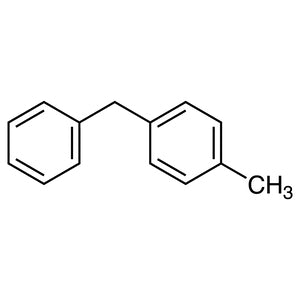
1-Benzyl-4-methylbenzene TCI B6623
Regular price From Rp 2.386.650,00Regular price
![9-([1,1'-Biphenyl]-4-yl)anthracene (CAS 323195-31-9) - TCI B5717 - AMI Scientific](http://amiscientific.com/cdn/shop/files/TCI2510B5717.jpg?v=1768815871&width=533)


![Benzo[k]fluoranthene (CAS 207-08-9) - TCI B6317 - AMI Scientific](http://amiscientific.com/cdn/shop/files/TCI2510B6317_9797284f-a326-4c13-8c48-43bc162551a1.jpg?v=1767865252&width=533)
![Benzo[j]fluoranthene (CAS 205-82-3) - TCI B6424 - AMI Scientific](http://amiscientific.com/cdn/shop/files/TCI2510B6424.jpg?v=1768193711&width=533)
![Benzo[c]phenanthrene (CAS 195-19-7) - TCI B6541 - AMI Scientific](http://amiscientific.com/cdn/shop/files/TCI2510B6541.jpg?v=1767093862&width=533)