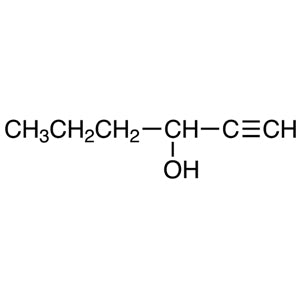
1-Hexyn-3-ol is a secondary propargylic alcohol that carries a terminal triple bond together with a hydroxyl group located on the third carbon, supplied by TCI under catalogue code H0141. The presence of two functional groups in close proximity within a single molecule makes it a highly useful bifunctional building block, because chemists can address the alkyne group and the alcohol group either separately or in combination. In the laboratory, this compound serves as a starting material for the synthesis of intermediates, as a precursor for ring formation, and as a substrate for studying propargylic transformation reactions that are widely developed in modern organic chemistry.
The characteristics that lead researchers to select this material include that dual reactivity, the acidity of the acetylenic proton which allows acetylide formation, and the secondary hydroxyl group which can be oxidised, substituted, or protected according to the requirements of the synthetic design. This bifunctional nature cuts down the number of steps that must be carried out compared with starting from a simple alkyne. The compound is supplied as a liquid, so dispensing is practical, and the 5 mL and 25 mL pack sizes accommodate both small-scale preliminary experiments and larger routine synthesis work.
In Indonesian laboratories, 1-Hexyn-3-ol is typically handled in university research groups, postgraduate organic synthesis programmes, and industrial research units that develop fine chemical intermediates. The smaller pack size suits method development and trial reactions where only a few millilitres are consumed, while the larger pack supports repeated preparations once a route has been established. Supply through TCI with a clear catalogue code makes reordering of the same grade straightforward across successive project stages.
TCI brochures (PDF)
- Click Chemistry 2026-09-08 · p. 13
- Preparation of synthetic intermediates: the combination of an alkyne and a hydroxyl group in one molecule allows chemists to build more elaborate structures without first installing a second functional group.
- Ring-formation precursor chemistry: the terminal triple bond provides a reactive handle for cyclisation strategies, while the neighbouring alcohol can direct or participate in the ring-closing step.
- Propargylic transformation studies: the secondary propargylic alcohol arrangement makes this compound a representative substrate for investigating substitution and rearrangement reactions at the propargylic position.
- Acetylide generation experiments: the acidic acetylenic proton can be removed with a suitable base to form acetylide species used for carbon–carbon bond construction in further synthetic sequences.
- Selective functional group manipulation: the secondary hydroxyl group can be oxidised, substituted, or protected independently, making the material useful for teaching and testing protecting group strategies.
| Brand | TCI, supplied under catalogue code H0141 |
|---|---|
| CAS number | 105-31-7 |
| Molecular formula | — |
| Purity | — |
| Category | Chemistry > Building Blocks > Non-Heterocyclic Building Blocks |
| Pack sizes | 5 mL and 25 mL |
| Physical form | liquid, allowing practical volumetric dispensing |
| Storage | keep in the closed original container under the conditions indicated on the product label |
Store the material in its tightly closed original container, kept in a cool, well ventilated chemical store away from heat sources, ignition sources, and direct sunlight. Because the product is a liquid, glass bottles with chemically resistant closures are appropriate, and containers should be resealed promptly after each withdrawal to limit evaporation and contamination. All handling should take place in a working fume hood, with gloves, safety glasses, and a laboratory coat worn at all times. Dispense only the volume required for the experiment, label any secondary containers clearly, and follow the safety data sheet supplied with the product for detailed exposure controls and disposal procedures.
—
Product Categories
Produk Terkait
-
5-Hexyn-1-ol TCI H0687
Regular price From Rp 2.147.250,00Regular priceRp 1.501.500,00Sale price From Rp 2.147.250,00 -
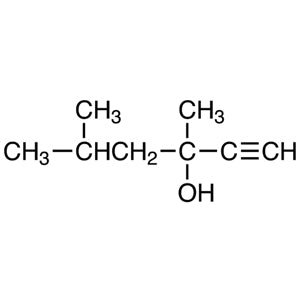
3,5-Dimethyl-1-hexyn-3-ol TCI D0737
Regular price From Rp 505.050,00Regular priceRp 352.800,00Sale price From Rp 505.050,00 -
3-Hexyn-1-ol TCI H0460
Regular price From Rp 6.122.550,00Regular priceRp 4.280.850,00Sale price From Rp 6.122.550,00 -
10-Undecyn-1-ol TCI U0055
Regular price Rp 3.446.100,00Regular priceRp 2.409.750,00Sale price Rp 3.446.100,00 -
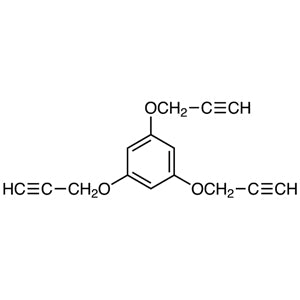
1,3,5-Tris(2-propynyloxy)benzene TCI T3135
Regular price From Rp 4.056.150,00Regular priceRp 2.836.050,00Sale price From Rp 4.056.150,00 -
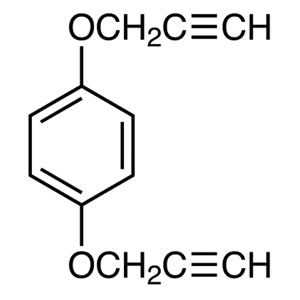
1,4-Bis(2-propynyloxy)benzene TCI B4607
Regular price From Rp 2.597.700,00Regular priceRp 1.816.500,00Sale price From Rp 2.597.700,00 -
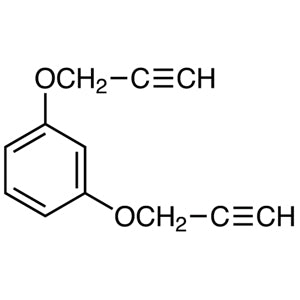
1,3-Bis(2-propynyloxy)benzene TCI B4521
Regular price From Rp 2.332.050,00Regular priceRp 1.630.650,00Sale price From Rp 2.332.050,00 -
3-Butyn-2-ol TCI B1001
Regular price From Rp 928.200,00Regular priceRp 648.900,00Sale price From Rp 928.200,00