TCI H0524 3-Hydroxy-4-methoxycinnamic Acid is a substituted cinnamic acid belonging to the phenolic acid family, a group of compounds commonly found in plants and widely studied in natural product research. Its molecule contains an aromatic ring bearing adjacent hydroxyl and methoxy groups, connected to a conjugated propenoic acid side chain. In the laboratory this compound plays a dual role: as a building block in organic synthesis for constructing cinnamate derivatives, and as a reference standard in the analysis of phenolic compound content in plant extracts and food products.
The property that makes this material a frequent choice is the presence of three reactivity centres within a single molecule. The carboxylic acid group can be esterified or converted into an amide to yield derivatives with different solubility behaviour, the phenolic hydroxyl group provides a site for alkylation or acylation while also contributing hydrogen-donating capability, and the conjugated double bond opens opportunities for addition, reduction, and coupling reactions. That same conjugated system gives the compound a characteristic ultraviolet absorption, so it is easily monitored with an ultraviolet detector during chromatographic work.
In Indonesian laboratories, this material is typically encountered in university and institutional research settings where natural product chemistry, phytochemistry, and food analysis are active fields. It is used by synthetic chemistry groups preparing cinnamate analogues, and by analytical laboratories that need a defined phenolic acid against which extract components can be compared. Its combination of synthetic utility and analytical usefulness makes it a practical item to keep in a shared chemical inventory.
- Synthesis of cinnamate derivatives: the carboxylic acid group can be esterified or amidated, allowing researchers to build a series of related compounds with deliberately varied solubility characteristics from one starting material.
- Reference standard in phenolic content analysis: as a defined phenolic acid, it serves as a comparison standard when quantifying phenolic compounds in plant extracts and food product samples.
- Chromatographic method development: the conjugated system produces a characteristic ultraviolet absorption, making the compound straightforward to track with an ultraviolet detector while retention and separation conditions are being optimised.
- Selective functionalisation studies: the phenolic hydroxyl group offers a distinct site for alkylation or acylation, letting chemists explore protecting group strategies and selectivity between the hydroxyl and carboxyl positions.
- Natural product chemistry research: as a member of a compound class common in plants, it supports investigations into substituted cinnamic acids and the preparation of structural analogues for further study.
| Brand | TCI (Tokyo Chemical Industry) |
|---|---|
| CAS number | 537-73-5 |
| Molecular formula | — |
| Purity | — |
| Category | Chemistry > Building Blocks > Non-Heterocyclic Building Blocks |
| Pack sizes | available in standard research-scale packaging; please confirm the current pack size options when ordering |
| Physical form | — |
| Storage | store in a cool, dry place in a tightly closed container, protected from light |
- Product Code: H0524
Store this product in a tightly closed original container in a cool, dry, well-ventilated area, away from direct sunlight and sources of heat or ignition. Phenolic compounds are best protected from prolonged light exposure, so keeping the container closed and shielded helps preserve sample integrity. Handle the material in a fume hood or a well-ventilated workspace, and wear standard personal protective equipment including safety glasses, gloves, and a laboratory coat. Avoid generating dust, and avoid contact with skin and eyes. Keep the container separated from strong oxidising agents and strong bases. Always consult the manufacturer's safety data sheet before first use, and dispose of residues and contaminated materials in accordance with applicable chemical waste procedures.
—
Produk Terkait
-
tert-Butyl12-Hydroxy-4,7,10-trioxadodecanoate TCI B5587
Regular price From Rp 2.279.550,00Regular price -
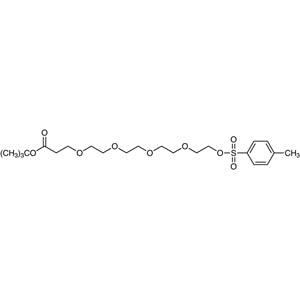
tert-Butyl1-(Tosyloxy)-3,6,9,12-tetraoxapentadecan-15-oate TCI B5902
Regular price From Rp 5.539.800,00Regular price -
1,6-Bis(4-carboxyphenoxy)hexane TCI B6150
Regular price From Rp 2.625.000,00Regular price -
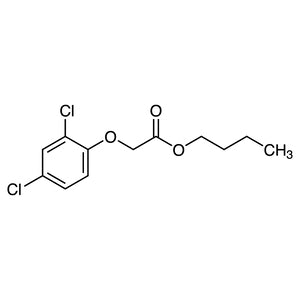
Butyl2-(2,4-Dichlorophenoxy)acetate TCI B6492
Regular price Rp 2.969.400,00Regular price -
tert-Butyl4-[4-(1-Hydroxyethyl)-2-methoxy-5-nitrophenoxy]butanoate TCI B6668
Regular price Rp 8.082.900,00Regular price -
tert-Butyl4-(4-Acetyl-2-methoxy-5-nitrophenoxy)butanoate TCI B6669
Regular price Rp 4.957.050,00Regular price -
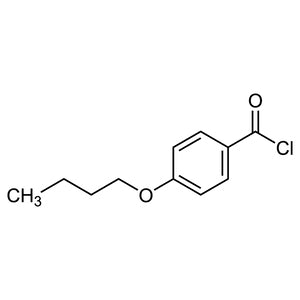
4-ButoxybenzoylChloride TCI B6724
Regular price Rp 3.312.750,00Regular price


![tert-Butyl 4-[4-(1-Hydroxyethyl)-2-methoxy-5-nitrophenoxy]butanoate (CAS 1410809-16-3) - TCI B6668 - AMI Scientific](http://amiscientific.com/cdn/shop/files/TCI2510B6668.jpg?v=1767094102&width=533)