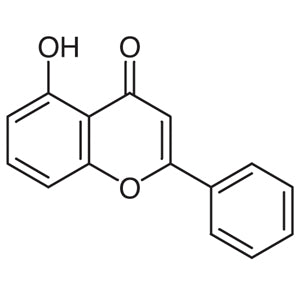
5-Hydroxyflavone is a simple flavone compound bearing a hydroxyl group at the 5-position of the chromone nucleus. This structure serves as the basic framework for thousands of natural flavonoids distributed widely throughout the plant kingdom, which places the compound in an important position both as a heterocyclic building block and as a structural model in natural product chemistry research. In the laboratory, it is used to construct flavonoid derivatives through reactions at the hydroxyl group, to study the spectroscopic properties of the flavone nucleus, and as a comparator in the analysis of flavonoid content.
The feature that makes this compound particularly interesting is the position of the hydroxyl group at C-5, adjacent to the carbonyl group at C-4. This proximity allows the formation of a strong intramolecular hydrogen bond, a feature that appreciably influences the acidity of the hydroxyl group, the stability of the molecule, its chelating behaviour toward metal ions, and its fluorescence properties. These characteristics make 5-hydroxyflavone a frequently used model for studying excited-state proton transfer phenomena and the formation of metal–flavonoid complexes, giving it a clear advantage over flavone analogues that lack this structural arrangement.
As a stable solid that is easy to weigh out, the compound is practical to use in synthetic work carried out in Indonesian laboratories. University research groups, natural product chemistry laboratories, and analytical facilities working on plant-derived flavonoids commonly require a well-defined reference structure of this kind. Its handling convenience makes it suitable for routine bench work, method development, and teaching laboratories where reproducible preparation of solutions and reaction mixtures is required.
- Flavonoid derivative synthesis: the free hydroxyl group at C-5 provides a reactive handle for alkylation, acylation, and related transformations that build more elaborate flavonoid structures from a well-defined starting framework.
- Spectroscopic studies of the flavone nucleus: the compound offers a clean, structurally simple system for examining the ultraviolet, infrared, and nuclear magnetic resonance characteristics associated with the core chromone skeleton.
- Excited-state proton transfer research: the strong intramolecular hydrogen bond between the C-5 hydroxyl and the C-4 carbonyl makes this molecule a classical model system for investigating photophysical proton transfer behaviour.
- Metal–flavonoid complex formation: the adjacent hydroxyl and carbonyl functions create a chelating arrangement suitable for studying how flavonoids coordinate metal ions and how such complexation alters molecular properties.
- Analytical comparison in flavonoid content work: the compound serves as a structural comparator when identifying, characterising, or confirming flavonoid components isolated from plant material during natural product analysis.
| Brand | TCI |
|---|---|
| CAS number | 491-78-1 |
| Molecular formula | — |
| Purity | — |
| Category | Chemistry > Building Blocks > Heterocyclic Building Blocks |
| Pack sizes | available in standard TCI research pack sizes; please confirm the currently listed options when ordering |
| Physical form | stable solid, easy to weigh out |
| Storage | keep in a closed container under the conditions indicated on the manufacturer's label |
- Catalogue code: H1238
Store the container tightly closed in a cool, dry, and well-ventilated place, away from direct sunlight, moisture, and sources of ignition, and follow any specific conditions stated on the manufacturer's label. Amber glass or the original supplier container is suitable for keeping the solid protected from light and humidity. Handle the material in a fume hood or a well-ventilated area, wearing a laboratory coat, safety glasses, and chemical-resistant gloves. Use clean, dry spatulas when weighing to avoid contaminating the bulk material, close the container immediately after use, and consult the manufacturer's safety data sheet before first handling and for waste disposal guidance.
—
Produk Terkait
-
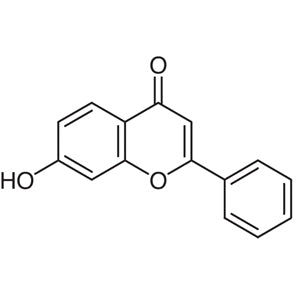
7-Hydroxyflavone TCI H0852
Regular price From Rp 903.000,00Regular price -
6-Hydroxyflavone TCI H0851
Regular price From Rp 505.050,00Regular price -
3-Hydroxyflavone TCI H0379
Regular price From Rp 1.140.300,00Regular price -
6-Hydroxyflavanone TCI H1027
Regular price From Rp 1.298.850,00Regular price -
7-Hydroxyflavanone TCI H1006
Regular price Rp 1.776.600,00Regular price -
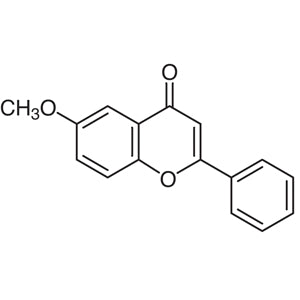
6-Methoxyflavone TCI M1346
Regular price From Rp 1.220.100,00Regular price -
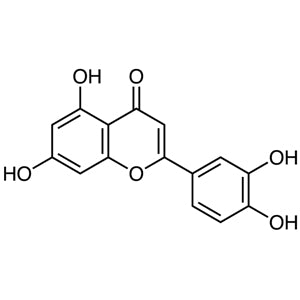
3',4',5,7-Tetrahydroxyflavone TCI T2682
Regular price From Rp 1.565.550,00Regular price -
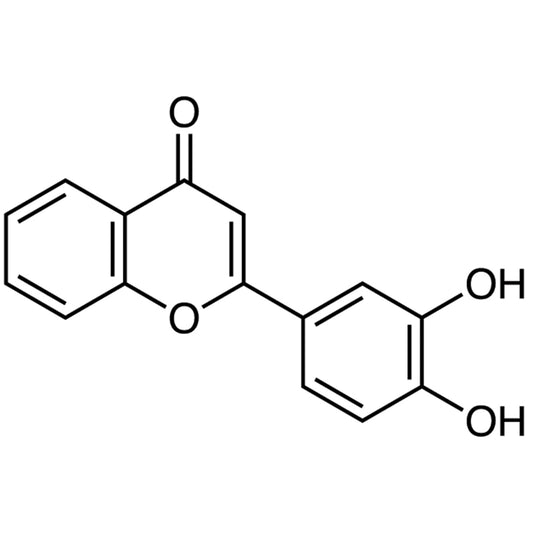
3',4'-Dihydroxyflavone TCI D4884
Regular price From Rp 2.359.350,00Regular price