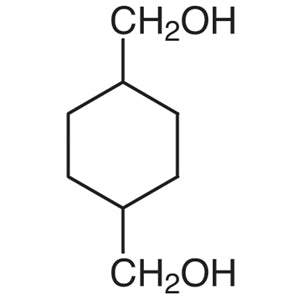
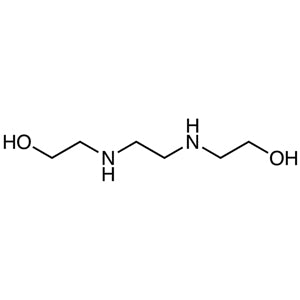
TCI H1253 with CAS number 74058-21-2 is 4-(2-Hydroxyethyl)cyclohexanol, supplied as a mixture of cis and trans isomers. This compound is an alicyclic diol belonging to the non-heterocyclic building blocks category, carrying a secondary hydroxyl group on the cyclohexane ring and a primary hydroxyl group at the end of the ethyl side chain. In organic synthesis laboratories, a molecule of this type serves as a linking scaffold that provides two attachment points with differing reactivity, while also contributing structural rigidity from the saturated cyclohexane ring.
The advantage of this material lies in the difference in reactivity between the primary and secondary alcohol. The primary alcohol at the end of the chain is more sterically accessible and therefore reacts faster in esterification, tosylation, and etherification, allowing researchers to perform selective differentiation without the need for complicated protection strategies. The secondary alcohol on the ring can be oxidised to a ketone, opening a route to further transformations. Supplying the compound as a cis and trans mixture makes the material economical and suitable for applications that do not demand single-stereoisomer purity.
In Indonesian laboratories, this building block fits routine synthetic work in university research groups, industrial R&D units, and contract synthesis facilities. It is typically used where a bifunctional alicyclic linker is required, such as polymer synthesis or the preparation of intermediates, rather than in work that depends on a single defined stereochemistry. Because the material is offered as an isomer mixture, it suits exploratory and scale-up chemistry where cost efficiency matters more than stereochemical resolution.
- Selective mono-functionalisation: the primary alcohol reacts preferentially in esterification and tosylation, letting chemists modify one end of the molecule while leaving the ring hydroxyl untouched.
- Polymer synthesis: as a difunctional diol it can be incorporated into polyester or polyurethane-type chains, with the saturated cyclohexane ring contributing rigidity to the resulting backbone.
- Intermediate preparation: the two hydroxyl groups give a convenient starting point for building more elaborate structures in multi-step organic synthesis routes.
- Oxidation chemistry: the secondary alcohol on the cyclohexane ring can be oxidised to the corresponding ketone, opening additional downstream transformation pathways for the researcher.
- Linker and spacer construction: the molecule supplies two attachment points of differing reactivity, making it useful for joining fragments where controlled, stepwise coupling is required.
| Brand | TCI |
|---|---|
| CAS number | 74058-21-2 |
| Molecular formula | — |
| Purity | — |
| Category | Chemistry > Building Blocks > Non-Heterocyclic Building Blocks |
| Pack sizes | available in standard TCI research-scale packaging; please confirm the currently offered size when ordering |
| Physical form | — |
| Storage | keep in the tightly closed original container as indicated on the product label |
- Chemical name: 4-(2-Hydroxyethyl)cyclohexanol (cis- and trans- mixture)
Store the container tightly closed in a cool, dry, and well-ventilated area, away from direct sunlight and from sources of heat or ignition. Keep the material in its original supplier container or in a chemically compatible glass vessel with a secure closure, since alcohols can absorb moisture from the air when left open. Handle inside a fume hood and wear standard laboratory personal protective equipment, including safety goggles, a lab coat, and chemical-resistant gloves. Avoid contact with skin and eyes and avoid breathing vapours. Always consult the manufacturer's Safety Data Sheet before use, and follow local institutional procedures for chemical waste disposal.
—
Produk Terkait
-
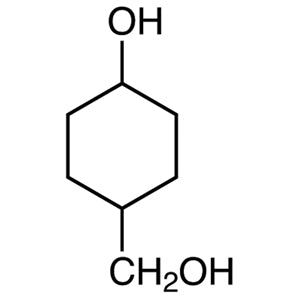
4-(Hydroxymethyl)cyclohexanol(cis-andtrans-mixture) TCI H1257
Regular price From Rp 6.758.850,00Regular price -
1,3-Cyclopentanediol(cis-andtrans-mixture) TCI C2534
Regular price Rp 3.870.300,00Regular price -
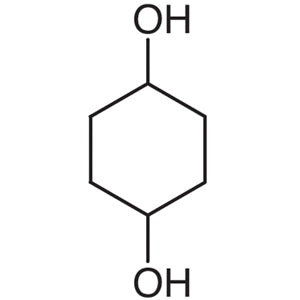
1,4-Cyclohexanediol(cis-andtrans-mixture) TCI C0482
Regular price From Rp 530.250,00Regular price -
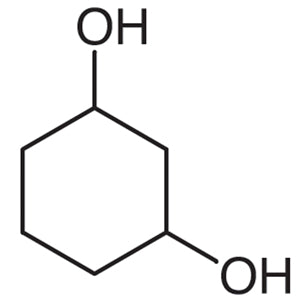
1,3-Cyclohexanediol(cis-andtrans-mixture) TCI C0481
Regular price From Rp 2.625.000,00Regular price -
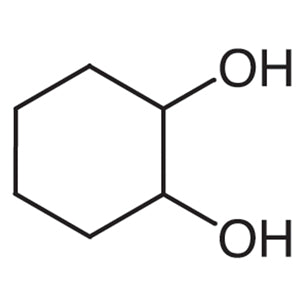
1,2-Cyclohexanediol(cis-andtrans-mixture) TCI C0480
Regular price From Rp 2.199.750,00Regular price -
1,4-Cyclohexanedimethanol(cis-andtrans-mixture) TCI C0479
Regular price From Rp 477.750,00Regular price -
4,4'-Bicyclohexanol(mixtureofisomers) TCI B1621
Regular price From Rp 1.565.550,00Regular price -
N,N'-Bis(2-hydroxyethyl)ethylenediamine TCI B3807
Regular price Rp 3.498.600,00Regular price