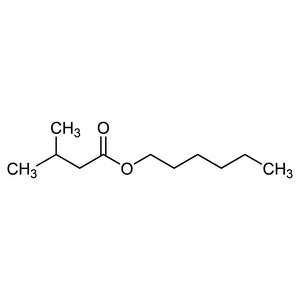
Hexyl 3-Methylbutanoate, listed under CAS number 10032-13-0, is an ester compound formed from the combination of a hexyl-chain alcohol group with 3-methylbutanoic acid (isovaleric acid). In the laboratory, this compound serves as a non-heterocyclic building block, meaning a simple starting molecule that researchers use to assemble more complex structures. Beyond synthetic work, medium-chain esters of this type are frequently employed as reference compounds in aroma studies, volatile fruit component analysis, and research into the chemical interactions between plants and insects. Its availability in a characterized form makes identification and quantification work considerably more focused and reliable.
The principal characteristics that make this compound a preferred choice are its ester nature, which remains relatively stable under neutral conditions, its ready solubility in organic solvents, and its sufficient volatility, making it well suited to analysis by gas chromatography. The branched chain on the acyl portion imparts a distinctive character that can be differentiated from comparable linear esters when observed through mass spectra or retention times. Its non-polar character also facilitates extraction from aqueous matrices, while the ester group remains reactive enough to participate in further transformation when required by a synthetic route.
In Indonesian laboratories, this ester is typically encountered in academic research groups, food and flavour science programmes, and analytical service units that handle volatile profiling work. It is commonly used to prepare calibration standards for gas chromatography, to confirm peak identity in fruit and fermentation samples, and as an intermediate in small-scale organic synthesis. University and institutional laboratories value a well-characterized supply because it removes ambiguity from method development and allows results to be compared consistently between studies.
- Non-heterocyclic building block in organic synthesis, where its simple ester framework and branched acyl group provide a defined starting point for constructing more complex target molecules.
- Reference compound in aroma and flavour research, since the characterized material allows researchers to anchor sensory and instrumental observations to a known, reproducible chemical identity.
- Volatile fruit component analysis, where its adequate volatility and defined retention behaviour make it suitable for confirming the presence of medium-chain esters in sample chromatograms.
- Gas chromatography standard preparation, because the compound is readily soluble in organic solvents and produces a mass spectrum distinguishable from comparable linear esters of similar molecular size.
- Plant–insect chemical interaction studies, where medium-chain esters of this type are commonly used to investigate volatile-mediated signalling between vegetation and insect populations under controlled conditions.
| Brand | TCI |
|---|---|
| CAS number | 10032-13-0 |
| Molecular formula | — |
| Purity | — |
| Category | Chemistry > Building Blocks > Non-Heterocyclic Building Blocks |
| Pack sizes | available in standard TCI research-scale packaging; please confirm the current size options when ordering |
| Physical form | — |
| Storage | keep in a tightly closed container in a cool, well-ventilated area away from ignition sources |
- Catalogue number: H1921
Store the container tightly closed in a cool, dry and well-ventilated location, away from heat, direct sunlight and sources of ignition. Because the material is a volatile organic ester, amber glass bottles with chemically resistant caps are appropriate, and containers should be reclosed immediately after dispensing to limit evaporative loss and moisture ingress. Handle inside a fume hood, wear safety glasses, gloves and a laboratory coat, and avoid generating aerosols or open transfers near open flames. Keep the material separated from strong oxidizing agents and strong acids or bases, which can promote ester degradation. Always consult the manufacturer's safety data sheet before use and dispose of residues through the laboratory's designated chemical waste channel.
—
Produk Terkait
-
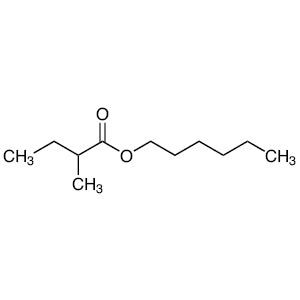
Hexyl2-Methylbutanoate TCI H1788
Regular price Rp 2.174.550,00Regular price -
Pentyl3-Methylbutanoate TCI A3780
Regular price From Rp 2.332.050,00Regular price -
3-Methylbutyl2-Methylbutanoate TCI M3281
Regular price Rp 1.220.100,00Regular price -
HexylAcetate TCI A0032
Regular price From Rp 477.750,00Regular price -
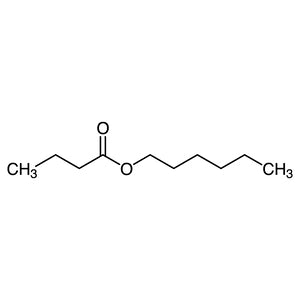
HexylButyrate TCI B1891
Regular price From Rp 980.700,00Regular price -
HexylBenzoate TCI B1076
Regular price Rp 505.050,00Regular price -
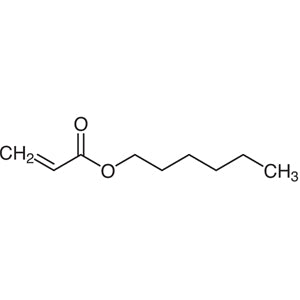
HexylAcrylate(stabilizedwithHQ) TCI A1257
Regular price From Rp 875.700,00Regular price -
HexylAcetoacetate TCI A0913
Regular price Rp 2.041.200,00Regular price