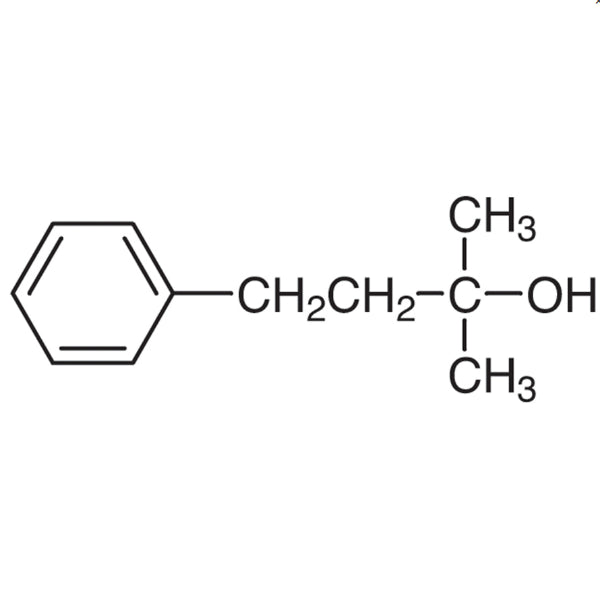
TCI M0398 2-Methyl-4-phenyl-2-butanol is an aromatic tertiary alcohol carrying a phenyl group at the end of the chain and a hydroxyl group on a branched tertiary carbon. This structure makes it both a useful non-heterocyclic building block and a compound of interest for fragrance materials research, since aromatic-aliphatic alcohols of this class are widely recognised in the flavour and fragrance industry. In the laboratory, the material is used as a synthesis starting material, as a comparison compound in the analysis of perfume components, and as a model substrate in studies of tertiary alcohols undergoing dehydration or substitution.
The characteristics that lead researchers to select this compound are its relatively good structural stability combined with the reactivity typical of tertiary alcohols. The tertiary hydroxyl group tends to resist oxidation to an aldehyde or acid, yet it readily undergoes elimination to an alkene as well as substitution through carbocation pathways, which makes it a highly informative substrate for both teaching and research. The benzene ring in the structure contributes chromophoric character, so the compound is easily monitored with an ultraviolet detector in liquid chromatography.
In Indonesian laboratories, this building block is generally handled in organic synthesis, fragrance chemistry, and analytical method development work across university research groups, institutional laboratories, and industrial R&D units. It is typically drawn upon in small quantities for reaction development, for preparing reference solutions used in chromatographic comparison, and for structured practical work where the distinctive behaviour of tertiary alcohols needs to be demonstrated clearly and reproducibly.
- Organic synthesis starting material — the phenyl-substituted skeleton and reactive tertiary hydroxyl group allow it to be carried forward into a range of downstream non-heterocyclic target structures.
- Fragrance and flavour research — as an aromatic-aliphatic alcohol from a class widely recognised in the industry, it supports investigation of structure and odour relationships in perfumery chemistry.
- Reference compound in perfume component analysis — it serves as a comparison standard when identifying or confirming individual constituents within complex fragrance mixtures during routine analytical work.
- Model substrate for dehydration and substitution studies — the tertiary hydroxyl readily undergoes elimination to alkenes and carbocation-mediated substitution, making reaction pathways straightforward to follow experimentally.
- Liquid chromatography method development — the benzene ring provides chromophoric character, so the compound is easily monitored with an ultraviolet detector during separation and detection optimisation.
| Brand | TCI (Tokyo Chemical Industry) |
|---|---|
| CAS number | 103-05-9 |
| Molecular formula | — |
| Purity | — |
| Category | Chemistry > Building Blocks > Non-Heterocyclic Building Blocks |
| Pack sizes | available in standard laboratory research pack sizes; please confirm the currently listed options when ordering |
| Physical form | — |
| Storage | store in a tightly closed container in a cool, dry, well-ventilated area away from ignition sources |
- Catalogue number: M0398
Store the container tightly closed in a cool, dry and well-ventilated place, away from heat, direct sunlight, and sources of ignition. Keep the material in its original tightly sealed bottle or in a chemically compatible glass container fitted with a secure cap, and label all transferred portions clearly. Handle inside a fume hood, and wear safety glasses, chemical-resistant gloves, and a laboratory coat. Avoid contact with skin and eyes and avoid inhaling vapours. Keep away from strong oxidising agents and strong acids. Always consult the manufacturer's Safety Data Sheet before use, and follow institutional procedures for the disposal of organic chemical waste.
—
Produk Terkait
-
1-Bromo-2-butanol(containsca.30%2-Bromo-1-butanol) TCI B0932
Regular price Rp 2.359.350,00Regular price -
1-Phenyl-1-butanol TCI P1682
Regular price From Rp 1.220.100,00Regular price -
4-Phenyl-1-butanol TCI P1275
Regular price From Rp 795.900,00Regular price -
4-Phenyl-2-butanol TCI P0876
Regular price Rp 3.260.250,00Regular price -
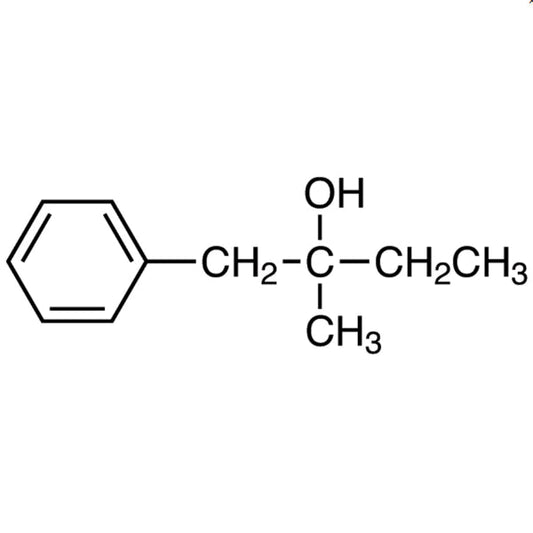
2-Methyl-1-phenyl-2-butanol TCI M2010
Regular price Rp 795.900,00Regular price -
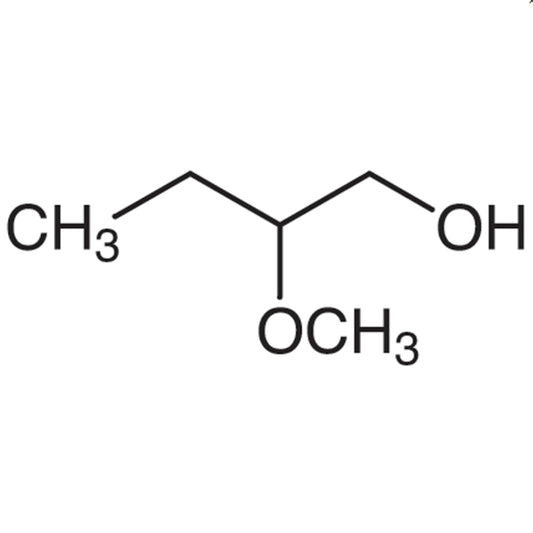
2-Methoxy-1-butanol TCI M1497
Regular price From Rp 3.630.900,00Regular price -
1-Methoxy-2-butanol TCI M0747
Regular price From Rp 980.700,00Regular price -
3-Methoxy-1-butanol TCI M0109
Regular price From Rp 505.050,00Regular price