2-Methoxy-5-(trifluoromethoxy)benzaldehyde is a fluorinated benzaldehyde carrying both a methoxy group and a trifluoromethoxy group on its aromatic ring. It belongs to the family of fluorinated building blocks that have become highly sought after in modern medicinal chemistry and agrochemical research. Its role in the laboratory is to serve as a reactive entry point for constructing larger molecules, because the aldehyde group is one of the most versatile functional handles in organic synthesis and can be converted into amines, alcohols, olefins, carboxylic acids, and a wide range of heterocyclic ring systems.
The advantages that make this compound a preferred choice come largely from the trifluoromethoxy group. This substituent significantly increases the lipophilicity of the molecule and is known to improve resistance to oxidative metabolism, two properties that are highly valued when designing candidate active compounds. The electron-withdrawing character of the group also modulates the reactivity of the aldehyde and the substitution pattern on the ring, while the methoxy group in the ortho position exerts an opposing electronic effect, producing a unique electronic combination. Disubstitution patterns of this kind are difficult to build from scratch, so ready availability saves considerable synthetic effort.
In Indonesian laboratories, this building block is typically used by university research groups, pharmaceutical and agrochemical R&D units, and contract synthesis laboratories working on fluorinated analogues. It is normally purchased in small research quantities for exploratory route development, analogue series preparation, and method optimisation rather than bulk production. Because obtaining specialised fluorinated intermediates domestically can be difficult, sourcing a catalogue-grade material shortens project timelines considerably.
- Medicinal chemistry analogue synthesis: the aldehyde handle allows rapid diversification into amine, alcohol, and heterocyclic analogues while the trifluoromethoxy group contributes lipophilicity and metabolic stability to the resulting candidates.
- Reductive amination routes: the aldehyde reacts cleanly with primary and secondary amines to give secondary and tertiary amines, a workhorse transformation for assembling fluorinated amine libraries in discovery programmes.
- Heterocycle construction: the compound serves as a carbonyl partner in condensation and cyclisation reactions that build imidazoles, quinolines, oxazoles, and related rings bearing a fluorinated aromatic substituent.
- Agrochemical research intermediates: fluorinated aromatic cores of this type are frequently incorporated into crop protection candidates, where the trifluoromethoxy group influences uptake, persistence, and biological activity profiles.
- Olefination and chain extension chemistry: the aldehyde undergoes Wittig, Horner-Wadsworth-Emmons, and aldol-type reactions, extending the carbon framework while retaining the difficult-to-install dual substitution pattern intact.
| Brand | TCI (Tokyo Chemical Industry), catalogue code M1945 |
|---|---|
| CAS number | 145742-65-0 |
| Molecular formula | — |
| Purity | — |
| Category | Chemistry > Building Blocks > Fluorinated Building Blocks |
| Pack sizes | available in standard research-scale catalogue pack sizes; please confirm the currently listed options when ordering |
| Physical form | — |
| Storage | keep in a cool, dark place in a tightly closed container |
- Chemical class: fluorinated benzaldehyde bearing methoxy and trifluoromethoxy substituents
Store the container tightly closed in a cool, dark, well-ventilated area, away from heat sources, ignition sources, and direct sunlight. Keep it separate from strong oxidising agents, strong acids, and strong bases. The original amber or opaque supplier container is the most suitable storage vessel; if transferring, use clean, dry, chemically compatible glassware with a secure closure and label it clearly. Handle inside a fume hood while wearing safety goggles, chemical-resistant gloves, and a laboratory coat. Aldehydes can be sensitive to air and moisture over time, so minimise exposure by closing the container promptly after use. Consult the manufacturer's safety data sheet before first use and dispose of residues and contaminated materials through the appropriate chemical waste stream.
—
Produk Terkait
-
2-(Trifluoromethoxy)benzaldehyde TCI T2302
Regular price Rp 2.041.200,00Regular price -
4-(Trifluoromethoxy)benzaldehyde TCI T2256
Regular price From Rp 1.378.650,00Regular price -
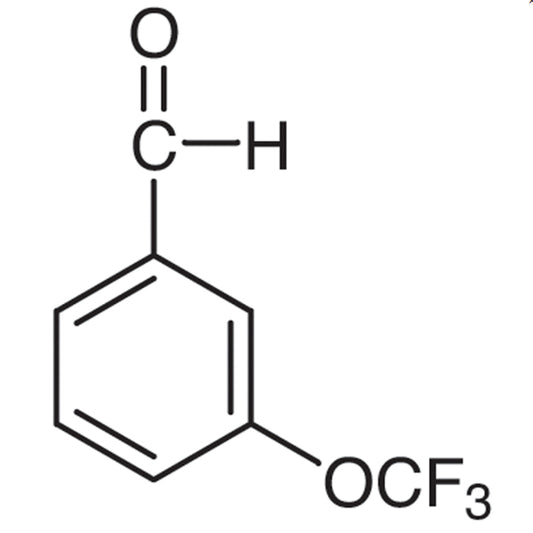
3-(Trifluoromethoxy)benzaldehyde TCI T1824
Regular price From Rp 1.829.100,00Regular price -
4-Methoxy-2-(trifluoromethyl)benzaldehyde TCI M2162
Regular price Rp 955.500,00Regular price -
4-(Trifluoromethoxy)phenylaceticAcid TCI T3664
Regular price Rp 1.724.100,00Regular price -
3-(Trifluoromethoxy)benzenesulfonylChloride TCI T3508
Regular price From Rp 530.250,00Regular price -
2'-(Trifluoromethoxy)acetophenone TCI T2794
Regular price From Rp 5.990.250,00Regular price -
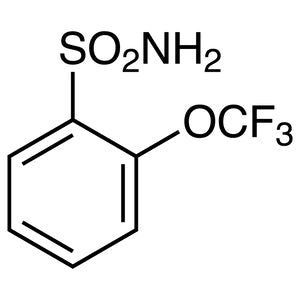
2-(Trifluoromethoxy)benzenesulfonamide TCI T2604
Regular price From Rp 637.350,00Regular price