Ethyl (E)-Cinnamate from TCI is the ethyl ester of cinnamic acid, with the trans (E) configuration at its carbon–carbon double bond. It occurs naturally in several essential oils and spices and has a characteristic sweet aroma. In synthesis laboratories it serves as a non-heterocyclic building block. It provides a conjugated aromatic system joined to an unsaturated ester. Chemists use this system widely for addition reactions, hydrogenation, cyclisation and building phenylpropanoid frameworks.
Researchers choose this compound because its α,β-unsaturated ester is conjugated with a phenyl ring, which makes the beta position electrophilic. As a result, it can act as both a Michael acceptor and a dienophile. Its double bond is also a standard substrate for asymmetric hydrogenation, dihydroxylation, epoxidation and cyclopropanation. Because it has long been used as a model substrate, results are easy to compare with published literature. The cinnamate chromophore also absorbs ultraviolet light, so derivatives of this compound are studied in research on UV-absorbing materials and photodimerisation.
In Indonesia, Ethyl (E)-Cinnamate has a special link to natural product research. Cinnamate derivatives are found in local medicinal and aromatic plants, so university and research institute laboratories often use this compound as a reference or comparison standard. They use it when isolating, identifying and modifying natural cinnamate esters. Organic chemistry groups also use it in teaching and research on conjugated addition reactions, catalytic hydrogenation and the synthesis of phenylpropanoid derivatives. This makes it a practical, well-documented starting material for Indonesian laboratories that work in both synthesis and natural products.
- Michael addition studies: the beta carbon is electrophilic because it is conjugated with the phenyl ring, so the compound is a dependable acceptor for testing nucleophiles and new catalysts.
- Asymmetric hydrogenation benchmarking: its well-characterised trans double bond makes it a standard model substrate, so new catalyst results are easy to compare with published literature.
- Oxidation of the double bond: it is widely used for dihydroxylation and epoxidation studies, giving functionalised phenylpropanoid intermediates for further synthetic steps in research laboratories.
- Cycloaddition and cyclopropanation research: the conjugated alkene acts as a dienophile and a cyclopropanation substrate, which supports work on building ring systems and studying stereoselectivity.
- UV absorber and photodimerisation studies: the cinnamate chromophore absorbs ultraviolet light, so the compound and its derivatives suit photochemistry research and the development of UV-absorbing materials.
| Brand | TCI (product code C0359) |
|---|---|
| CAS number | 4192-77-2 |
| Molecular formula | — |
| Purity | — |
| Category | Chemistry > Building Blocks > Non-Heterocyclic Building Blocks |
| Pack sizes | TCI standard pack sizes; please confirm current availability with AMI Scientific |
| Physical form | liquid at room temperature; see the TCI Certificate of Analysis for details |
| Storage | keep tightly closed in a cool, dark, well-ventilated place |
Store Ethyl (E)-Cinnamate in its original tightly closed container in a cool, dry, dark and well-ventilated area. Keep it away from heat sources, open flames, direct sunlight and strong oxidising agents. Glass or other chemically compatible containers with secure caps are recommended to limit evaporation and contamination. Handle the material in a fume hood or a well-ventilated area, and wear safety glasses, chemical-resistant gloves and a laboratory coat. Avoid contact with skin and eyes and avoid breathing vapours. Always read the TCI Safety Data Sheet before use, and dispose of waste according to local regulations and your laboratory's chemical waste procedures.
—
Produk Terkait
-
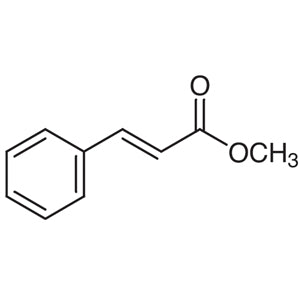
MethylCinnamate TCI C0360
Regular price Rp 582.750,00Regular priceRp 423.150,00Sale price Rp 582.750,00 -
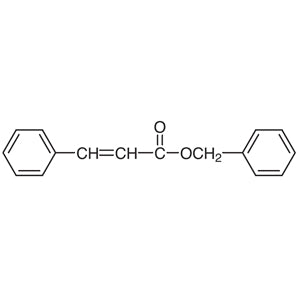
BenzylCinnamate TCI C0358
Regular price From Rp 822.150,00Regular priceRp 590.100,00Sale price From Rp 822.150,00 -
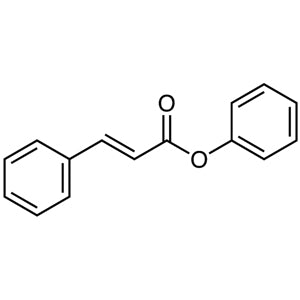
Phenyl(E)-Cinnamate TCI P2519
Regular price Rp 4.929.750,00Regular priceRp 3.462.900,00Sale price Rp 4.929.750,00 -
2-Phenylethyl(E)-Cinnamate TCI P2007
Regular price From Rp 848.400,00Regular priceRp 609.000,00Sale price From Rp 848.400,00 -
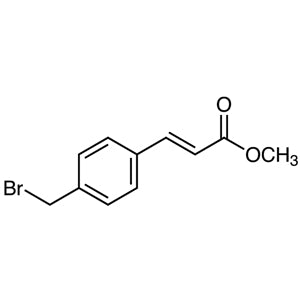
Methyl(E)-4-(Bromomethyl)cinnamate TCI M2816
Regular price Rp 6.122.550,00Regular priceRp 4.296.600,00Sale price Rp 6.122.550,00 -
IsopropylCinnamate TCI C1779
Regular price Rp 530.250,00Regular priceRp 386.400,00Sale price Rp 530.250,00 -
CinnamylCinnamate TCI C0960
Regular price Rp 2.411.850,00Regular priceRp 1.702.050,00Sale price Rp 2.411.850,00 -
VinylCinnamate(stabilizedwithMEHQ) TCI C0899
Regular price From Rp 1.856.400,00Regular priceRp 1.313.550,00Sale price From Rp 1.856.400,00