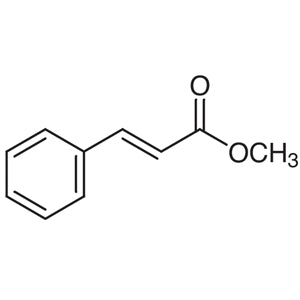
Methyl Cinnamate (TCI C0360, CAS 103-26-4) is one of the most widely used cinnamate esters in synthetic and analytical laboratories. Its conjugated ester system enables hydrolysis, transesterification, conjugate addition, dihydroxylation, and epoxidation chemistry from a single compact building block. It also serves as a reference substrate in Heck coupling, cross-metathesis, and hydrogenation studies, and as a comparison standard in essential-oil analysis. AMI Scientific offers 25 g and 500 g packs supplied in original TCI packaging.
—
| Brand | — |
|---|---|
| CAS number | — |
| Molecular formula | — |
| Purity | — |
| Category | — |
| Pack sizes | — |
| Physical form | — |
| Storage | — |
—
- Singh et al. (1991). Changes in the Linalool and Methyl Cinnamate Amounts in a Methyl Cinnamate-rich Clone ofOcimum basilicumat Different Growth Stages. Journal of Essential Oil Research doi:10.1080/10412905.1991.9697993
- Moyna et al. (1996). An Improved Procedure for the Epoxidation of Methyl Cinnamate Derivatives and Production of Acid Sensitive Epoxides. Synthetic Communications doi:10.1080/00397919608003584
- BANIK (2004). Samarium-induced reductive dimerization of methyl cinnamate: synthesis of 2,8-diamino chrysene. Tetrahedron Letters doi:10.1016/s0040-4039(04)00877-9
References were compiled automatically from Crossref and every DOI was verified to exist. AMI Scientific is not affiliated with the authors or the publishers.
Produk Terkait
-
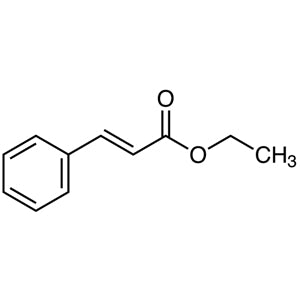
Ethyl(E)-Cinnamate TCI C0359
Regular price From Rp 3.207.750,00Regular priceRp 2.258.550,00Sale price From Rp 3.207.750,00 -
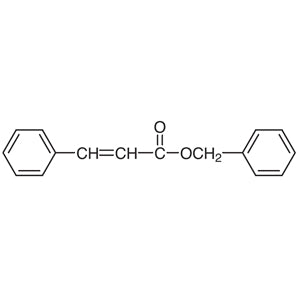
BenzylCinnamate TCI C0358
Regular price From Rp 822.150,00Regular priceRp 590.100,00Sale price From Rp 822.150,00 -
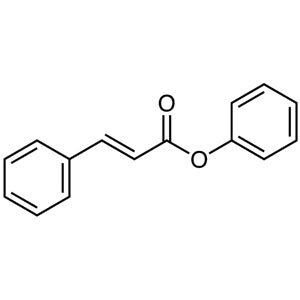
Phenyl(E)-Cinnamate TCI P2519
Regular price Rp 4.929.750,00Regular priceRp 3.462.900,00Sale price Rp 4.929.750,00 -
2-Phenylethyl(E)-Cinnamate TCI P2007
Regular price From Rp 848.400,00Regular priceRp 609.000,00Sale price From Rp 848.400,00 -
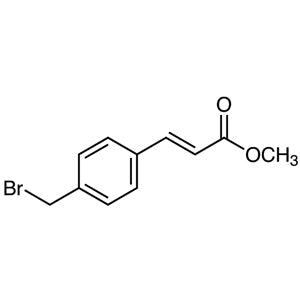
Methyl(E)-4-(Bromomethyl)cinnamate TCI M2816
Regular price Rp 6.122.550,00Regular priceRp 4.296.600,00Sale price Rp 6.122.550,00 -
IsopropylCinnamate TCI C1779
Regular price Rp 530.250,00Regular priceRp 386.400,00Sale price Rp 530.250,00 -
CinnamylCinnamate TCI C0960
Regular price Rp 2.411.850,00Regular priceRp 1.702.050,00Sale price Rp 2.411.850,00 -
VinylCinnamate(stabilizedwithMEHQ) TCI C0899
Regular price From Rp 1.856.400,00Regular priceRp 1.313.550,00Sale price From Rp 1.856.400,00