

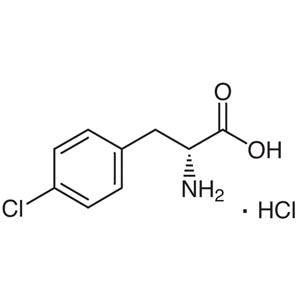
4-Chloro-D-phenylalanine Hydrochloride is a chemical compound widely used in chemical and biochemical experiments. As a derivative of the amino acid phenylalanine, it features a chlorine atom attached to the phenyl ring, making it a valuable reagent in synthetic chemistry. This compound is commonly found in laboratory settings where researchers are engaged in peptide synthesis and the study of organic compound activity. Its unique structure allows for specific chemical reactions, making it a key component in various scientific investigations.
The compound is favored for its stable chemical properties and controlled reactivity. Its hydrochloride form enhances solubility in both organic solvents and water, which simplifies its use in experimental procedures. This solubility makes it ideal for applications requiring precise dissolution and reaction conditions. Additionally, its molecular structure enables it to participate in substitution reactions, facilitating the creation of new compounds. These characteristics make it a reliable and versatile material in scientific research.
In Indonesian laboratories, 4-Chloro-D-phenylalanine Hydrochloride is frequently used in pharmaceutical research, organic synthesis, and enzymatic activity studies. Its availability and consistent quality make it a preferred choice for scientists working on drug development and biochemical processes. Researchers in Indonesia rely on this compound for its reliability and effectiveness in various experimental applications.
- Peptide Synthesis: This compound is ideal for peptide synthesis due to its structural versatility and reactivity, allowing for the creation of complex biomolecules.
- Biochemical Research: It is used in biochemical studies to investigate the behavior and interactions of organic compounds in biological systems.
- Pharmaceutical Development: Its role in organic synthesis makes it a key reagent in the development of new pharmaceutical compounds.
- Enzymatic Activity Studies: The compound is used to study how enzymes interact with and modify organic molecules in controlled environments.
- Organic Chemistry Experiments: Its solubility and reactivity make it suitable for a wide range of organic chemistry experiments and reactions.
| Brand | TCI |
|---|---|
| CAS number | 147065-05-2 |
| Molecular formula | — |
| Purity | — |
| Category | Chemistry > Chemical Biology > Peptide Chemistry |
| Pack sizes | 5 g, 25 g, 100 g |
| Physical form | White crystalline powder |
| Storage | Store in a cool, dry place away from light |
This compound should be stored in a cool, dry place, away from direct light and moisture. It is recommended to use airtight containers to prevent exposure to humidity and air. Due to its chemical nature, it should be handled in a well-ventilated area to avoid inhalation of vapors. Avoid contact with skin and eyes, and use appropriate personal protective equipment such as gloves and safety goggles. It is important to keep the compound away from incompatible substances to ensure safe storage and handling in the laboratory.
—
Produk Terkait
-
1,4-PhenyleneBis(4-aminobenzoate) TCI B6311
Regular price From Rp 2.923.200,00Regular price -
tert-Butyl3-Aminopropanoate TCI B6504
Regular price From Rp 2.303.700,00Regular price -
4-Chloro-DL-phenylalanine TCI C0253
Regular price From Rp 709.800,00Regular price -
trans-1,2-CyclohexanediaminetetraaceticAcidMonohydrate TCI C0473
Regular price From Rp 1.830.150,00Regular price -
L-CysteicAcid TCI C0514
Regular price From Rp 1.151.850,00Regular price -
DL-2-(4-Chlorophenyl)glycine TCI C1401
Regular price From Rp 532.350,00Regular price -
Nalpha-Carbobenzoxy-L-lysine TCI C1728
Regular price Rp 2.155.650,00Regular price -
2-Amino-6-chlorobenzoicAcid TCI C2048
Regular price From Rp 1.623.300,00Regular price


