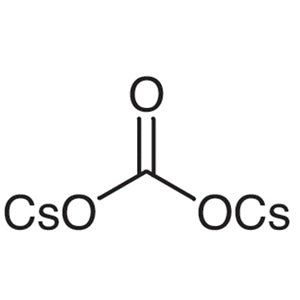
TCI Cesium Carbonate, catalog code C2160, is an inorganic salt of the alkali metal cesium that has become one of the most popular bases in modern organic synthesis. In the laboratory this compound is used primarily as a proton-scavenging base in alkylation reactions, transition-metal-catalyzed cross-coupling reactions, and nucleophilic aromatic substitution reactions. Its presence on the reagent shelf of a synthesis laboratory means that many transformations that previously proceeded only with difficulty under conventional bases can now be carried out under considerably milder conditions.
The property that most often leads chemists to select cesium carbonate is its relatively good solubility in polar aprotic organic solvents such as DMF, DMSO, and acetonitrile, far exceeding that of the corresponding potassium or sodium carbonate salts. The cesium cation is large and has low polarizing power, so its ion pairing is loose; this leaves the accompanying nucleophilic anion more reactive, an effect widely known as the cesium effect. Its basicity is moderate, strong enough to deprotonate phenols, thiols, amides, or dicarbonyl compounds, yet mild enough to leave sensitive functional groups intact. The compound is also hygroscopic, which must be taken into account during handling.
In Indonesian laboratories, this reagent is typically found in university organic synthesis and medicinal chemistry groups, in research institute laboratories, and in pharmaceutical and fine chemical development units where coupling and alkylation reactions are run routinely. Because the local climate is humid throughout the year, laboratories here pay particular attention to keeping the container tightly closed and limiting exposure to open air, so that the reagent retains its performance from one experiment to the next.
TCI brochures (PDF)
- AMP for Cesium Ion Selective and Efficient Adsorbent 2024-09-12 · p. 1
- Reagent for Incorporating a High-Performance Protecting Group (Nms) into Amines 2025-07-10 · p. 2
- Glycosidation 2026-04-14 · p. 5
- C-H Bond Activation Reaction 2025-06-20 · p. 10
- Colloidal Quantum Dot (QD) Research Reagents 2026-05-21 · p. 13
- Metallic Salts 2025-11-06 · p. 9
- Alkylation of phenols and thiols — the moderate basicity deprotonates these substrates cleanly while the loose cesium ion pair keeps the resulting anion highly nucleophilic toward the alkylating agent.
- Transition-metal-catalyzed cross-coupling reactions — serves as the proton-scavenging base that keeps the catalytic cycle turning over without attacking sensitive functional groups elsewhere in the substrate.
- Nucleophilic aromatic substitution — good solubility in DMF, DMSO, and acetonitrile allows the base to work in the homogeneous polar aprotic media these substitutions normally require.
- N-alkylation of amides and related nitrogen nucleophiles — basicity sufficient to deprotonate the amide nitrogen while remaining mild enough to preserve other functionality in the molecule.
- Deprotonation and functionalization of dicarbonyl compounds — generates the stabilized enolate under milder conditions than conventional carbonate bases permit, which is useful for multi-step synthetic sequences.
| Brand | TCI |
|---|---|
| CAS number | 534-17-8 |
| Molecular formula | — |
| Purity | — |
| Category | Chemistry > Catalysis and Inorganic Chemistry > Main-group Elements [Catalysis and Inorganic Chemistry] |
| Pack sizes | — |
| Physical form | — |
| Storage | hygroscopic material; keep the container tightly closed and protected from moisture. Pack sizes available on request. |
- Catalog code: C2160
- Chemical class: inorganic alkali metal salt (cesium carbonate)
Store cesium carbonate in its original tightly closed container, in a dry place away from direct exposure to humid air, since the material is hygroscopic and readily takes up atmospheric moisture. Chemically resistant containers with well-sealed caps are appropriate, and transferring the reagent inside a glove box or under a dry inert atmosphere is advisable when reaction results are sensitive to water content. Weigh out only the quantity needed and close the container immediately afterwards. Handle the material in a fume hood using safety glasses, gloves, and a laboratory coat, avoid contact with skin and eyes and inhalation of the dust, and consult the manufacturer's safety data sheet before use.
References cited in the TCI brochure
- Philipp Spieß. Deprotective Functionalization: A Direct Conversion of Nms‐Amides to Carboxamides Using Carboxylic Acids Angewandte Chemie International Edition, 2024. doi:10.1002/anie.202318304
- Philipp Spieß. Deprotective Lossen rearrangement: a direct and general transformation of Nms-amides to unsymmetrical ureas Chemical Science, 2024. doi:10.1039/d4sc04974h
Product Categories
- Catalysis and Inorganic ChemistryMain-group Elements [Catalysis and Inorganic Chemistry]Cesium [Catalysis and Inorganic Chemistry]
- Catalysis and Inorganic ChemistryCross-coupling Reaction using Transition Metal Catalysts [C-C Bond Formation]Bases and Additives [Cross-coupling Reaction using Transition Metal Catalysts]
- Catalysis and Inorganic ChemistryMetallic Salts [Catalysis and Inorganic Chemistry]Carbonate Salts [Metallic Salts]
- Synthetic ReagentsAcids, Bases [Synthetic Reagents]Bases [Synthetic Reagents]
- Synthetic ReagentsC-C Bond Formation [Synthetic Reagents]Cross-coupling Reaction using Transition Metal Catalysts [C-C Bond Formation]
- Synthetic ReagentsInorganic Salts [Synthetic Reagents]
- Synthetic ReagentsC-X(Non-Halogen) Bond Formation [Synthetic Reagents]C-H Bond Activation Reaction [Synthetic Reagents]
Produk Terkait
-
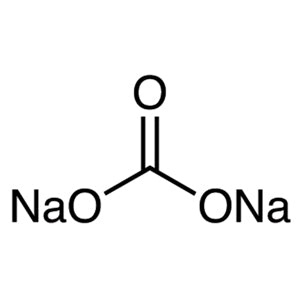
SodiumCarbonate TCI S0560
Regular price Rp 477.750,00Regular priceRp 333.900,00Sale price Rp 477.750,00 -
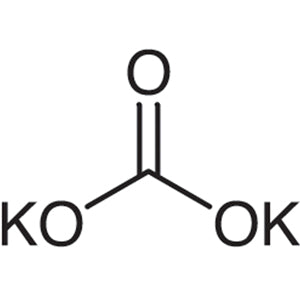
PotassiumCarbonate TCI P1748
Regular price Rp 505.050,00Regular priceRp 352.800,00Sale price Rp 505.050,00 -
CesiumFluoride TCI C2204
Regular price From Rp 1.803.900,00Regular priceRp 1.261.050,00Sale price From Rp 1.803.900,00 -
LithiumCarbonate TCI L0224
Regular price From Rp 557.550,00Regular priceRp 405.300,00Sale price From Rp 557.550,00 -
CesiumBromide TCI C2202
Regular price From Rp 2.466.450,00Regular priceRp 1.724.100,00Sale price From Rp 2.466.450,00 -
CesiumIodide TCI C2205
Regular price From Rp 848.400,00Regular priceRp 2.072.700,00Sale price From Rp 848.400,00Sale -
CesiumPivalate TCI C3230
Regular price From Rp 1.193.850,00Regular priceRp 834.750,00Sale price From Rp 1.193.850,00 -
PotassiumHydroxide(Powder) TCI P2844
Regular price From Rp 505.050,00Regular priceRp 352.800,00Sale price From Rp 505.050,00