

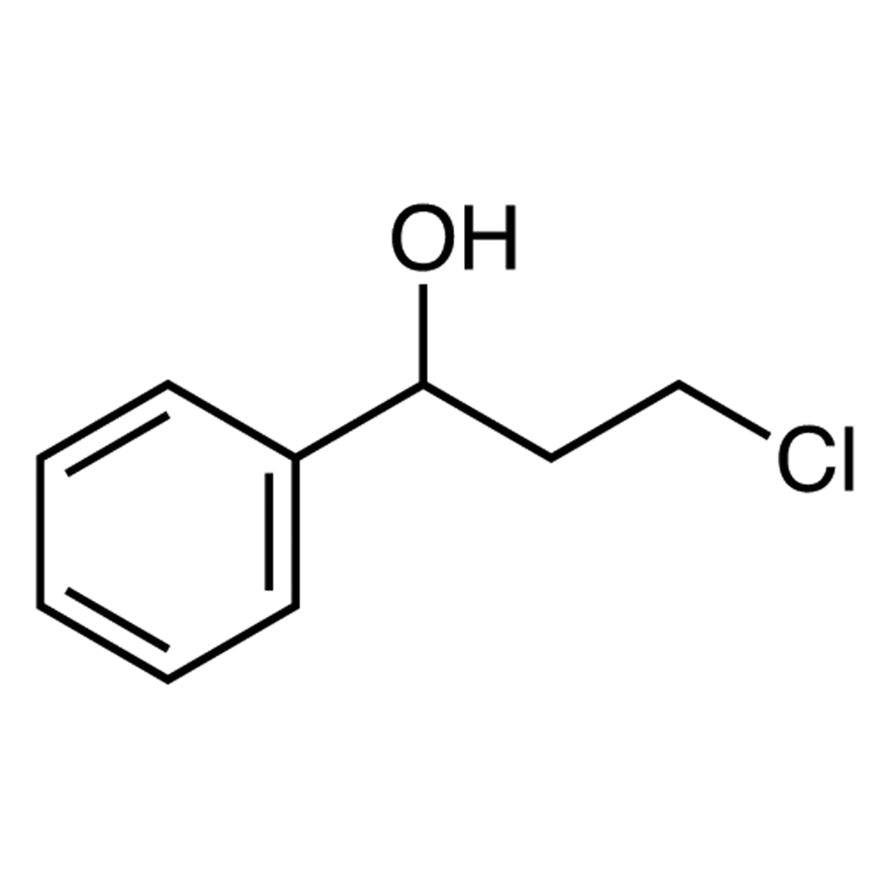
3-Chloro-1-phenyl-1-propanol is a chemical compound widely used as a building block in the synthesis of complex organic molecules. Its unique molecular structure, featuring both a chloro group and a phenyl group, makes it a versatile reagent in various chemical reactions. This compound is particularly valuable in laboratory settings where the introduction of reactive functional groups is essential for the development of new compounds. Its presence in synthetic pathways enables chemists to create a wide range of derivatives with potential applications in pharmaceutical and industrial chemistry.
The compound’s reactivity stems from its hydroxyl and chloro groups, which are highly susceptible to substitution, reduction, and addition reactions. These properties make it a preferred choice for chemists seeking to manipulate molecular structures with precision. The presence of both functional groups allows for multiple synthetic routes, enhancing its utility in research and development. Its ability to participate in diverse chemical transformations contributes to its popularity in the field of organic chemistry.
In Indonesian laboratories, 3-Chloro-1-phenyl-1-propanol is commonly used in organic chemistry research, particularly in academic and research institutions. It plays a crucial role in the synthesis of heterocyclic compounds and aromatic derivatives. Its reactivity and structural versatility make it an essential tool for chemists working on drug development, material science, and other advanced chemical applications. Proper handling is necessary to ensure safe and effective use in laboratory environments.
- Organic synthesis applications benefit from its reactivity and functional group versatility, enabling the creation of complex molecules.
- Pharmaceutical research utilizes its structural features to develop new drug compounds with targeted biological activities.
- Industrial chemical production relies on its ability to participate in various chemical reactions, enhancing process efficiency.
- Academic research institutions use it as a key reagent in teaching and experimental studies on organic chemistry.
- Aromatic compound synthesis leverages its phenyl group for the construction of aromatic ring structures in synthetic pathways.
| Brand | TCI |
|---|---|
| CAS number | 18776-12-0 |
| Molecular formula | — |
| Purity | — |
| Category | Chemistry > Building Blocks > Non-Heterocyclic Building Blocks |
| Pack sizes | Available in various quantities as per supplier specifications |
| Physical form | Liquid |
| Storage | Store in a cool, dry place away from light and incompatible materials |
This compound should be stored in a cool, dry environment, away from direct sunlight and sources of heat. It is recommended to use airtight containers made of materials compatible with organic solvents to prevent contamination and evaporation. Due to its reactivity, it should be handled in a well-ventilated area, preferably under a fume hood, to minimize exposure. Avoid contact with strong acids, bases, or oxidizing agents to prevent unwanted chemical reactions. Always wear appropriate personal protective equipment, including gloves, goggles, and a lab coat, when handling this substance. Proper labeling and storage conditions are essential to ensure safety and maintain the integrity of the compound in the laboratory.
—
Produk Terkait
-
1-Chloro-2-propanol TCI C3533
Regular price From Rp 1.565.550,00Regular price -
3-Chloro-2,2-dimethyl-1-propanol TCI C1538
Regular price From Rp 1.220.100,00Regular price -
1-Chloro-3-methoxy-2-propanol TCI C1472
Regular price Rp 2.254.350,00Regular price -
1-Chloro-2-methyl-2-propanol TCI C0971
Regular price Rp 1.565.550,00Regular price -
3-Chloro-1-propanol TCI C0270
Regular price From Rp 823.200,00Regular price -
1-Chloro-2-propanol(containsca.25%2-Chloro-1-propanol) TCI C0269
Regular price From Rp 717.150,00Regular price -
2-(4-Bromophenyl)-2-propanol TCI B5274
Regular price From Rp 1.353.450,00Regular price -
3-(4-Bromophenyl)-1-propanol TCI B4657
Regular price From Rp 848.400,00Regular price


