1-(2-Chlorophenyl)-3-methyl-5-pyrazolone is a chemical compound widely used in laboratory settings for its versatility in chemical and pharmacological research. This compound plays a crucial role in synthetic chemistry, particularly in the development of new pharmaceutical compounds. Its unique molecular structure, featuring a pyrazolone ring with a chlorophenyl group, makes it a valuable reagent for various chemical transformations. Its ability to participate in multiple reaction types, such as substitution and condensation, enhances its utility in organic synthesis.
The compound's chemical properties, including its stability under controlled conditions and its reactivity with functional groups, make it a preferred choice for researchers. It is sensitive to UV light and high temperatures, which necessitates careful handling and storage. Its reactivity and functional group compatibility allow it to be used in a wide range of chemical processes, making it a staple in both academic and industrial laboratories. Its chemical stability and reactivity contribute to its effectiveness in various experimental setups.
In Indonesian laboratories, this compound is commonly used in research institutions, universities, and pharmaceutical industries. It is particularly important in the development of new drugs and the study of biological activities of chemical compounds. Its availability in various packaging formats ensures that it can be used in both small-scale and large-scale experiments. Its role in pharmacological and chemical research continues to expand, supporting innovation in the scientific community.
- Pharmacological research utilizes this compound for the synthesis of new drug candidates due to its reactivity and structural versatility.
- Organic chemistry experiments benefit from its ability to participate in substitution and condensation reactions, enhancing synthetic pathways.
- Biochemical studies employ it to investigate biological activity and molecular interactions in complex systems.
- Industrial pharmaceutical development relies on its stability and reactivity for the creation of novel therapeutic agents.
- Academic research institutions use it as a key reagent in teaching and experimental protocols for advanced chemical synthesis.
| Brand | TCI |
|---|---|
| CAS number | 14580-22-4 |
| Molecular formula | — |
| Purity | — |
| Category | TCI |
| Pack sizes | Available in various sizes to accommodate different experimental needs |
| Physical form | Solid |
| Storage | Store in a cool, dark place away from UV light and high temperatures |
This compound should be stored in a cool, dark environment to prevent degradation due to UV exposure and thermal sensitivity. It is recommended to use airtight containers made of materials such as glass or high-density polyethylene to minimize contamination and maintain chemical integrity. Laboratory personnel should handle it with appropriate personal protective equipment, including gloves and safety goggles, to ensure safety during use. The compound should be kept away from incompatible substances to avoid potential chemical reactions. Proper ventilation is essential when working with this material to ensure a safe laboratory environment. Regular monitoring of storage conditions is advised to maintain its chemical stability and effectiveness in experimental applications.
—
Produk Terkait
-
TCI B5774 5,10-Bis(4,4,5,5-tetramethyl-1,3,2-dioxaborolan-2-yl)naphtho[1,2-c:5,6-c']bis([1,2,5]oxadiazole)
Regular price Rp 11.420.850,00Regular price -
3-Bromo-5-methylaniline TCI B6015
Regular price From Rp 3.927.000,00Regular price -
TCI B6321 2,6-Bis(acetamido)-2,6-dideoxy-D-mannose
Regular price Rp 4.044.600,00Regular price -
BTP3-Neu5AcNa TCI B6529
Regular price Rp 4.251.450,00Regular price -
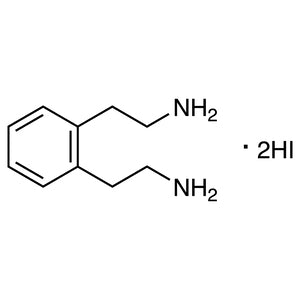
Dihydroiodide TCI B6569
Regular price From Rp 2.155.650,00Regular price -
Biotin-PEG3-Dz TCI B6572
Regular price From Rp 5.904.150,00Regular price -
Biotin-PEG3-PhN3 TCI B6585
Regular price From Rp 5.371.800,00Regular price -
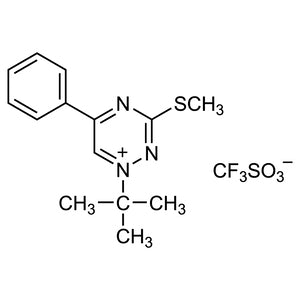
Trifluoromethanesulfonate TCI B7003
Regular price From Rp 2.155.650,00Regular price
![5,10-Bis(4,4,5,5-tetramethyl-1,3,2-dioxaborolan-2-yl)naphtho[1,2-c:5,6-c']bis([1,2,5]oxadiazole) - TCI B5774 - AMI Scientific](http://amiscientific.com/cdn/shop/files/TCI2510B5774.jpg?v=1769180228&width=533)