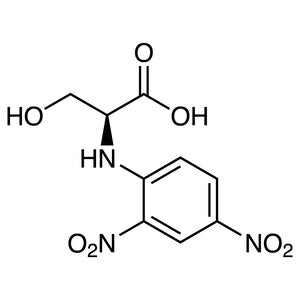
N-(2,4-Dinitrophenyl)-L-serine is a chemical compound widely used in laboratory experiments across various fields of chemistry and biochemistry. As a derivative of the amino acid serine, it plays a crucial role in molecular interaction studies, particularly in enzyme research and complex chemical reactions. Its unique chemical structure enables specific chemical reactions, making it a valuable tool for the synthesis of new compounds and molecular structure analysis. This compound is commonly found in research settings where precision and controlled chemical reactions are essential.
The compound's chemical properties make it a preferred choice for researchers due to its high reactivity and specificity. It is stable under certain conditions but remains sensitive to light and moisture, requiring careful handling. Its complex molecular structure allows it to interact effectively with various substrates, making it ideal for substitution reactions and other chemical processes. This reactivity, combined with its structural versatility, positions it as a key reagent in advanced chemical and biochemical investigations.
In Indonesian laboratories, N-(2,4-Dinitrophenyl)-L-serine is frequently used in scientific research, especially in organic chemistry, biochemistry, and pharmacology. It is a common component in studies aimed at understanding molecular interactions and developing new chemical compounds. Many research institutions and universities in Indonesia rely on this compound for its reliability and effectiveness in experimental procedures requiring high precision and controlled environments.
- Used in enzyme kinetics studies due to its ability to interact with enzyme substrates and modulate reaction pathways.
- Applied in molecular docking simulations to analyze binding affinities and structural compatibility of compounds.
- Employed in peptide synthesis to modify amino acid side chains and create functionalized peptides for biological applications.
- Utilized in drug discovery research to screen for potential inhibitors and study enzyme-substrate interactions.
- Incorporated in analytical chemistry for the detection and quantification of specific amino acid derivatives in complex mixtures.
| Brand | TCI |
|---|---|
| CAS number | 1655-64-7 |
| Molecular formula | — |
| Purity | — |
| Category | Chemistry > Chemical Biology > Peptide Chemistry |
| Pack sizes | Available in various quantities as per supplier specifications |
| Physical form | Solid powder |
| Storage | Store in a cool, dark place away from light and moisture |
N-(2,4-Dinitrophenyl)-L-serine should be stored in a cool, dark environment to prevent degradation due to light exposure. It is recommended to keep the compound in a tightly sealed container to minimize moisture absorption, which can affect its stability. Due to its sensitivity, it is important to handle it with care, using appropriate personal protective equipment such as gloves and safety goggles. The compound should be stored in a dry, well-ventilated area, away from incompatible substances. Regular monitoring of storage conditions is advised to ensure the integrity of the material during long-term use. Proper labeling of containers is essential to prevent accidental exposure and ensure safe handling in laboratory settings.
—
Produk Terkait
-
BromfenacSodiumSesquihydrate TCI B5971
Regular price Rp 3.870.300,00Regular price -
5-Chloro-2-methoxyaniline TCI C0118
Regular price From Rp 1.115.100,00Regular price -
H-Tyr(3-Cl)-OH TCI C3770
Regular price From Rp 2.386.650,00Regular price -
3,5-Dibromo-L-tyrosine TCI D0213
Regular price Rp 1.405.950,00Regular price -
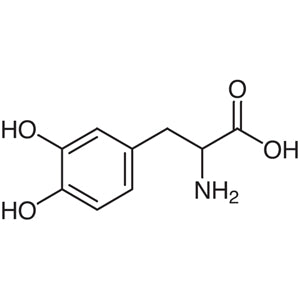
3-(3,4-Dihydroxyphenyl)-DL-alanine TCI D0599
Regular price Rp 1.140.300,00Regular price -
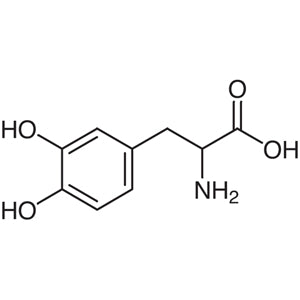
3-(3,4-Dihydroxyphenyl)-L-alanine TCI D0600
Regular price From Rp 717.150,00Regular price -
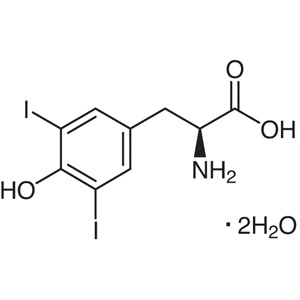
3,5-Diiodo-L-tyrosineDihydrate TCI D0612
Regular price From Rp 928.200,00Regular price