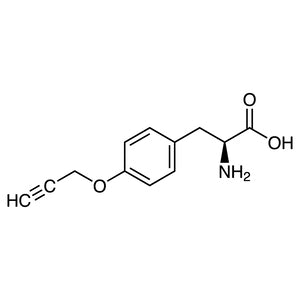
H-Tyr(3-Cl)-OH from TCI is a derivative of the amino acid tyrosine that carries a single chlorine atom at position 3 of its phenol ring. It is also known as 3-chlorotyrosine. The "H-…-OH" notation means that both the amino group and the carboxyl group are free, with no protecting groups attached. In the laboratory, this compound belongs to the peptide chemistry and chemical biology categories. Researchers use it as a non-canonical amino acid to modify peptides and as a reference compound in biochemical studies.
What sets this compound apart is the chlorine atom on the aromatic ring of tyrosine. This substitution changes the electronic properties and the acidity of the phenol group. It also makes the side chain larger and more lipophilic, while the overall amino acid backbone stays the same. This lets researchers study how one small structural change affects peptide behaviour. In biochemistry, 3-chlorotyrosine is a recognised marker of protein damage caused by hypochlorous acid, which the enzyme myeloperoxidase produces. For this reason, it is often used as an analytical standard in oxidative stress and inflammation research.
In Indonesia, this material is relevant to biochemistry, pharmacy, and medical laboratories that study inflammatory mechanisms. It also suits peptide chemistry research groups that want to explore how halogenation of tyrosine affects peptide structure and properties. University research laboratories, pharmaceutical research and development teams, and clinical research units can use it both as a building block for modified peptides and as a reference material for analytical method work on oxidative protein damage.
TCI brochures (PDF)
- Bio-Orthogonal Non-Canonical Amino Acid Tagging (BONCAT) Related Reagents 2025-12-23 · p. 2
- Non-Canonical Amino Acids for Protein Site-specific Modification by Genetic Code Expansion 2024-04-16 · p. 2
- Amino Acids and Peptide Synthesis Reagents 2025-08-14 · p. 8
- Peptide modification: as a non-canonical amino acid, it lets researchers add a chlorinated tyrosine residue to a peptide sequence and study how halogenation changes peptide properties.
- Oxidative stress research: because 3-chlorotyrosine marks protein damage from hypochlorous acid, it serves as a relevant reference compound in studies of oxidative damage to proteins.
- Analytical standard for inflammation studies: it is often used as an analytical standard when measuring myeloperoxidase-related protein damage in inflammation research, which supports reliable identification and comparison.
- Structure-activity studies: the chlorine substitution changes phenol acidity, electronic properties, size, and lipophilicity, so the compound is useful for comparing how side-chain changes affect peptide behaviour.
- Chemical biology research: both the amino and carboxyl groups are free, so it can be used directly as an unprotected amino acid in biochemical experiments and comparisons with native tyrosine.
| Brand | TCI (product code C3770) |
|---|---|
| CAS number | 7423-93-0 |
| Molecular formula | — |
| Purity | — |
| Category | Chemistry > Chemical Biology > Peptide Chemistry |
| Pack sizes | as offered by TCI for product C3770; please confirm the available sizes when you order |
| Physical form | refer to the TCI product label and certificate of analysis |
| Storage | follow the storage conditions stated on the TCI label and safety data sheet |
Store H-Tyr(3-Cl)-OH in its original, tightly closed TCI container under the conditions stated on the product label and safety data sheet. In general, amino acid derivatives should be kept in a cool, dry place away from direct light, moisture, and incompatible substances such as strong oxidising agents. Reseal the container promptly after each use so the material does not absorb moisture. Handle the compound in a clean, well-ventilated area and wear suitable personal protective equipment, including gloves, safety glasses, and a laboratory coat. Avoid creating or breathing dust, and avoid contact with skin and eyes. Use clean, dry spatulas and glassware to prevent contamination, especially when you prepare analytical standards. Read the current TCI safety data sheet before use, and dispose of waste according to institutional and local regulations.
—
Product Categories
Produk Terkait
-
H-L-Tyr(Propargyl)-OH TCI P3021
Regular price Rp 8.003.100,00Regular priceRp 5.612.250,00Sale price Rp 8.003.100,00 -
3,5-Dibromo-L-tyrosine TCI D0213
Regular price Rp 1.458.450,00Regular priceRp 1.035.300,00Sale price Rp 1.458.450,00 -
5-Hydroxy-L-tryptophan TCI H0531
Regular price From Rp 1.087.800,00Regular priceRp 775.950,00Sale price From Rp 1.087.800,00 -
4-AminobutyricAcid TCI A0282
Regular price From Rp 505.050,00Regular priceRp 352.800,00Sale price From Rp 505.050,00 -
DL-Homoserine TCI A0319
Regular price From Rp 2.439.150,00Regular priceRp 1.720.950,00Sale price From Rp 2.439.150,00 -
DL-2-Amino-n-octanoicAcid TCI A0382
Regular price From Rp 2.332.050,00Regular priceRp 1.646.400,00Sale price From Rp 2.332.050,00 -
L-Isoserine TCI I0828
Regular price From Rp 1.351.350,00Regular priceRp 960.750,00Sale price From Rp 1.351.350,00 -
DL-Allothreonine(containsThreonine) TCI A0214
Regular price From Rp 928.200,00Regular priceRp 664.650,00Sale price From Rp 928.200,00