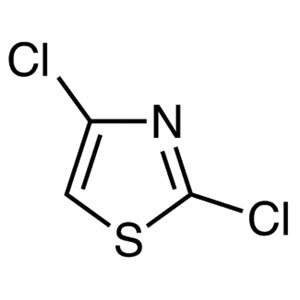
2,4-Dichlorothiazole (TCI D3549, CAS 4175-76-2) is a heterocyclic compound widely used in chemical reactions for the synthesis of complex molecules. As a building block in organic chemistry, it plays a crucial role in the development of pharmaceuticals, industrial chemicals, and functional compounds. Its ability to participate in substitution and ring-opening reactions makes it an essential tool for chemists seeking to modify molecular structures with precision. This compound is particularly valuable in laboratories where the synthesis of heterocyclic systems is a primary focus.
The chemical stability and reactivity of 2,4-Dichlorothiazole make it a preferred choice for various synthetic applications. Its molecular structure, featuring a thiazole ring with chlorine atoms at positions 2 and 4, contributes to its unique reactivity. This compound can react with amines, acids, and oxidizing agents, offering versatility in reaction conditions. The presence of chlorine atoms enhances its ability to undergo substitution reactions, making it suitable for a wide range of synthetic pathways. These properties ensure its relevance in both academic and industrial research settings.
In Indonesian laboratories, 2,4-Dichlorothiazole is commonly used in organic chemistry research, especially in the development of pharmaceutical compounds and functional materials. Its role in the synthesis of heterocyclic structures makes it a key component in the work of educational and research institutions. The compound's utility extends to the creation of new chemical entities, supporting innovation in chemical synthesis and drug discovery.
- Organic synthesis is a primary application where 2,4-Dichlorothiazole is used to construct complex heterocyclic structures with high precision.
- Pharmaceutical research benefits from this compound as it contributes to the development of new drug molecules through substitution and ring-opening reactions.
- Industrial chemical production utilizes 2,4-Dichlorothiazole for the synthesis of functional compounds and specialty chemicals.
- Academic research in chemistry relies on this compound for teaching and experimental purposes, particularly in heterocyclic chemistry.
- Functional material development incorporates 2,4-Dichlorothiazole to create compounds with specific chemical and physical properties.
| Brand | TCI |
|---|---|
| CAS number | 4175-76-2 |
| Molecular formula | — |
| Purity | — |
| Category | Chemistry > Building Blocks > Heterocyclic Building Blocks |
| Pack sizes | — |
| Physical form | — |
| Storage | Store in a cool, dry place away from light and moisture |
2,4-Dichlorothiazole should be stored in a cool, dry environment, away from direct light and moisture. It is recommended to use airtight containers to prevent exposure to air and humidity, which could affect its chemical stability. As a reactive compound, it should be handled with care in a well-ventilated area to avoid inhalation of vapors. Laboratory personnel should wear appropriate personal protective equipment, such as gloves and safety goggles, when handling this material. Proper labeling of containers is essential to ensure safe handling and storage. The compound should not be stored near incompatible materials, such as strong oxidizers or acids, to prevent unwanted chemical reactions.
—
Produk Terkait
-
2-[(tert-Butoxycarbonyl)amino]thiazole-4-carboxylicAcid TCI B6144
Regular price From Rp 1.458.450,00Regular price -
2-[2-[(tert-Butoxycarbonyl)amino]thiazol-4-yl]aceticAcid TCI B6173
Regular price From Rp 769.650,00Regular price -
5-(4-Bromophenyl)thiazol-2-amine TCI B6270
Regular price Rp 2.306.850,00Regular price -
5-(3-Bromophenyl)thiazol-2-amine TCI B6285
Regular price Rp 3.287.550,00Regular price -
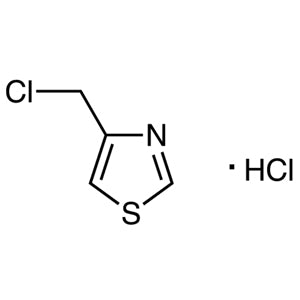
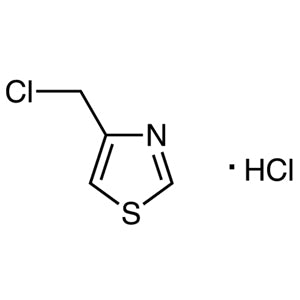
4-(Chloromethyl)thiazoleHydrochloride TCI C1623
Regular price From Rp 1.908.900,00Regular price -
2-Chlorothiazole TCI C2471
Regular price From Rp 1.565.550,00Regular price -
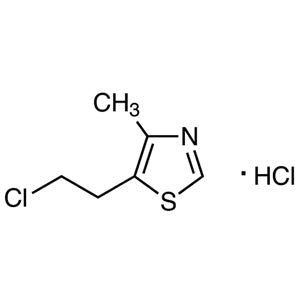
ChlormethiazoleHydrochloride TCI C3020
Regular price From Rp 2.677.500,00Regular price -
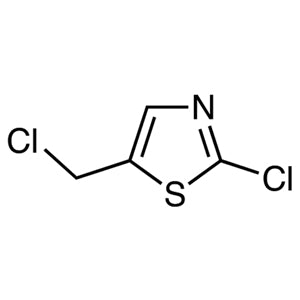
2-Chloro-5-(chloromethyl)thiazole TCI C3295
Regular price From Rp 477.750,00Regular price
![2-[(tert-Butoxycarbonyl)amino]thiazole-4-carboxylic Acid (CAS 83673-98-7) - TCI B6144 - AMI Scientific](http://amiscientific.com/cdn/shop/files/TCI2510B6144_30b774b8-53f0-43f4-a45f-a11d6bda12b0.jpg?v=1767864684&width=533)
![2-[2-[(tert-Butoxycarbonyl)amino]thiazol-4-yl]acetic Acid (CAS 89336-46-9) - TCI B6173 - AMI Scientific](http://amiscientific.com/cdn/shop/files/TCI2510B6173_3c32a927-9099-41fd-a930-c06aeda91824.jpg?v=1767864801&width=533)