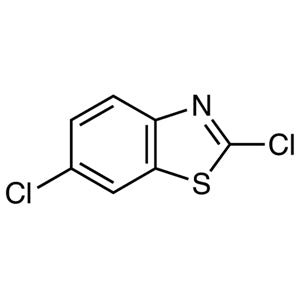
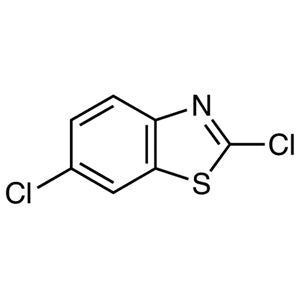
TCI D3801 2,6-Dichlorobenzothiazole is a heterocyclic building block based on the benzothiazole core, a fused ring system combining a benzene ring with a thiazole ring that contains both nitrogen and sulfur atoms. The compound carries two chlorine atoms, at position 2 and position 6, whose reactivity characteristics differ substantially from one another, making the material an efficient reagent for stepwise synthesis. In the laboratory, the benzothiazole core is recognised as a scaffold that appears frequently in pharmaceutically active compounds, agrochemicals, dyes, and fluorescent molecules, so this material serves as a practical starting point for a wide range of synthetic research routes.
The property that makes this building block a preferred choice is precisely the difference in reactivity between its two chlorine atoms. The chlorine at position 2 sits between the nitrogen and the sulfur of the thiazole ring and is therefore strongly activated toward nucleophilic aromatic substitution; amines, alkoxides, and thiolates can displace it under relatively mild conditions without requiring a metal catalyst. The chlorine at position 6, by contrast, is located on the benzene ring and is far more inert toward nucleophilic substitution, yet it remains available for palladium-catalysed cross-coupling reactions whenever further structural elaboration is needed.
In Indonesian laboratories, this reagent fits naturally into synthetic and medicinal chemistry research programmes at universities, government research institutes, and industrial R&D units working on pharmaceutical intermediates, agrochemical candidates, dyes, and fluorescent probes. Its two-stage reactivity profile allows a single starting material to be carried through a sequence of transformations, which suits research groups that need to build compound libraries around a common heterocyclic core in a controlled and predictable manner.
- Nucleophilic aromatic substitution at C-2: the position between ring nitrogen and sulfur is strongly activated, so amines, alkoxides, and thiolates displace this chlorine under relatively mild conditions with no metal catalyst required.
- Palladium-catalysed cross-coupling at C-6: the far less reactive benzene-ring chlorine remains intact through C-2 chemistry and stays available later for structural elaboration through cross-coupling when the synthetic route calls for it.
- Stepwise or sequential synthesis: because the two chlorine atoms respond to clearly different conditions, chemists can functionalise one site at a time and build complex targets in a controlled, predictable order.
- Pharmaceutical intermediate research: the benzothiazole core appears frequently in pharmaceutically active compounds, making this building block a practical starting point for medicinal chemistry programmes exploring that scaffold.
- Dye and fluorescent molecule synthesis: benzothiazole frameworks are common in dyes and fluorescent molecules, so this reagent supports research groups preparing coloured or light-emitting compounds around that ring system.
| Brand | TCI |
|---|---|
| CAS number | 3622-23-9 |
| Molecular formula | — |
| Purity | — |
| Category | Chemistry > Building Blocks > Heterocyclic Building Blocks |
| Pack sizes | available in the standard TCI catalogue pack sizes; please refer to the packaging options listed for this item |
| Physical form | — |
| Storage | follow the storage conditions stated on the manufacturer's label and accompanying safety data sheet |
- Chemical name: 2,6-Dichlorobenzothiazole
- Product code: D3801
Store this material in its original tightly closed container, in a cool, dry, and well-ventilated area away from heat sources, direct sunlight, moisture, and incompatible chemicals, following the conditions stated on the manufacturer's label and safety data sheet. Keep containers sealed when not in use to limit exposure to atmospheric moisture. Handle the compound in a fume hood using appropriate personal protective equipment, including chemical-resistant gloves, safety goggles, and a laboratory coat. Avoid inhalation of dust and contact with skin and eyes, use clean and dry glassware or spatulas when weighing out portions, and dispose of residues and contaminated materials in accordance with institutional chemical waste procedures and applicable regulations.
—
Produk Terkait
-
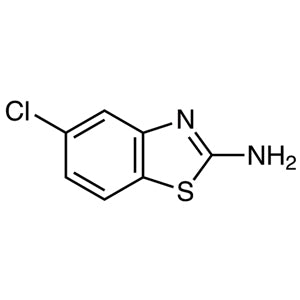
2-Amino-5-chlorobenzothiazole TCI A3177
Regular price From Rp 769.650,00Regular price -
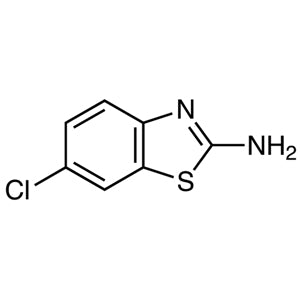
2-Amino-6-chlorobenzothiazole TCI A1216
Regular price Rp 848.400,00Regular price -
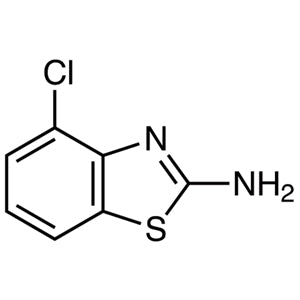
2-Amino-4-chlorobenzothiazole TCI A1087
Regular price From Rp 1.220.100,00Regular price -
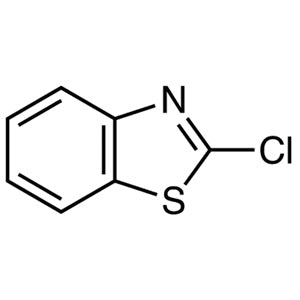
2-Chlorobenzothiazole TCI C0332
Regular price From Rp 1.405.950,00Regular price -
2-Bromobenzothiazole TCI B3740
Regular price Rp 1.670.550,00Regular price -
2-Amino-6-bromobenzothiazole TCI A2379
Regular price Rp 4.611.600,00Regular price -
2-Mercapto-6-nitrobenzothiazole TCI N0326
Regular price From Rp 2.016.000,00Regular price -
5-Chloro-2-mercaptobenzothiazole TCI C1297
Regular price Rp 4.611.600,00Regular price