TCI D3857 2,3-Dihydrobenzofuran-5-carboxaldehyde is a heterocyclic building block that combines a dihydrobenzofuran framework with an aldehyde group at the five position. This partially hydrogenated benzofuran skeleton is a motif frequently encountered in active pharmaceutical ingredients and natural products, while the aldehyde group provides a highly versatile point of reaction for synthetic chemists. In other words, a single bottle of this reagent already delivers a structurally valuable core together with a chemical handle for extending the molecule in whatever direction the researcher requires within a new compound discovery programme.
The main appeal of this material lies in the readily directed reactivity of its aromatic formyl group. The aldehyde can undergo reductive amination, Wittig and Horner-Wadsworth-Emmons reactions, aldol and Knoevenagel condensations, imine and oxime formation, as well as oxidation to the corresponding carboxylic acid or reduction to the benzylic alcohol. The fused dihydrofuran ring imparts electronic character and conformational rigidity that differ from those of an ordinary benzaldehyde, so the resulting derivatives display distinctive solubility and interaction profiles. As a TCI product, lot-to-lot consistency of quality helps maintain reproducible synthetic results.
In Indonesian laboratories, this building block is typically used in academic and industrial research settings where medicinal chemistry, organic synthesis, and natural product derivatisation work is carried out. University research groups, pharmaceutical R&D units, and contract synthesis laboratories draw on reagents of this type when constructing focused compound libraries or preparing intermediates on a small scale. Its role is that of a starting point in a multi-step route rather than a bulk process chemical, which suits the working scale of most research laboratories in Indonesia.
Related TCI products
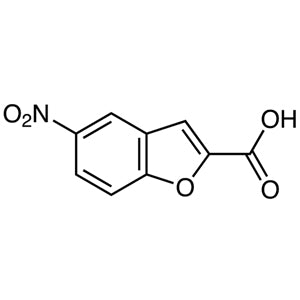
- TCI N1035 10242-12-3 5-Nitrobenzofuran-2-carboxylic Acid
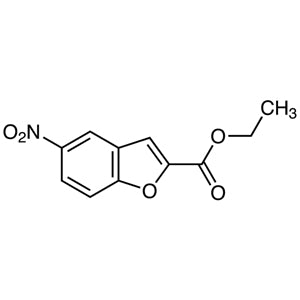
- TCI E0950 69604-00-8 Ethyl 5-Nitrobenzofuran-2-carboxylate
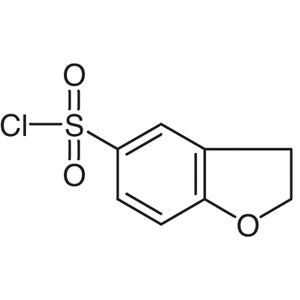
- TCI D3553 115010-11-2 2,3-Dihydrobenzofuran-5-sulfonyl Chloride
- TCI D2446 35700-40-4 2,3-Dihydrobenzofuran-7-carboxylic Acid
- TCI D1583 496-16-2 2,3-Dihydrobenzofuran
- TCI I0743 1196-70-9 Indole-6-carboxaldehyde
- Medicinal chemistry lead elaboration — the dihydrobenzofuran core appears widely in pharmaceutical actives, so this reagent provides a relevant scaffold that chemists can extend directly from the formyl handle.
- Reductive amination to secondary and tertiary amines — the aromatic aldehyde couples cleanly with amine partners, giving access to amine-linked derivatives that are common in bioactive molecule design programmes.
- Olefination via Wittig and Horner-Wadsworth-Emmons chemistry — the formyl group converts efficiently into alkene linkages, allowing researchers to lengthen the carbon framework in a controlled and predictable manner.
- Aldol and Knoevenagel condensation studies — the reactive aldehyde participates readily in carbon-carbon bond forming condensations, supporting the preparation of extended conjugated systems for further transformation.
- Imine and oxime derivative preparation — condensation with amines or hydroxylamine gives nitrogen-containing derivatives, useful for both synthetic elaboration and structural characterisation work in research laboratories.
| Brand | TCI (Tokyo Chemical Industry) |
|---|---|
| CAS number | 55745-70-5 |
| Molecular formula | — |
| Purity | — |
| Category | Chemistry > Building Blocks > Heterocyclic Building Blocks |
| Pack sizes | available in standard research quantities as listed by the manufacturer; please confirm the required size when ordering |
| Physical form | — |
| Storage | keep in a cool, dry place in the tightly closed original container |
- Product code: D3857
Store the material in its tightly closed original container in a cool, dry, and well-ventilated place, away from direct sunlight, heat sources, and incompatible chemicals such as strong oxidising agents. Aromatic aldehydes are generally sensitive to prolonged exposure to air, so minimise the time the container remains open and reseal it promptly after each use. Handle the reagent inside a fume hood while wearing safety glasses, chemically resistant gloves, and a laboratory coat. Avoid inhalation of vapours and contact with skin and eyes. Always consult the manufacturer's Safety Data Sheet before use, and dispose of residues and contaminated materials in accordance with applicable chemical waste regulations.
—
Produk Terkait
-
5-Nitrobenzofuran-2-carboxylicAcid TCI N1035
Regular price From Rp 1.936.200,00Regular price -
Ethyl5-Nitrobenzofuran-2-carboxylate TCI E0950
Regular price From Rp 1.510.950,00Regular price -
2,3-Dihydrobenzofuran-5-sulfonylChloride TCI D3553
Regular price From Rp 2.094.750,00Regular price -
2,3-Dihydrobenzofuran-7-carboxylicAcid TCI D2446
Regular price From Rp 2.518.950,00Regular price -
2,3-Dihydrobenzofuran TCI D1583
Regular price From Rp 928.200,00Regular price -
Indole-6-carboxaldehyde TCI I0743
Regular price From Rp 2.359.350,00Regular price -
Imidazole-2-carboxaldehyde TCI I0809
Regular price From Rp 769.650,00Regular price -
Indole-2-carboxaldehyde TCI I0852
Regular price From Rp 3.949.050,00Regular price