TCI D3947 N,N'-Ditridecyl-3,4,9,10-perylenetetracarboxylic Diimide is a perylene diimide dye in which both imide nitrogen atoms carry tridecyl alkyl chains. In materials science laboratories, compounds of this class are well-established n-type organic semiconductors, meaning that their majority charge carriers are electrons. The material is used to build the active layer of organic field-effect transistors, to serve as the acceptor component in organic photovoltaic devices, and to form electron transport layers in a range of optoelectronic devices. Its rigid, planar perylene framework provides good intermolecular orbital overlap in the thin films researchers deposit from it.
The characteristic that makes this compound a preferred choice is the combination of an electron-poor perylene diimide core with two long alkyl chains at the imide positions. The perylene core supplies low-lying orbital energy levels that support electron injection and electron transport, while also giving strong absorption in the visible region together with high thermal and photochemical stability. The tridecyl chains work in the opposite direction, improving solubility in common organic solvents so that thin films can be prepared by solution-based techniques such as spin coating or drop casting rather than by vacuum deposition alone.
In Indonesian laboratories, this material is typically encountered in university and institutional research groups working on organic electronics, printed electronics, and organic photovoltaics. It is normally handled in small research quantities inside a fume hood or glove box, dissolved in organic solvent, and processed into thin films on prepared substrates for device fabrication and characterization. Groups studying n-type semiconductor behaviour, acceptor materials, or solution-processable device architectures are the usual users of this compound.
- Organic field-effect transistor (OFET) fabrication: the compound acts as the n-type active layer, where its electron-transporting perylene diimide core supports device operation with electrons as the majority charge carriers.
- Organic photovoltaic device research: it serves as the acceptor component, since the electron-poor perylene core provides the low-lying orbital energy levels needed to accept electrons from a donor material.
- Electron transport layer deposition in optoelectronic devices: the material's electron-transporting character makes it suitable for the layer that moves electrons between the active region and the electrode.
- Solution-processed thin film preparation: the two long tridecyl chains raise solubility in common organic solvents, allowing films to be formed by spin coating or drop casting techniques.
- Optical and photophysical characterization studies: the perylene framework absorbs visible light strongly and shows high photochemical stability, which suits absorption and dye-related measurements on the resulting films.
| Brand | TCI |
|---|---|
| CAS number | 95689-92-2 |
| Molecular formula | — |
| Purity | — |
| Category | Materials Science > Electronic Materials > Organic Transistor (OFET) Materials |
| Pack sizes | available in research-scale pack sizes; please confirm the currently listed packaging option when ordering. |
| Physical form | — |
| Storage | store in a tightly closed container, protected from light, in a cool and dry place as indicated on the manufacturer's label. |
- Product code: TCI D3947
Store the material in its original tightly closed container in a cool, dry, and well-ventilated area, away from light and from sources of heat or ignition, following the storage conditions stated on the manufacturer's label and safety data sheet. Amber glass vials or opaque containers are appropriate for a light-sensitive dye, and containers should be kept closed when not in use to limit exposure to moisture and air. Handle the solid and its solutions in a fume hood, wear a laboratory coat, safety glasses, and chemical-resistant gloves, and avoid generating dust during weighing or transfer. Keep solvents used for film preparation away from ignition sources, and dispose of residues and contaminated materials in accordance with institutional chemical waste procedures.
—
Produk Terkait
-
N,N'-Bis[3-(dimethylamino)propyl]perylene-3,4,9,10-tetracarboxylicDiimide TCI B5954
Regular price From Rp 3.446.100,00Regular price -
3-Benzyl-3-azabicyclo[3.1.0]hexane-2,4-dione TCI B6094
Regular price Rp 3.340.050,00Regular price -
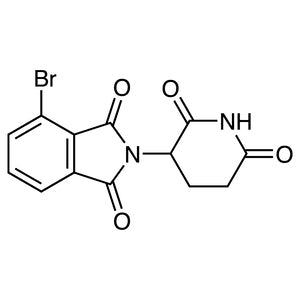
4-Bromo-2-(2,6-dioxopiperidin-3-yl)isoindoline-1,3-dione TCI B6527
Regular price From Rp 3.870.300,00Regular price -
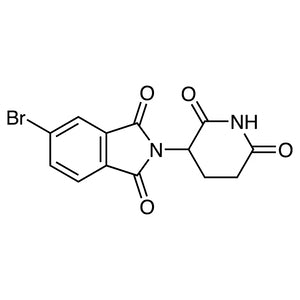
5-Bromo-2-(2,6-dioxopiperidin-3-yl)isoindoline-1,3-dione TCI B6550
Regular price From Rp 1.829.100,00Regular price -
6-Bromo-2-butyl-1H-benz[de]isoquinoline-1,3(2H)-dione TCI B6575
Regular price From Rp 1.246.350,00Regular price -
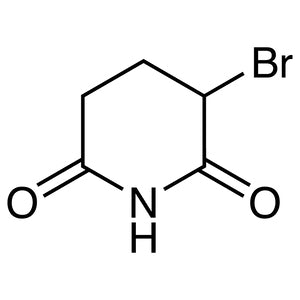
3-Bromopiperidine-2,6-dione TCI B6791
Regular price From Rp 1.670.550,00Regular price
![N,N'-Bis[3-(dimethylamino)propyl]perylene-3,4,9,10-tetracarboxylic Diimide (CAS 117901-97-0) - TCI B5954 - AMI Scientific](http://amiscientific.com/cdn/shop/files/TCI2510B5954.jpg?v=1768815937&width=533)
![3-Benzyl-3-azabicyclo[3.1.0]hexane-2,4-dione (CAS 73799-63-0) - TCI B6094 - AMI Scientific](http://amiscientific.com/cdn/shop/files/TCI2510B6094.jpg?v=1767093160&width=533)
![6-Bromo-2-butyl-1H-benz[de]isoquinoline-1,3(2H)-dione (CAS 92874-17-4) - TCI B6575 - AMI Scientific](http://amiscientific.com/cdn/shop/files/TCI2510B6575.jpg?v=1767093937&width=533)