![167218-46-4 N,N'-Diphenyl-N,N'-bis[4'-(diphenylamino)biphenyl-4-yl]benzidine - AMI Scientific](http://amiscientific.com/cdn/shop/files/TCI2510D4863.jpg?v=1768818232&width=1946)
![167218-46-4 N,N'-Diphenyl-N,N'-bis[4'-(diphenylamino)biphenyl-4-yl]benzidine - AMI Scientific](http://amiscientific.com/cdn/shop/files/TCI2510D4863.jpg?v=1768818232&width=1445)
TCI D4863, N,N'-Diphenyl-N,N'-bis[4'-(diphenylamino)biphenyl-4-yl]benzidine, is a large arylamine compound containing four trisubstituted nitrogen centres linked through a connected series of biphenyl and benzidine cores. Branched, high-molecular-weight structures of this kind are known in application terms as functional organic materials, particularly for hole-injection and hole-transport layers in organic electronic devices. Its laboratory role is to provide a ready-to-use p-type semiconductor material that can be deposited as a thin film, so that device researchers can proceed directly to building their device stacks without having to synthesise this complex arylamine material themselves.
The property that leads researchers to select this compound is the electron richness contributed by its many diphenylamino groups, which produces a relatively shallow highest occupied molecular orbital energy level and therefore eases the entry of holes from the electrode into the organic layer. Its large molecular weight and branched geometry give amorphous films with a glass transition temperature that is generally higher than that of small arylamines — an important advantage for device stability during operation under warm conditions. This combination of favourable hole-injection energetics and morphological robustness is what distinguishes it from simpler triarylamine alternatives.
In Indonesian laboratories, a material of this class is typically used in university and institutional research groups working on organic electronics and thin-film device physics, where it is handled in vacuum deposition or solution-processing workflows for prototype device fabrication. Because it arrives as a defined, characterised material from TCI, groups without dedicated organic synthesis capacity can still carry out device-level research, and teaching laboratories can demonstrate hole-transport layer behaviour reproducibly across student cohorts.
- Hole-injection layer fabrication — the shallow highest occupied molecular orbital level of this electron-rich arylamine lowers the barrier for holes passing from the electrode into the organic stack.
- Hole-transport layer deposition — as a p-type organic semiconductor it carries holes toward the active layer, making it directly suitable for standard multilayer device architectures.
- Organic light-emitting device prototyping — researchers can assemble complete emissive device stacks using this ready-made transport material instead of first synthesising a complex branched arylamine themselves.
- Thin-film morphology and stability studies — the branched, high-molecular-weight geometry forms amorphous films with comparatively high glass transition temperature, useful for investigating thermal behaviour of device layers.
- Teaching and demonstration of organic semiconductor principles — a well-defined commercial arylamine gives students reproducible hole-transport behaviour without the variability of laboratory-prepared material.
| Brand | TCI |
|---|---|
| CAS number | 167218-46-4 |
| Molecular formula | — |
| Purity | — |
| Category | TCI |
| Pack sizes | available in the standard research-scale pack sizes offered under the TCI catalogue listing for this item |
| Physical form | — |
| Storage | store in the closed original container under the conditions stated on the manufacturer's label and safety data sheet |
- Chemical name: N,N'-Diphenyl-N,N'-bis[4'-(diphenylamino)biphenyl-4-yl]benzidine
Keep the material in its original tightly closed container, protected from light, moisture and heat, and store it in a cool, dry, well-ventilated place away from incompatible chemicals. Amber glass vials or the supplied container are appropriate; transfer only what is needed for the experiment and reseal promptly, since organic semiconductor films are sensitive to contamination. Handle the solid in a fume hood or under local exhaust, wear gloves, safety glasses and a laboratory coat, and avoid generating or inhaling dust. Use clean, dedicated spatulas and substrates to prevent cross-contamination that would affect film quality. Always consult the manufacturer's safety data sheet before use, and dispose of residues and contaminated consumables through your institution's chemical waste route.
—
Produk Terkait
-
TCI B5774 5,10-Bis(4,4,5,5-tetramethyl-1,3,2-dioxaborolan-2-yl)naphtho[1,2-c:5,6-c']bis([1,2,5]oxadiazole)
Regular price Rp 11.420.850,00Regular price -
3-Bromo-5-methylaniline TCI B6015
Regular price From Rp 3.927.000,00Regular price -
TCI B6321 2,6-Bis(acetamido)-2,6-dideoxy-D-mannose
Regular price Rp 4.044.600,00Regular price -
BTP3-Neu5AcNa TCI B6529
Regular price Rp 4.251.450,00Regular price -
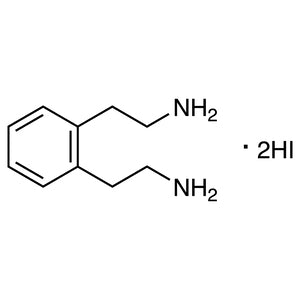
Dihydroiodide TCI B6569
Regular price From Rp 2.155.650,00Regular price -
Biotin-PEG3-Dz TCI B6572
Regular price From Rp 5.904.150,00Regular price -
Biotin-PEG3-PhN3 TCI B6585
Regular price From Rp 5.371.800,00Regular price -
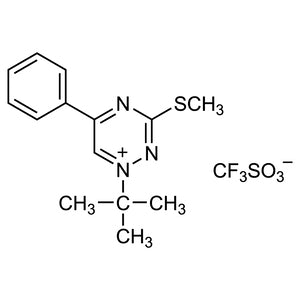
Trifluoromethanesulfonate TCI B7003
Regular price From Rp 2.155.650,00Regular price
![5,10-Bis(4,4,5,5-tetramethyl-1,3,2-dioxaborolan-2-yl)naphtho[1,2-c:5,6-c']bis([1,2,5]oxadiazole) - TCI B5774 - AMI Scientific](http://amiscientific.com/cdn/shop/files/TCI2510B5774.jpg?v=1769180228&width=533)