TCI D5958 DMPSi-Pd/SiO2 is a heterogeneous catalyst composed of active palladium (Pd) metal dispersed on a silica (SiO2) support. This material plays a crucial role in chemical laboratories by facilitating various reactions that require catalytic activity, particularly in reduction and oxidation processes. Its ability to accelerate chemical reactions without being consumed in the process makes it an essential tool for researchers working in both organic and inorganic chemistry. The catalyst’s unique structure allows it to interact efficiently with reactants, enhancing the overall reaction rate and yield.
The key properties that make TCI D5958 DMPSi-Pd/SiO2 a preferred choice include its high surface area and porous structure, which enable efficient adsorption of reactive molecules. These characteristics ensure optimal interaction between the catalyst and the reactants, leading to improved catalytic performance. Additionally, the catalyst is stable under a wide range of reaction conditions and can be reused after reactivation, making it a cost-effective solution for laboratory applications. Its versatility and efficiency make it a popular choice among chemists conducting complex synthesis and conversion processes.
In Indonesian laboratories, DMPSi-Pd/SiO2 is widely used in chemical research and development. It is particularly favored for its reliability and performance in catalytic reactions, supporting both academic and industrial research. Its availability and effectiveness contribute to its popularity in various chemical processes, making it a staple in many laboratory settings across Indonesia.
- Organic synthesis reactions benefit from the high catalytic efficiency of DMPSi-Pd/SiO2, which accelerates complex molecular transformations with minimal side reactions.
- Oxidation processes in inorganic chemistry are enhanced by the catalyst’s ability to facilitate electron transfer and promote selective oxidation of substrates.
- Reduction reactions in chemical synthesis are efficiently supported by the active palladium sites on the silica support, leading to high yields and purity.
- Catalytic hydrogenation processes in industrial and academic settings are optimized using this catalyst due to its stability and reusability.
- Molecular conversion reactions in research laboratories utilize the catalyst’s porous structure for efficient adsorption and reaction kinetics.
| Brand | TCI |
|---|---|
| CAS number | — |
| Molecular formula | — |
| Purity | — |
| Category | Chemistry > Catalysis and Inorganic Chemistry > Transition Elements |
| Pack sizes | Available in various sizes as per supplier specifications |
| Physical form | Solid powder or granular, depending on the formulation |
| Storage | Store in a cool, dry place away from moisture and direct sunlight |
TCI D5958 DMPSi-Pd/SiO2 should be stored in a cool, dry environment to maintain its catalytic activity and prevent degradation. It is recommended to use airtight containers to protect the material from moisture and contaminants. Proper labeling of storage containers is essential to ensure safe handling and prevent accidental exposure. Laboratory personnel should wear appropriate personal protective equipment when handling the catalyst to minimize contact. The material should be kept away from incompatible substances to avoid any potential chemical interactions. Regular inspection of storage conditions ensures the material remains in optimal condition for use in chemical experiments.
—
Produk Terkait
-
TCI B5774 5,10-Bis(4,4,5,5-tetramethyl-1,3,2-dioxaborolan-2-yl)naphtho[1,2-c:5,6-c']bis([1,2,5]oxadiazole)
Regular price Rp 11.420.850,00Regular price -
3-Bromo-5-methylaniline TCI B6015
Regular price From Rp 3.927.000,00Regular price -
TCI B6321 2,6-Bis(acetamido)-2,6-dideoxy-D-mannose
Regular price Rp 4.044.600,00Regular price -
BTP3-Neu5AcNa TCI B6529
Regular price Rp 4.251.450,00Regular price -
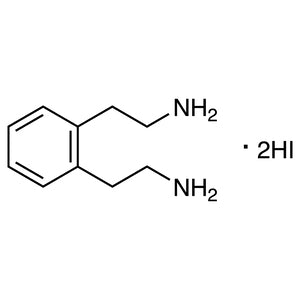
Dihydroiodide TCI B6569
Regular price From Rp 2.155.650,00Regular price -
Biotin-PEG3-Dz TCI B6572
Regular price From Rp 5.904.150,00Regular price -
Biotin-PEG3-PhN3 TCI B6585
Regular price From Rp 5.371.800,00Regular price -
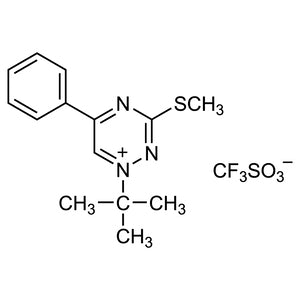
Trifluoromethanesulfonate TCI B7003
Regular price From Rp 2.155.650,00Regular price
![5,10-Bis(4,4,5,5-tetramethyl-1,3,2-dioxaborolan-2-yl)naphtho[1,2-c:5,6-c']bis([1,2,5]oxadiazole) - TCI B5774 - AMI Scientific](http://amiscientific.com/cdn/shop/files/TCI2510B5774.jpg?v=1769180228&width=533)