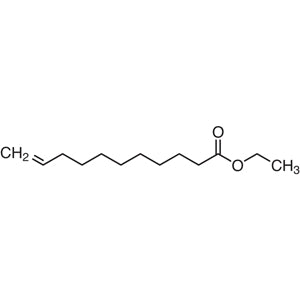
TCI E0771 Ethyl 10-Undecenoate is the ethyl ester of undecylenic acid, classified as a non-heterocyclic building block characterised by a long carbon chain and a terminal double bond at the end of that chain. The combination of an ester group at one end and a terminal alkene at the other makes this compound a genuinely bifunctional material, widely useful in organic chemistry, polymer chemistry, and oleochemical research laboratories. It is frequently employed as a model substrate for studying reactions at terminal double bonds, and equally as a long-chain linker that imparts flexible, hydrophobic character to synthesised molecules and materials.
The property that makes this compound such a common choice is the clean, easily directed reactivity of its terminal alkene. The terminal double bond can undergo olefin metathesis, hydrosilylation, epoxidation, hydroboration, thiol-ene reactions, hydroformylation, or polymerisation, while the ester group can either be preserved intact or converted separately into the corresponding acid, alcohol, or amide at a later stage. This orthogonality gives synthetic chemists a dependable handle for stepwise chain construction, allowing one functional end to be modified without disturbing the other.
Supplied as a liquid that transfers readily by pipette or syringe, the material is practical for small- to medium-scale reactions typical of Indonesian university, institutional, and industrial research laboratories. Because it derives from a vegetable-oil derivative, it also fits work oriented toward renewable feedstocks. It is commonly used in teaching-adjacent research on alkene transformations, in polymer and coating formulation studies, and in oleochemistry groups exploring value-added derivatives of local plant-oil chains.
- Olefin metathesis studies — the unhindered terminal double bond reacts cleanly with common metathesis catalysts, making this ester a reliable substrate for cross- and self-metathesis method development.
- Thiol-ene and hydrosilylation coupling — the terminal alkene provides an accessible addition site for thiols or silanes, allowing long-chain ester fragments to be grafted onto other molecules or surfaces.
- Polymer and copolymer synthesis — the compound serves as a bio-based monomer or comonomer whose long flexible chain lowers rigidity and adds hydrophobic character to the resulting polymer backbone.
- Epoxidation and hydroboration route development — the terminal double bond converts predictably into epoxide or alcohol functionality while the ethyl ester remains untouched for later transformation.
- Oleochemical derivative research — as an undecylenic acid derivative from a vegetable-oil source, it supports investigations into renewable feedstock chemistry and value-added plant-oil products.
| Brand | TCI (Tokyo Chemical Industry) |
|---|---|
| CAS number | 692-86-4 |
| Molecular formula | — |
| Purity | — |
| Category | Chemistry > Building Blocks > Non-Heterocyclic Building Blocks |
| Pack sizes | available in standard TCI research-scale packaging; please confirm the size you require when ordering |
| Physical form | liquid, readily transferred by pipette or syringe |
| Storage | keep in a tightly closed container in a cool, dry, well-ventilated place |
- Catalogue number: E0771
Store the material in a cool, dry, well-ventilated area in its original tightly closed container, kept away from heat, open flame, and direct sunlight. Amber glass bottles or the supplier's original packaging are appropriate, since a tight seal limits exposure to air and moisture that could affect the terminal double bond over long periods. Handle in a fume hood using nitrile gloves, safety glasses, and a laboratory coat, and transfer with clean, dry pipettes or syringes to avoid contamination. Keep containers clearly labelled, avoid contact with strong oxidising agents, and consult the manufacturer's safety data sheet before first use.
—
Produk Terkait
-
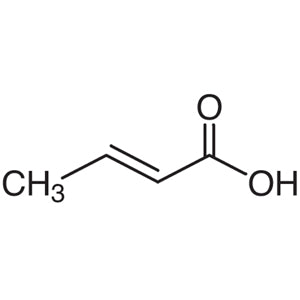
CrotonicAcid TCI C0416
Regular price From Rp 769.650,00Regular price -
ButylCrotonate TCI C0417
Regular price From Rp 530.250,00Regular price -
EthylCrotonate TCI C0418
Regular price From Rp 637.350,00Regular price -
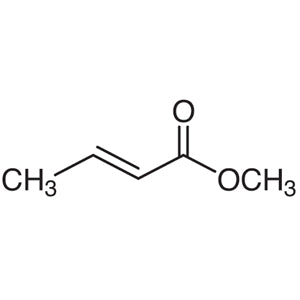
MethylCrotonate TCI C0419
Regular price From Rp 795.900,00Regular price -
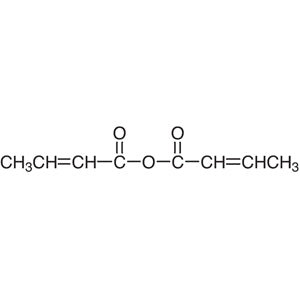
CrotonicAnhydride TCI C0420
Regular price Rp 1.193.850,00Regular price -
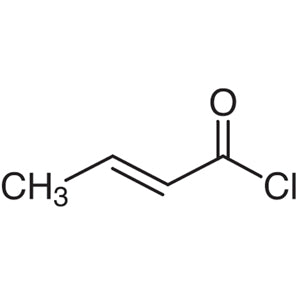
CrotonoylChloride(cis-andtrans-mixture) TCI C0424
Regular price From Rp 795.900,00Regular price -
p-TolylCrotonate TCI C0866
Regular price From Rp 1.115.100,00Regular price -
VinylCrotonate(stabilizedwithMEHQ) TCI C0897
Regular price From Rp 980.700,00Regular price