Ethyl Crotonate from TCI is the ethyl ester of crotonic acid. It is a short-chain α,β-unsaturated ester in which the carbon-carbon double bond is conjugated with the carbonyl group. TCI lists it under Life Science > Biochemicals and Reagents > Lipids because it is related to short-chain fatty acid derivatives. In the laboratory, it is better known as a versatile synthetic reagent. It serves as a Michael acceptor, a dienophile, and a monomer that adds a four-carbon framework to target molecules.
Chemists choose this reagent because it is small, its reactivity is well defined, and any excess is easy to remove since it is a volatile liquid. The electrophilic beta carbon accepts conjugate addition from carbon, nitrogen, and sulfur nucleophiles. The double bond can take part in Diels-Alder reactions, cyclopropanation, and hydrogenation. Unlike ethyl acrylate, it carries a methyl group at the beta position, so addition reactions create a new stereogenic centre. This makes it useful for studies of asymmetric conjugate addition and enantioselective catalysis.
In Indonesia, Ethyl Crotonate is useful in synthetic organic chemistry laboratories, catalysis research groups, and teams developing synthetic intermediates. University research groups often use it as a model substrate when they test new catalysts or reaction conditions, because its behaviour is well documented in the literature. Industrial and contract research laboratories can use it as a simple four-carbon building block when they prepare more complex intermediates for further synthesis.
TCI brochures (PDF)
- Lipids 2025-12-17 · p. 10
- Michael addition studies: The electrophilic beta carbon readily accepts conjugate addition from carbon, nitrogen, and sulfur nucleophiles, making it a dependable substrate for building new carbon-carbon and carbon-heteroatom bonds.
- Asymmetric and enantioselective catalysis: The beta-methyl group creates a new stereogenic centre during addition, so researchers can use it to evaluate how selective chiral catalysts and ligands are.
- Diels-Alder cycloadditions: Its conjugated double bond acts as a dienophile, so chemists can build six-membered ring systems that carry a useful ester group for later transformations.
- Cyclopropanation and hydrogenation reactions: The well-defined alkene undergoes cyclopropanation and hydrogenation in a predictable way, which makes it a convenient model compound for comparing reaction methods and catalysts.
- Synthesis of intermediates: As a compact reagent that brings a four-carbon unit into target molecules, it supports the stepwise construction of intermediates in organic synthesis research and development.
| Brand | TCI (product code C0418) |
|---|---|
| CAS number | 623-70-1 |
| Molecular formula | — |
| Purity | — |
| Category | Life Science > Biochemicals and Reagents > Lipids |
| Pack sizes | See the pack options shown on this product page |
| Physical form | Volatile liquid |
| Storage | Store according to the TCI label and Safety Data Sheet |
Keep Ethyl Crotonate in its original tightly closed container in a cool, dry, well-ventilated place, as directed on the TCI label and Safety Data Sheet. Because it is a volatile liquid, keep it away from heat, sparks, open flames, and other ignition sources, and keep it apart from strong oxidising agents. Work in a fume hood whenever possible. Wear suitable protective gloves, safety glasses, and a laboratory coat. Do not inhale vapours or let the liquid touch your skin or eyes. Reseal the container right after use to limit evaporation and contamination. Dispose of waste according to local regulations and your institution's procedures.
—
Product Categories
Produk Terkait
-
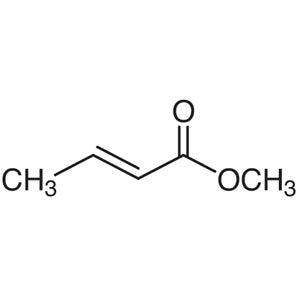
MethylCrotonate TCI C0419
Regular price From Rp 848.400,00Regular priceRp 609.000,00Sale price From Rp 848.400,00 -
IsobutylCrotonate TCI C1295
Regular price Rp 1.113.000,00Regular priceRp 793.800,00Sale price Rp 1.113.000,00 -
tert-ButylCrotonate TCI C1186
Regular price Rp 3.498.600,00Regular priceRp 2.462.250,00Sale price Rp 3.498.600,00 -
sec-ButylCrotonate TCI C1184
Regular price From Rp 1.246.350,00Regular priceRp 887.250,00Sale price From Rp 1.246.350,00 -
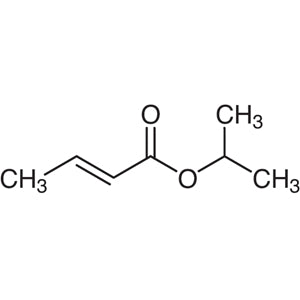
IsopropylCrotonate TCI C1183
Regular price From Rp 1.431.150,00Regular priceRp 1.016.400,00Sale price From Rp 1.431.150,00 -
VinylCrotonate(stabilizedwithMEHQ) TCI C0897
Regular price From Rp 1.033.200,00Regular priceRp 738.150,00Sale price From Rp 1.033.200,00 -
p-TolylCrotonate TCI C0866
Regular price From Rp 1.167.600,00Regular priceRp 831.600,00Sale price From Rp 1.167.600,00 -
ButylCrotonate TCI C0417
Regular price From Rp 582.750,00Regular priceRp 423.150,00Sale price From Rp 582.750,00