9-Fluorenone supplied under TCI catalogue code F0021 is a polycyclic aromatic ketone obtained by oxidation at the ninth position of the fluorene skeleton. The carbonyl group is locked inside a five-membered ring and conjugated with two benzene rings, an arrangement that gives the compound its characteristic yellow colour and its notable photochemical behaviour. In the laboratory, 9-fluorenone serves simultaneously as a synthetic building block, a photosensitizer, and an electron acceptor across a wide range of research programmes. This dual role places it on the reagent shelves of organic chemistry laboratories and of materials laboratories working on light-driven energy conversion.
The property that makes it so widely chosen is the ability of its carbonyl group to absorb visible and ultraviolet light and then enter a relatively long-lived triplet excited state. This excited state can transfer energy to, or draw electrons from, other molecules, which makes the compound an effective initiator of photochemical reactions. Beyond its photochemistry, the carbonyl remains reactive toward nucleophiles, so it is readily converted into alcohols, olefins, and other substituted derivatives. Its rigid, fully conjugated structure also confers good thermal stability, an important characteristic for materials intended to withstand processing and prolonged illumination.
In Indonesian laboratories, 9-fluorenone is typically encountered in university and institutional research settings where organic synthesis and materials chemistry overlap. It appears in postgraduate synthetic work as an intermediate toward fluorene-derived structures, and in photochemistry and photocatalysis studies that examine energy and electron transfer. Materials groups working on light-harvesting and organic electronic systems keep it as a reference acceptor, while teaching laboratories use it to demonstrate carbonyl reactivity within a rigid aromatic framework.
TCI brochures (PDF)
- Fluorenes and Fluorenones 2026-04-15 · p. 7
- Building Blocks for Organic Semiconductor 2026-03-24 · p. 15
- Synthetic building block: the reactive carbonyl and rigid fluorene core allow straightforward elaboration into alcohols, olefins, and substituted derivatives for multi-step organic synthesis programmes.
- Photosensitizer in photochemical reactions: strong absorption of ultraviolet and visible light combined with a long-lived triplet excited state lets it transfer energy efficiently to substrate molecules.
- Electron acceptor studies: the conjugated carbonyl readily draws electrons from donor molecules, making it a useful probe for investigating photoinduced electron transfer processes.
- Light-conversion materials research: good thermal stability and extended conjugation suit it to materials laboratories developing systems that convert absorbed light into usable chemical or electrical energy.
- Carbonyl reactivity demonstrations: its distinct yellow colour and well-defined nucleophilic addition chemistry make it an instructive reagent for teaching and method-development work in organic chemistry.
| Brand | TCI (Tokyo Chemical Industry) |
|---|---|
| CAS number | 486-25-9 |
| Molecular formula | — |
| Purity | — |
| Category | Chemistry > Building Blocks > Non-Heterocyclic Building Blocks |
| Pack sizes | available in the standard research-scale pack sizes offered for this catalogue item |
| Physical form | solid, characteristically yellow in colour |
| Storage | keep in a cool, dry place, protected from light |
- Catalogue code: F0021
Store 9-Fluorenone in its original tightly closed container in a cool, dry, well-ventilated area away from direct sunlight and other light sources, since the compound is photochemically active and should not be left exposed to illumination. Amber glass or otherwise light-protected containers are appropriate for any material transferred out of the original packaging. Handle the solid inside a fume hood to avoid inhaling dust, and wear a laboratory coat, safety goggles, and chemical-resistant gloves throughout. Keep the container away from strong oxidising agents and from sources of heat or ignition. Close the container promptly after use, label all transferred material clearly, and consult the manufacturer's safety data sheet before first use and before any disposal step.
—
Produk Terkait
-
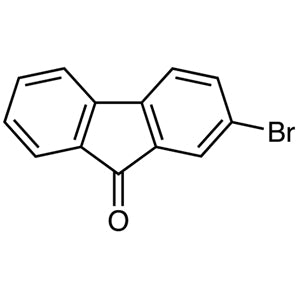
2-Bromo-9-fluorenone TCI B3109
Regular price From Rp 1.405.950,00Regular priceRp 998.550,00Sale price From Rp 1.405.950,00 -
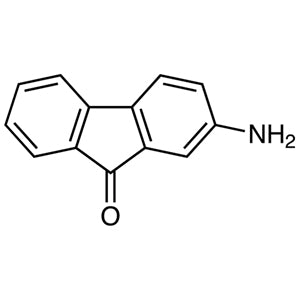
2-Amino-9-fluorenone TCI A1040
Regular price From Rp 1.643.250,00Regular priceRp 1.164.450,00Sale price From Rp 1.643.250,00 -
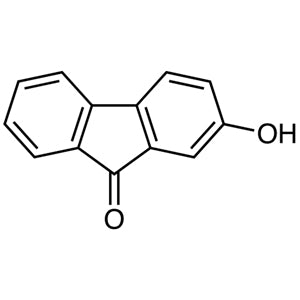
2-Hydroxy-9-fluorenone TCI H0329
Regular price Rp 4.611.600,00Regular priceRp 3.240.300,00Sale price Rp 4.611.600,00 -
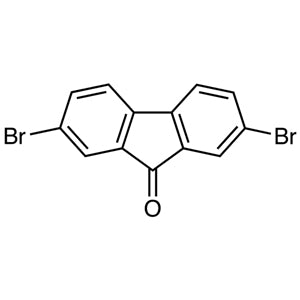
2,7-Dibromo-9-fluorenone TCI D3557
Regular price From Rp 1.326.150,00Regular priceRp 942.900,00Sale price From Rp 1.326.150,00 -
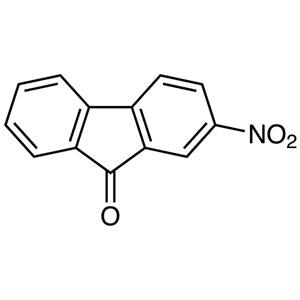
2-Nitrofluorenone TCI N0202
Regular price From Rp 1.829.100,00Regular priceRp 1.294.650,00Sale price From Rp 1.829.100,00 -
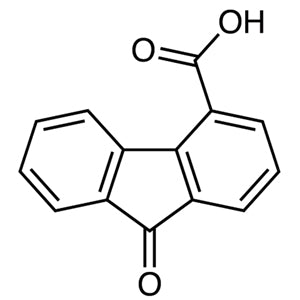
9-Fluorenone-4-carboxylicAcid TCI F0804
Regular price From Rp 1.060.500,00Regular priceRp 757.050,00Sale price From Rp 1.060.500,00 -
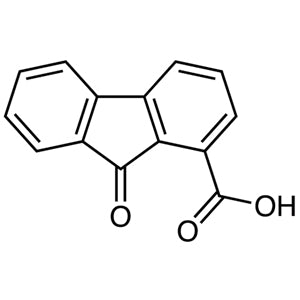
9-Fluorenone-1-carboxylicAcid TCI F0590
Regular price Rp 1.405.950,00Regular priceRp 998.550,00Sale price Rp 1.405.950,00 -
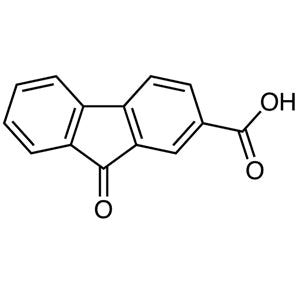
9-Fluorenone-2-carboxylicAcid TCI F0263
Regular price Rp 4.664.100,00Regular priceRp 3.277.050,00Sale price Rp 4.664.100,00