9-Fluorenecarboxylic Acid, supplied under TCI catalogue code F0022, is a fluorene derivative carrying a carboxylic acid group at the ninth carbon atom. The addition of this acid group transforms what was originally a nonpolar hydrocarbon framework into a versatile building block with a clearly defined reactive handle. In organic synthesis laboratories, this compound serves as a starting material for the preparation of esters, amides, and other acyl derivatives, while simultaneously acting as a large, rigid scaffold that is frequently used to introduce controlled steric hindrance into target molecules under design.
The characteristic that makes this material a widely chosen option is the combination of a readily activated carboxylate group with a C-9 proton that is relatively acidic owing to stabilisation by two aromatic rings. Researchers can therefore modify the molecule from two directions: converting the acid group into a range of derivatives through standard coupling reactions, or deprotonating the ninth position in order to install additional substituents. The rigid, planar fluorene framework also confers good crystallinity, so that derivative products are generally straightforward to purify by recrystallisation and are well suited to structural analysis by crystallography.
In Indonesia, this compound is typically used in university organic chemistry research laboratories and in institutional synthesis groups working on the preparation of new derivatives. It is normally ordered in research-scale quantities for use in multi-step synthetic routes, method development work, and the preparation of reference compounds. Laboratories requiring a rigid aromatic building block with a defined reactive handle commonly keep it on hand as a standard item in their synthetic chemistry inventory.
TCI brochures (PDF)
- Fluorenes and Fluorenones 2026-04-15 · p. 3
- Ester synthesis — the carboxylic acid group is readily activated and coupled with alcohols, making this compound a convenient acyl donor for preparing fluorene-containing ester derivatives in multi-step routes.
- Amide bond formation — standard coupling chemistry converts the acid into amides, allowing researchers to attach the bulky fluorene framework to amine-bearing fragments during target molecule construction.
- Acyl derivative preparation — the compound serves as a general starting material for acid chlorides, anhydrides, and related acyl species that feed into further synthetic transformations.
- Steric hindrance engineering — the large and rigid fluorene scaffold is deliberately incorporated into target molecules when a controlled degree of steric bulk is required around a reactive centre.
- C-9 functionalisation studies — the relatively acidic ninth-position proton, stabilised by two aromatic rings, can be deprotonated to install additional substituents at that carbon during derivative development.
| Brand | TCI (Tokyo Chemical Industry) |
|---|---|
| CAS number | 1989-33-9 |
| Molecular formula | — |
| Purity | — |
| Category | Chemistry > Building Blocks > Non-Heterocyclic Building Blocks |
| Pack sizes | available in standard TCI research-scale catalogue pack sizes; please confirm the currently listed options when ordering |
| Physical form | — |
| Storage | store in a tightly closed container in a cool, dry, well-ventilated area away from incompatible materials |
- Catalogue Code: F0022
Store 9-Fluorenecarboxylic Acid in its original tightly closed container, kept in a cool, dry and well-ventilated area away from direct sunlight, heat sources, and incompatible materials such as strong bases and strong oxidising agents. Glass or the manufacturer's supplied packaging is suitable for storage, and containers should be clearly labelled and resealed promptly after each use to limit moisture uptake. Handle the solid in a fume hood where dust generation is possible, and wear appropriate personal protective equipment including safety glasses, gloves, and a laboratory coat. Avoid inhalation of dust and contact with skin and eyes, wash hands thoroughly after handling, and always consult the manufacturer's Safety Data Sheet before use and disposal.
—
Produk Terkait
-
1-FluorenecarboxylicAcid TCI F0541
Regular price From Rp 1.749.300,00Regular priceRp 1.239.000,00Sale price From Rp 1.749.300,00 -
2-Fluorenecarboxaldehyde TCI F0333
Regular price Rp 3.021.900,00Regular priceRp 2.112.600,00Sale price Rp 3.021.900,00 -
1-Pyrenecarboxaldehyde TCI P1448
Regular price From Rp 557.550,00Regular priceRp 389.550,00Sale price From Rp 557.550,00 -
2-Acetamidofluorene TCI A0076
Regular price From Rp 3.419.850,00Regular priceRp 2.406.600,00Sale price From Rp 3.419.850,00 -
2-Acetyl-7-bromofluorene TCI A3061
Regular price Rp 3.180.450,00Regular priceRp 2.239.650,00Sale price Rp 3.180.450,00 -
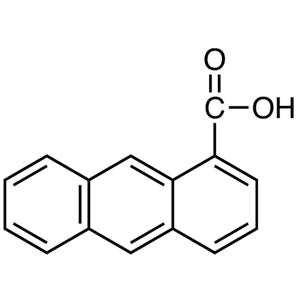
1-AnthracenecarboxylicAcid TCI A1220
Regular price Rp 7.737.450,00Regular priceRp 5.426.400,00Sale price Rp 7.737.450,00 -
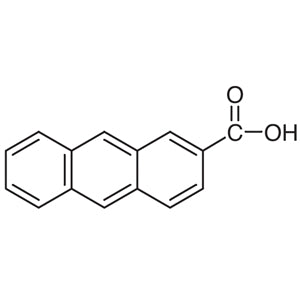
2-AnthracenecarboxylicAcid TCI A1150
Regular price From Rp 5.062.050,00Regular priceRp 3.555.300,00Sale price From Rp 5.062.050,00 -
2-Acetylfluorene TCI A1069
Regular price From Rp 689.850,00Regular priceRp 481.950,00Sale price From Rp 689.850,00