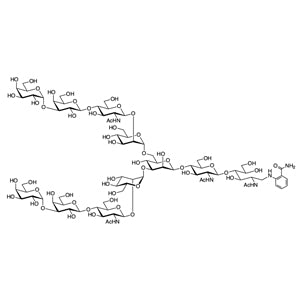
TCI G0494 Gal alpha(1-3) N-Glycan 2AB is a specialized glycan compound used in chemical biology and glycoscience research. This material serves as a key reagent for studying the structural and functional roles of glycans in biological systems. Its specific molecular structure makes it an essential tool for researchers analyzing glycan interactions, metabolism, and disease mechanisms. The compound is widely applicable in advanced analytical techniques, supporting both fundamental and applied research in life sciences.
The compound's chemical stability and well-defined structure make it a preferred choice for laboratory applications. It is compatible with various analytical methods such as HPLC and mass spectrometry, allowing for accurate identification and characterization of glycans in complex biological samples. Its consistent quality and purity ensure reliable results, making it a trusted resource for scientific investigations. The vial format also enhances convenience, ensuring easy handling and storage, which is crucial for maintaining sample integrity and reducing waste.
In Indonesian laboratories, this product is particularly valuable for researchers in glycoscience, especially those working on public health, pharmacology, and biotechnology. Its use in educational settings also supports the training of students in glycan analysis techniques. The compound's versatility and reliability make it an essential component for laboratories focused on molecular interactions and biological processes.
- Glycan Structural Analysis – This compound is ideal for studying the structural characteristics of glycans, aiding in the understanding of their role in cellular processes and disease mechanisms.
- Disease Biomarker Research – Its specific structure allows for the identification of glycan-based biomarkers, supporting research into various diseases and their progression.
- Metabolic Pathway Studies – It is used to investigate the metabolic pathways involving glycans, contributing to insights into metabolic disorders and regulatory mechanisms.
- Molecular Interaction Studies – The compound facilitates the study of glycan-protein and glycan-cell interactions, essential for understanding cellular communication and signaling.
- Educational Training – It serves as a practical tool for teaching glycan analysis techniques, enhancing students’ skills in analytical chemistry and biochemistry.
| Brand | TCI |
|---|---|
| CAS number | — |
| Molecular formula | — |
| Purity | — |
| Category | Chemistry > Chemical Biology > Glycoscience |
| Pack sizes | 500pmol/vial |
| Physical form | Solid (glycan compound) |
| Storage | Store at 2–8°C in a cool, dry place away from light |
This compound should be stored at 2–8°C in a cool, dry place, away from direct light to maintain its stability and integrity. It is recommended to use airtight containers to prevent moisture absorption and contamination. When handling, ensure proper laboratory safety practices are followed, including the use of personal protective equipment such as gloves and safety goggles. Due to its chemical nature, it should be stored separately from incompatible substances. Regular monitoring of storage conditions is advised to ensure optimal performance and consistency in experimental results. Proper labeling and documentation of storage conditions are essential for maintaining a safe and efficient laboratory environment.
—
Produk Terkait
-
TCI B5774 5,10-Bis(4,4,5,5-tetramethyl-1,3,2-dioxaborolan-2-yl)naphtho[1,2-c:5,6-c']bis([1,2,5]oxadiazole)
Regular price Rp 11.420.850,00Regular price -
3-Bromo-5-methylaniline TCI B6015
Regular price From Rp 3.927.000,00Regular price -
TCI B6321 2,6-Bis(acetamido)-2,6-dideoxy-D-mannose
Regular price Rp 4.044.600,00Regular price -
BTP3-Neu5AcNa TCI B6529
Regular price Rp 4.251.450,00Regular price -
Dihydroiodide TCI B6569
Regular price From Rp 2.155.650,00Regular price -
Biotin-PEG3-Dz TCI B6572
Regular price From Rp 5.904.150,00Regular price -
Biotin-PEG3-PhN3 TCI B6585
Regular price From Rp 5.371.800,00Regular price -
Trifluoromethanesulfonate TCI B7003
Regular price From Rp 2.155.650,00Regular price
![5,10-Bis(4,4,5,5-tetramethyl-1,3,2-dioxaborolan-2-yl)naphtho[1,2-c:5,6-c']bis([1,2,5]oxadiazole) - TCI B5774 - AMI Scientific](http://amiscientific.com/cdn/shop/files/TCI2510B5774.jpg?v=1769180228&width=533)