


Methyl 2-Aminothiophene-3-carboxylate is a chemical compound widely used in organic synthesis reactions. It belongs to the category of heterocyclic building blocks, making it a valuable tool in the laboratory for creating complex molecular structures. This compound is often employed as a starting material in the synthesis of various pharmaceuticals, industrial chemicals, and bioactive compounds. Its role as a fundamental building block allows researchers to design and develop new compounds with specific functional groups and molecular frameworks.
The compound's chemical properties, including its heterocyclic structure containing sulfur and nitrogen atoms, make it highly reactive in substitution and condensation reactions. These characteristics enable it to participate in a wide range of synthetic pathways, offering versatility in chemical transformations. Its stability under certain conditions further enhances its utility in controlled laboratory environments. The presence of both nitrogen and sulfur atoms also makes it an attractive candidate for reactions involving the formation of heterocyclic bonds.
In Indonesian laboratories, Methyl 2-Aminothiophene-3-carboxylate is extensively used in organic chemistry research, particularly in pharmacology and the synthesis of bioactive compounds. It is a key component in the development of new drugs and chemical products. Many research institutions and universities rely on this compound for its reliability and effectiveness in complex chemical processes. Its application is widespread in both academic and industrial research settings.
Related TCI products
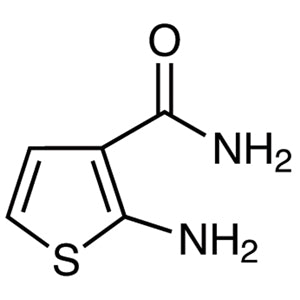
- TCI A3165 14080-51-4 2-Aminothiophene-3-carboxamide
- TCI E1418 844502-63-2 3-Ethyl 4-Methyl 2-Aminothiophene-3,4-dicarboxylate
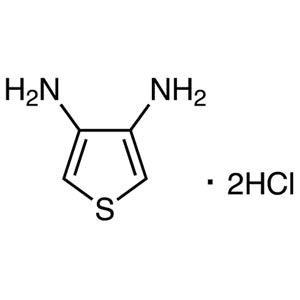
- TCI D2378 90069-81-1 3,4-Diaminothiophene Dihydrochloride
- TCI B5501 147804-30-6 tert-Butyl 1-Oxa-6-azaspiro[2.5]octane-6-carboxylate
- TCI B5385 114214-49-2 tert-Butyl 6-Oxa-3-azabicyclo[3.1.0]hexane-3-carboxylate
- TCI B5248 122684-34-8 tert-Butyl 3-Carbamoylpyrrolidine-1-carboxylate
- Organic synthesis applications benefit from its reactivity and heterocyclic structure, enabling the creation of complex molecules.
- Pharmaceutical research utilizes it as a building block for synthesizing bioactive compounds and drug candidates.
- Industrial chemical development leverages its versatility in forming diverse molecular frameworks.
- Bioactive compound synthesis relies on its ability to participate in precise and controlled chemical reactions.
- Academic research in pharmacology and medicinal chemistry frequently employs it for compound development and structural modifications.
| Brand | TCI |
|---|---|
| CAS number | 4651-81-4 |
| Molecular formula | — |
| Purity | — |
| Category | Chemistry > Building Blocks > Heterocyclic Building Blocks |
| Pack sizes | Available in various quantities as per standard laboratory supply |
| Physical form | Solid powder |
| Storage | Store in a cool, dry place away from direct sunlight |
Methyl 2-Aminothiophene-3-carboxylate should be stored in a cool, dry environment to maintain its chemical stability. It is recommended to keep it in a sealed container to prevent moisture absorption and contamination. Suitable storage conditions include a controlled temperature range between 15°C and 25°C. Avoid exposure to direct sunlight and high humidity to ensure long-term integrity. When handling, use appropriate personal protective equipment such as gloves and safety goggles to minimize direct contact. This compound is generally non-hazardous under normal laboratory conditions but should be treated with care to maintain safety standards.
—
Produk Terkait
-
2-Aminothiophene-3-carboxamide TCI A3165
Regular price From Rp 689.850,00Regular price -
3-Ethyl4-Methyl2-Aminothiophene-3,4-dicarboxylate TCI E1418
Regular price From Rp 1.829.100,00Regular price -
3,4-DiaminothiopheneDihydrochloride TCI D2378
Regular price From Rp 505.050,00Regular price -
tert-Butyl1-Oxa-6-azaspiro[2.5]octane-6-carboxylate TCI B5501
Regular price From Rp 3.021.900,00Regular price -
tert-Butyl6-Oxa-3-azabicyclo[3.1.0]hexane-3-carboxylate TCI B5385
Regular price From Rp 689.850,00Regular price -
tert-Butyl3-Carbamoylpyrrolidine-1-carboxylate TCI B5248
Regular price From Rp 1.060.500,00Regular price -
tert-Butyl2,6-Diazaspiro[3.3]heptane-2-carboxylate TCI B5032
Regular price Rp 3.232.950,00Regular price -
tert-Butyl4-[4-(4,4,5,5-Tetramethyl-1,3,2-dioxaborolan-2-yl)pyrazol-1-yl]piperidine-1-carboxylate TCI B5002
Regular price From Rp 1.696.800,00Regular price

![147804-30-6 tert-Butyl 1-Oxa-6-azaspiro[2.5]octane-6-carboxylate - AMI Scientific](http://amiscientific.com/cdn/shop/files/TCI2510B5501_08674994-ba62-46fc-acd1-54c812460ed8.jpg?v=1767862194&width=533)
![114214-49-2 tert-Butyl 6-Oxa-3-azabicyclo[3.1.0]hexane-3-carboxylate - AMI Scientific](http://amiscientific.com/cdn/shop/files/TCI2510B5385_5494a0f2-ca27-4c7c-b2aa-345805a88f08.jpg?v=1767861794&width=533)

![1041026-70-3 tert-Butyl 2,6-Diazaspiro[3.3]heptane-2-carboxylate - AMI Scientific](http://amiscientific.com/cdn/shop/files/TCI2510B5032.jpg?v=1767091949&width=533)
![877399-74-1 tert-Butyl 4-[4-(4,4,5,5-Tetramethyl-1,3,2-dioxaborolan-2-yl)pyrazol-1-yl]piperidine-1-carboxylate - AMI Scientific](http://amiscientific.com/cdn/shop/files/TCI2510B5002_79e00c7c-6778-4604-beae-188e01d7ad50.jpg?v=1767854889&width=533)