Tert-Butyl 4-[4-(4,4,5,5-Tetramethyl-1,3,2-dioxaborolan-2-yl)pyrazol-1-yl]piperidine-1-carboxylate is a complex organic compound used extensively in synthetic chemistry, particularly in the synthesis of heterocyclic compounds. This compound serves as a key building block in the development of pharmaceuticals and other specialized chemical products. Its unique molecular structure, combining piperidine and pyrazole units linked via a boron atom, makes it a versatile intermediate in various chemical transformations. It is widely utilized in research settings where the creation of complex molecular architectures is required.
The compound's reactivity is a key factor in its popularity among chemists. It is particularly effective in nucleophilic aromatic substitution (S_NAr) reactions and boron-mediated coupling reactions. These properties make it an ideal choice for synthesizing compounds with specific functional groups and structural features. Its ability to participate in multiple reaction pathways enhances its utility in the development of new chemical entities with potential therapeutic or industrial applications.
In Indonesian laboratories, this compound is commonly used in organic chemistry research, especially in the development of new compounds with potential medical or industrial applications. Researchers in academic and industrial settings rely on it to explore novel synthetic routes and to create compounds with specific biological activities. Its role in advancing chemical innovation is significant in both academic and applied research environments.
TCI brochures (PDF)
- Boron Compounds 2025-10-07 · p. 18
Related TCI products
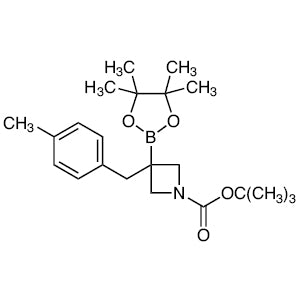
- TCI M3370 2507954-87-0 tert-Butyl 3-(4-Methylbenzyl)-3-(4,4,5,5-tetramethyl-1,3,2-dioxaborolan-2-yl)azetidine-1-carboxylate
- TCI M3369 2507954-88-1 tert-Butyl 3-(4-Methoxybenzyl)-3-(4,4,5,5-tetramethyl-1,3,2-dioxaborolan-2-yl)azetidine-1-carboxylate
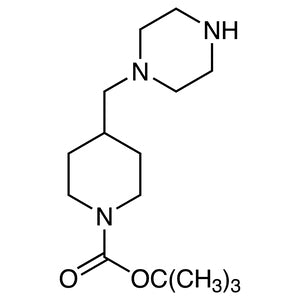
- TCI D5966 381722-48-1 tert-Butyl 4-(Piperazin-1-ylmethyl)piperidine-1-carboxylate
- TCI B5847 167484-18-6 Benzyl Spiro[indoline-3,4'-piperidine]-1'-carboxylate
- TCI T4400 942919-26-8 4-(4,4,5,5-Tetramethyl-1,3,2-dioxaborolan-2-yl)-1H-pyrrolo[2,3-b]pyridine
- TCI T4396 928664-98-6 4-(4,4,5,5-Tetramethyl-1,3,2-dioxaborolan-2-yl)isoxazole
- Organic synthesis of heterocyclic compounds due to its unique molecular structure and reactivity.
- Development of pharmaceuticals and bioactive molecules through nucleophilic substitution and coupling reactions.
- Research in medicinal chemistry for the creation of compounds with specific biological activities.
- Synthesis of complex molecular architectures in academic and industrial research settings.
- Exploration of new chemical pathways in the design of advanced functional materials.
| Brand | TCI |
|---|---|
| CAS number | 877399-74-1 |
| Molecular formula | — |
| Purity | — |
| Category | Chemistry > Building Blocks > Heterocyclic Building Blocks |
| Pack sizes | Available in various quantities as per standard laboratory supply practices |
| Physical form | Solid or liquid, depending on formulation |
| Storage | Store in a cool, dry place away from moisture and direct sunlight |
This compound should be stored in a cool, dry environment, away from moisture and direct sunlight to maintain its stability and reactivity. It is recommended to use airtight containers made of materials compatible with organic solvents to prevent contamination and degradation. Due to its chemical nature, it should be handled with appropriate personal protective equipment, including gloves and safety goggles, to ensure safe laboratory practices. Proper ventilation should be maintained in the workspace to minimize exposure. Regular inspection of storage conditions is advised to ensure the compound remains in optimal condition for use in research applications.
—
Produk Terkait
-
tert-Butyl3-(4-Methylbenzyl)-3-(4,4,5,5-tetramethyl-1,3,2-dioxaborolan-2-yl)azetidine-1-carboxylate TCI M3370
Regular price From Rp 1.988.700,00Regular priceRp 1.405.950,00Sale price From Rp 1.988.700,00 -
tert-Butyl3-(4-Methoxybenzyl)-3-(4,4,5,5-tetramethyl-1,3,2-dioxaborolan-2-yl)azetidine-1-carboxylate TCI M3369
Regular price From Rp 2.279.550,00Regular priceRp 1.609.650,00Sale price From Rp 2.279.550,00 -
tert-Butyl4-(Piperazin-1-ylmethyl)piperidine-1-carboxylate TCI D5966
Regular price From Rp 1.563.450,00Regular priceRp 1.108.800,00Sale price From Rp 1.563.450,00 -
BenzylSpiro[indoline-3,4'-piperidine]-1'-carboxylate TCI B5847
Regular price Rp 7.578.900,00Regular priceRp 5.315.100,00Sale price Rp 7.578.900,00 -
4-(4,4,5,5-Tetramethyl-1,3,2-dioxaborolan-2-yl)-1H-pyrrolo[2,3-b]pyridine TCI T4400
Regular price From Rp 3.683.400,00Regular priceRp 2.591.400,00Sale price From Rp 3.683.400,00 -
4-(4,4,5,5-Tetramethyl-1,3,2-dioxaborolan-2-yl)isoxazole TCI T4396
Regular price From Rp 2.227.050,00Regular priceRp 1.572.900,00Sale price From Rp 2.227.050,00 -
1-(Tetrahydro-2H-pyran-4-yl)-4-(4,4,5,5-tetramethyl-1,3,2-dioxaborolan-2-yl)-1H-pyrazole TCI T3668
Regular price From Rp 822.150,00Regular priceRp 590.100,00Sale price From Rp 822.150,00 -
5-(4,4,5,5-Tetramethyl-1,3,2-dioxaborolan-2-yl)oxindole TCI T3512
Regular price From Rp 3.392.550,00Regular priceRp 2.387.700,00Sale price From Rp 3.392.550,00