


The TCI M3370, tert-Butyl 3-(4-Methylbenzyl)-3-(4,4,5,5-tetramethyl-1,3,2-dioxaborolan-2-yl)azetidine-1-carboxylate, is a complex heterocyclic building block used extensively in organic chemistry laboratories. This compound plays a crucial role in the synthesis of various organic molecules, particularly those requiring high reactivity and functional group versatility. Its unique molecular structure enables it to participate in a wide range of chemical transformations, making it an essential component in modern synthetic strategies. In Indonesia, this compound is widely used in academic and industrial research settings to develop new compounds with specific biological activities.
The compound’s molecular structure features a boronic acid group and an azetidine ring, which contribute to its reactivity and selectivity in chemical reactions. These properties make it a preferred choice for chemists working on complex syntheses, especially in the context of cross-coupling reactions such as the Suzuki-Miyaura reaction. The presence of the boron atom allows for efficient coupling with a variety of aromatic and aliphatic compounds, enhancing the versatility of this building block. Its stability under controlled conditions further supports its use in laboratory environments.
In Indonesian laboratories, this compound is commonly used in pharmaceutical and chemical research to develop new drugs and functional materials. It is a key reagent in the synthesis of bioactive compounds, particularly those with potential therapeutic applications. Researchers rely on its predictable reactivity and compatibility with various reaction conditions to achieve desired chemical outcomes in their experiments.
Related TCI products
- TCI M3369 2507954-88-1 tert-Butyl 3-(4-Methoxybenzyl)-3-(4,4,5,5-tetramethyl-1,3,2-dioxaborolan-2-yl)azetidine-1-carboxylate
- TCI T4400 942919-26-8 4-(4,4,5,5-Tetramethyl-1,3,2-dioxaborolan-2-yl)-1H-pyrrolo[2,3-b]pyridine
- TCI T4396 928664-98-6 4-(4,4,5,5-Tetramethyl-1,3,2-dioxaborolan-2-yl)isoxazole
- TCI T3668 1040377-03-4 1-(Tetrahydro-2H-pyran-4-yl)-4-(4,4,5,5-tetramethyl-1,3,2-dioxaborolan-2-yl)-1H-pyrazole
- TCI T3512 837392-64-0 5-(4,4,5,5-Tetramethyl-1,3,2-dioxaborolan-2-yl)oxindole
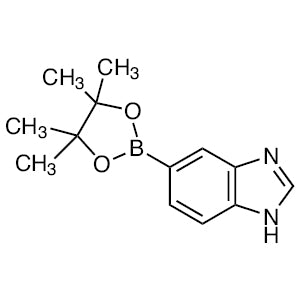
- TCI T3275 1007206-54-3 5-(4,4,5,5-Tetramethyl-1,3,2-dioxaborolan-2-yl)-1H-benzimidazole
- Synthetic Organic Chemistry: This compound is ideal for synthesizing complex organic molecules due to its reactivity and compatibility with various reaction conditions.
- Pharmaceutical Research: It is widely used in drug development for creating bioactive compounds with specific therapeutic properties.
- Cross-Coupling Reactions: Its boronic acid group makes it suitable for Suzuki-Miyaura reactions, enabling the formation of complex molecular structures.
- Functional Material Development: It is employed in the creation of advanced materials with tailored chemical and physical properties.
- Academic and Industrial Research: Its versatility and reliability make it a preferred choice for both academic studies and industrial chemical processes.
| Brand | TCI |
|---|---|
| CAS number | 2507954-87-0 |
| Molecular formula | — |
| Purity | — |
| Category | Chemistry > Building Blocks > Heterocyclic Building Blocks |
| Pack sizes | — |
| Physical form | — |
| Storage | Store in a cool, dry place away from moisture and direct sunlight |
This compound should be stored in a cool, dry environment to maintain its chemical integrity. It is recommended to keep it in a tightly sealed container to prevent exposure to moisture and air. Due to its reactivity, it should be handled with care in a well-ventilated laboratory setting. Avoid direct contact with skin and eyes, and use appropriate personal protective equipment such as gloves and safety goggles. Ensure that storage conditions are consistent to prevent degradation. Proper labeling and storage away from incompatible materials are essential for safe handling and long-term stability.
—
Produk Terkait
-
tert-Butyl3-(4-Methoxybenzyl)-3-(4,4,5,5-tetramethyl-1,3,2-dioxaborolan-2-yl)azetidine-1-carboxylate TCI M3369
Regular price From Rp 2.227.050,00Regular price -
4-(4,4,5,5-Tetramethyl-1,3,2-dioxaborolan-2-yl)-1H-pyrrolo[2,3-b]pyridine TCI T4400
Regular price From Rp 3.630.900,00Regular price -
4-(4,4,5,5-Tetramethyl-1,3,2-dioxaborolan-2-yl)isoxazole TCI T4396
Regular price From Rp 2.174.550,00Regular price -
1-(Tetrahydro-2H-pyran-4-yl)-4-(4,4,5,5-tetramethyl-1,3,2-dioxaborolan-2-yl)-1H-pyrazole TCI T3668
Regular price From Rp 769.650,00Regular price -
5-(4,4,5,5-Tetramethyl-1,3,2-dioxaborolan-2-yl)oxindole TCI T3512
Regular price From Rp 3.340.050,00Regular price -
5-(4,4,5,5-Tetramethyl-1,3,2-dioxaborolan-2-yl)-1H-benzimidazole TCI T3275
Regular price Rp 2.121.000,00Regular price -
1-Methyl-4-[3-(4,4,5,5-tetramethyl-1,3,2-dioxaborolan-2-yl)benzyl]piperazine TCI M3245
Regular price From Rp 1.829.100,00Regular price -
2-Methyl-4-(4,4,5,5-tetramethyl-1,3,2-dioxaborolan-2-yl)pyridine TCI M2867
Regular price From Rp 4.664.100,00Regular price

![942919-26-8 4-(4,4,5,5-Tetramethyl-1,3,2-dioxaborolan-2-yl)-1H-pyrrolo[2,3-b]pyridine - AMI Scientific](http://amiscientific.com/cdn/shop/files/TCI2510T4400.jpg?v=1767145178&width=533)


![883738-27-0 1-Methyl-4-[3-(4,4,5,5-tetramethyl-1,3,2-dioxaborolan-2-yl)benzyl]piperazine - AMI Scientific](http://amiscientific.com/cdn/shop/files/TCI2510M3245.jpg?v=1768205872&width=533)
![883738-27-0 1-Methyl-4-[3-(4,4,5,5-tetramethyl-1,3,2-dioxaborolan-2-yl)benzyl]piperazine - AMI Scientific](http://amiscientific.com/cdn/shop/files/TCI2510M3245_a076a757-1c0f-4f19-8e0d-d99f5073b984.jpg?v=1769056954&width=533)
