TCI M3126 7-Methoxy-1-indanone, bearing CAS number 34985-41-6, is a bicyclic ketone that combines a benzene ring with a fused cyclopentanone ring, carrying a methoxy group at the seventh position. In the laboratory, this compound serves as a highly versatile non-heterocyclic building block for constructing indane and indanone frameworks. These frameworks appear widely in bioactive compounds as well as functional materials, so having a starting material that is already substituted in a specific pattern saves researchers a considerable number of synthetic steps when pursuing complex molecular targets.
The properties that make this compound a preferred choice are the presence of a reactive carbonyl group adjacent to an easily deprotonated alpha position, which leaves the molecule ready to undergo aldol condensation, alpha alkylation, reductive amination, and reduction to the corresponding alcohol and hydrocarbon. The methoxy group on the aromatic ring directs electrophilic substitution reactions while simultaneously providing a site for demethylation should the researcher require a free hydroxyl group at a later stage. As a solid that is stable under ordinary storage, the material is easy to weigh out and does not demand inert atmosphere handling.
In Indonesian laboratories, this building block fits naturally into synthetic organic chemistry work at university research groups, pharmaceutical development units, and materials science programmes. Because it is supplied as a stable solid requiring no special atmosphere, it suits benches that do not have dedicated glovebox facilities. The 200 mg pack size matches exploratory route-scouting and small-scale method development, where a researcher needs enough material to run several trial reactions without committing to a larger quantity.
- Indane and indanone scaffold construction, where the pre-formed bicyclic core with its fixed methoxy substitution pattern removes several ring-building and functionalisation steps from the overall synthetic route.
- Aldol condensation chemistry, since the alpha position next to the carbonyl is readily deprotonated, allowing controlled carbon-carbon bond formation with aldehyde and ketone partners on the bench.
- Alpha alkylation studies, in which the acidic alpha carbon permits the introduction of diverse side chains to build structural variety around a common indanone core template.
- Reductive amination routes toward amine-containing targets, because the reactive carbonyl group converts cleanly into substituted amino derivatives useful in medicinal chemistry exploration.
- Demethylation to free phenol intermediates, where the aromatic methoxy group acts as a protected hydroxyl that can be unmasked when a free hydroxyl is required downstream.
| Brand | TCI |
|---|---|
| CAS number | 34985-41-6 |
| Molecular formula | — |
| Purity | — |
| Category | Chemistry > Building Blocks > Non-Heterocyclic Building Blocks |
| Pack sizes | 200 mg |
| Physical form | solid, stable under ordinary storage conditions |
| Storage | ordinary storage; no inert atmosphere handling required |
- Catalogue code: M3126
Keep the material in its original tightly closed container, stored in a cool, dry place away from direct sunlight, moisture, and sources of ignition or heat. Ordinary storage conditions are sufficient and no inert atmosphere is required, which simplifies routine handling on the bench. Use clean, dry glass or chemically compatible plastic vials when transferring portions, and close containers promptly after weighing to avoid moisture pickup. Handle the solid in a well-ventilated area or fume hood, wearing safety glasses, gloves, and a laboratory coat. Avoid generating dust during weighing, and wash hands thoroughly after use. Keep the container clearly labelled and consult the manufacturer's safety data sheet before first use and before disposal.
—
Produk Terkait
-
6-Methoxy-1-indanone TCI M1535
Regular price From Rp 2.359.350,00Regular price -
5-Methoxy-1-indanone TCI M1467
Regular price From Rp 1.565.550,00Regular price -
4-Methoxy-3-(methoxymethoxy)benzaldehyde TCI M3066
Regular price Rp 3.976.350,00Regular price -
3-Hydroxy-7-methoxy-2-naphthoicAcid TCI H0707
Regular price Rp 1.881.600,00Regular price -
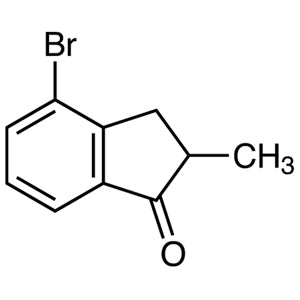
4-Bromo-2-methyl-1-indanone TCI B5096
Regular price From Rp 1.670.550,00Regular price -
4-Bromo-1-indanone TCI B3801
Regular price From Rp 769.650,00Regular price -
6-Bromo-1-indanone TCI B3711
Regular price From Rp 1.510.950,00Regular price -
5-Bromo-1-indanone TCI B2342
Regular price From Rp 743.400,00Regular price