6-Bromo-1-indanone is a chemical compound widely used as a building block in laboratory settings for the synthesis of heterocyclic and aromatic compounds. Its unique structure, featuring a bromo group attached to the indanone ring, makes it a versatile reagent in organic chemistry. This compound plays a crucial role in various synthetic pathways, particularly in reactions involving bromo substitution and aromatic ring modifications. Due to its reactivity and structural stability, it is a key component in the development of complex molecules with applications across multiple scientific disciplines.
The compound’s high reactivity is attributed to its aromatic structure and the presence of the bromo group, which enhances its ability to participate in electrophilic substitution and cyclization reactions. These properties make it a preferred choice for chemists seeking to create new compounds with tailored functionalities. Its stability under controlled conditions ensures that it remains a reliable reagent for precise and reproducible experimental outcomes. This combination of reactivity and stability is essential for maintaining the integrity of chemical reactions in both academic and industrial research environments.
In Indonesian laboratories, 6-Bromo-1-indanone is commonly used in organic chemistry research, pharmaceutical development, and materials science. It is a fundamental reagent for synthesizing new compounds and is frequently employed in experiments requiring high precision and quality. Many research institutions and universities in Indonesia rely on this compound for its consistent performance and reliability in chemical synthesis processes.
- Synthesis of heterocyclic compounds for pharmaceutical development due to its reactivity and structural versatility.
- Bromo substitution reactions in aromatic compound synthesis to create functionalized derivatives.
- Organic chemistry research for creating complex molecules with specific chemical properties.
- Material science applications in the development of new polymers and functional materials.
- Drug discovery projects where precise chemical modifications are required for bioactive compound design.
| Brand | TCI |
|---|---|
| CAS number | 14548-39-1 |
| Molecular formula | — |
| Purity | — |
| Category | Chemistry > Building Blocks > Non-Heterocyclic Building Blocks |
| Pack sizes | Available in various quantities as per standard chemical supply practices |
| Physical form | Solid (exact form may vary based on supplier packaging) |
| Storage | Store in a cool, dry place away from light and incompatible substances |
6-Bromo-1-indanone should be stored in a cool, dry environment, away from direct sunlight and sources of heat. It is recommended to keep the compound in a tightly sealed container to prevent moisture absorption and contamination. Due to its reactivity, it should be stored separately from strong oxidizers and reducing agents to avoid unwanted chemical interactions. In laboratory settings, it is important to handle the compound with appropriate personal protective equipment, such as gloves and safety goggles, to ensure safety during handling and experimentation. Proper ventilation should be maintained in the workspace to minimize exposure to vapors. The compound should not be disposed of in drains or landfills without proper treatment to comply with environmental regulations.
—
Produk Terkait
-
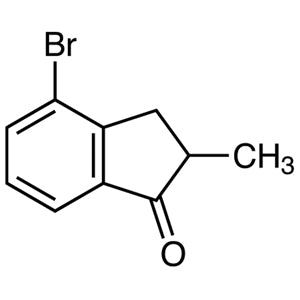
4-Bromo-2-methyl-1-indanone TCI B5096
Regular price From Rp 1.723.050,00Regular priceRp 1.220.100,00Sale price From Rp 1.723.050,00 -
4-Bromo-1-indanone TCI B3801
Regular price From Rp 822.150,00Regular priceRp 590.100,00Sale price From Rp 822.150,00 -
5-Bromo-1-indanone TCI B2342
Regular price From Rp 795.900,00Regular priceRp 572.250,00Sale price From Rp 795.900,00 -
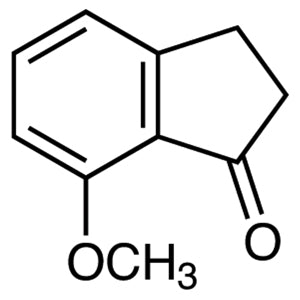
7-Methoxy-1-indanone TCI M3126
Regular price From Rp 1.510.950,00Regular priceRp 1.072.050,00Sale price From Rp 1.510.950,00 -
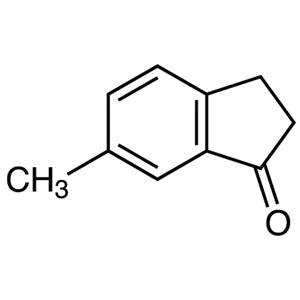
6-Methyl-1-indanone TCI M1901
Regular price Rp 1.644.300,00Regular priceRp 1.149.750,00Sale price Rp 1.644.300,00 -
6-Methoxy-1-indanone TCI M1535
Regular price From Rp 2.411.850,00Regular priceRp 1.702.050,00Sale price From Rp 2.411.850,00 -
5-Methoxy-1-indanone TCI M1467
Regular price From Rp 1.618.050,00Regular priceRp 1.146.600,00Sale price From Rp 1.618.050,00 -
2-Indanone TCI I0649
Regular price From Rp 875.700,00Regular priceRp 612.150,00Sale price From Rp 875.700,00