5-Bromo-1-indanone is a chemical compound widely used in laboratory settings as a building block for the synthesis of heterocyclic and aromatic compounds. It plays a crucial role in organic chemistry, serving as a foundational structure for various chemical reactions. Its presence in the synthesis of pharmaceuticals, industrial chemicals, and complex organic molecules highlights its importance in modern chemical research. This compound is particularly valued for its ability to participate in substitution and condensation reactions, making it a versatile reagent in synthetic pathways.
The compound's molecular structure is stable, yet it exhibits sufficient reactivity to undergo a variety of chemical transformations under controlled laboratory conditions. The bromo group significantly influences its reactivity, enabling it to be a preferred choice in substitution reactions. Its chemical stability and reactivity make it an essential component for researchers aiming to develop new compounds and materials. The compound's adaptability to different reaction conditions further enhances its utility in diverse chemical applications.
In Indonesian laboratories, 5-Bromo-1-indanone is commonly used in pharmaceutical research, organic chemistry studies, and industrial chemical development. It is a key reagent in the synthesis of new compounds and the advancement of chemical products. Many research institutions and universities in Indonesia rely on this compound for their experimental work, contributing to the growth of scientific knowledge in the region.
- Pharmaceutical research utilizes 5-Bromo-1-indanone for the synthesis of novel drug compounds due to its reactivity and structural versatility.
- Organic chemistry experiments benefit from its role as a building block in the creation of complex aromatic and heterocyclic structures.
- Industrial chemical development incorporates this compound for the production of specialty chemicals and intermediates.
- Academic research institutions use it to explore new synthetic pathways and chemical transformations in laboratory settings.
- Chemical synthesis projects rely on its stability and reactivity to produce a wide range of organic compounds efficiently.
| Brand | TCI |
|---|---|
| CAS number | 34598-49-7 |
| Molecular formula | — |
| Purity | — |
| Category | Chemistry > Building Blocks > Non-Heterocyclic Building Blocks |
| Pack sizes | Available in standard laboratory quantities as per supplier specifications |
| Physical form | Solid, crystalline appearance |
| Storage | Store in a cool, dry place away from light and moisture |
5-Bromo-1-indanone should be stored in a cool, dry environment, away from direct light and moisture to maintain its chemical stability. It is recommended to use airtight containers made of glass or inert materials to prevent contamination and degradation. Due to its reactivity, it should be handled with care in a well-ventilated laboratory setting. Proper personal protective equipment, including gloves and safety goggles, should be worn during handling. The compound is not flammable but should be kept away from incompatible substances such as strong oxidizers. Regular monitoring of storage conditions ensures the compound remains suitable for use in chemical synthesis and research applications.
—
Produk Terkait
-
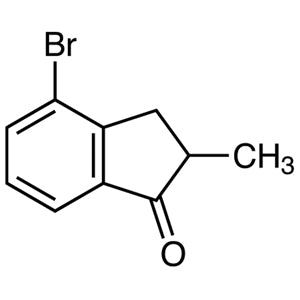
4-Bromo-2-methyl-1-indanone TCI B5096
Regular price From Rp 1.723.050,00Regular priceRp 1.220.100,00Sale price From Rp 1.723.050,00 -
4-Bromo-1-indanone TCI B3801
Regular price From Rp 822.150,00Regular priceRp 590.100,00Sale price From Rp 822.150,00 -
6-Bromo-1-indanone TCI B3711
Regular price From Rp 1.563.450,00Regular priceRp 1.108.800,00Sale price From Rp 1.563.450,00 -
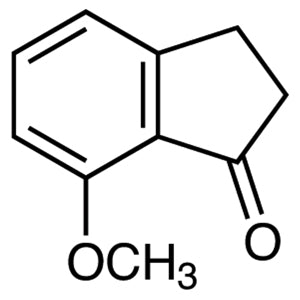
7-Methoxy-1-indanone TCI M3126
Regular price From Rp 1.510.950,00Regular priceRp 1.072.050,00Sale price From Rp 1.510.950,00 -
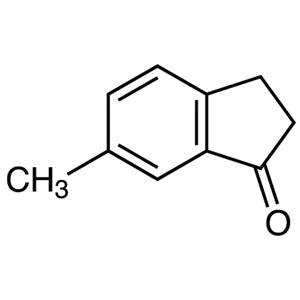
6-Methyl-1-indanone TCI M1901
Regular price Rp 1.644.300,00Regular priceRp 1.149.750,00Sale price Rp 1.644.300,00 -
6-Methoxy-1-indanone TCI M1535
Regular price From Rp 2.411.850,00Regular priceRp 1.702.050,00Sale price From Rp 2.411.850,00 -
5-Methoxy-1-indanone TCI M1467
Regular price From Rp 1.618.050,00Regular priceRp 1.146.600,00Sale price From Rp 1.618.050,00 -
2-Indanone TCI I0649
Regular price From Rp 875.700,00Regular priceRp 612.150,00Sale price From Rp 875.700,00