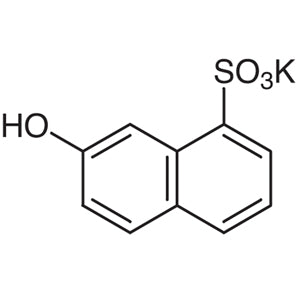
TCI N0075 Potassium 7-Hydroxy-1-naphthalenesulfonate is the potassium salt of a hydroxylated naphthalenesulfonic acid, supplied as an aromatic building block for organic synthesis. The preparation is declared to contain isomer, and this compositional information matters: it allows the user to plan a purification step in advance or to select applications that are not sensitive to the presence of an isomer. Naphthol sulfonate compounds of this class have historically served as key intermediates in the manufacture of azo dyes and of a wide range of substituted naphthalene derivatives in synthesis laboratories.
The properties that make this material a preferred choice come from the combination of two reactive functional groups on a single naphthalene framework: a phenolic hydroxyl group, which activates the ring toward electrophilic substitution reactions including diazo coupling, and a sulfonate group present in the potassium salt form. The presence of the sulfonate group confers good solubility in water, a practical advantage over neutral naphthol derivatives, which tend to dissolve poorly, so that reactions can be run in aqueous media. The solid salt form is also easier to weigh, handle, and store than the free sulfonic acid, which is strongly hygroscopic.
In Indonesian laboratories, a building block of this type is used in university and institutional organic synthesis work, in dye and colorant chemistry teaching and research, and in the preparation of substituted naphthalene derivatives. The water solubility of the potassium salt suits laboratories that prefer aqueous reaction conditions, while the stable solid form is well suited to the warm, humid conditions typical of the region, where hygroscopic free acids are more troublesome to keep in good condition between uses.
- Azo dye synthesis — the activated phenolic ring undergoes diazo coupling readily, making this a classical coupling component for preparing azo colorants in research and teaching laboratories.
- Preparation of substituted naphthalene derivatives — the two distinct functional groups provide separate handles for further chemical modification of the naphthalene framework in multi-step synthesis.
- Aqueous-phase organic synthesis — the sulfonate group gives water solubility, allowing reactions to be carried out in aqueous media without recourse to organic solvent systems.
- Electrophilic aromatic substitution studies — the phenolic hydroxyl activates the ring, so the compound serves as a well-behaved substrate for teaching and investigating substitution behaviour.
- Reference and method development work — the declared isomer content lets analysts develop separation or purification procedures, or deliberately choose isomer-tolerant applications during method design.
| Brand | TCI |
|---|---|
| CAS number | 30252-40-5 |
| Molecular formula | — |
| Purity | — |
| Category | Chemistry > Building Blocks > Non-Heterocyclic Building Blocks |
| Pack sizes | available in the catalogue pack sizes offered by TCI for this item |
| Physical form | solid potassium salt |
| Storage | keep in a tightly closed container, protected from moisture |
- Composition note: contains isomer
Store the material in its original tightly closed container in a cool, dry, well-ventilated place away from moisture, since sulfonate salts readily take up water from humid air. Glass or suitable chemically resistant plastic containers with secure closures are appropriate. Weigh and transfer the solid in a fume hood or a well-ventilated area to avoid inhaling dust, and wear a laboratory coat, safety glasses, and chemical-resistant gloves. Keep the container closed when not in use, avoid contact with skin and eyes, and consult the manufacturer's safety data sheet before handling. Dispose of residues and contaminated material in accordance with applicable laboratory waste procedures.
—
Produk Terkait
-
o-ToluenesulfonylChloride(containsca23%isomer) TCI T0284
Regular price From Rp 1.140.300,00Regular price -
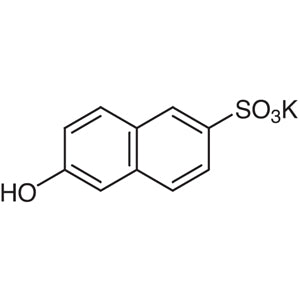
Potassium6-Hydroxy-2-naphthalenesulfonate TCI N0703
Regular price Rp 2.041.200,00Regular price -
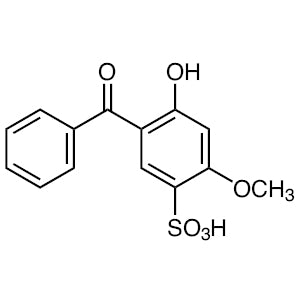
2-Hydroxy-4-methoxybenzophenone-5-sulfonicAcid(containsca10%IsopropylAlcohol) TCI H0466
Regular price From Rp 1.644.300,00Regular price -
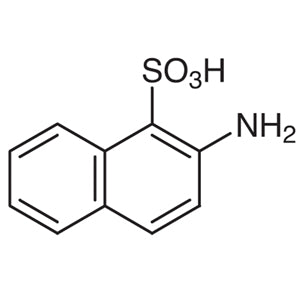
2-Amino-1-naphthalenesulfonicAcid TCI A0343
Regular price From Rp 477.750,00Regular price -
5-Amino-2-naphthalenesulfonicAcid TCI A0346
Regular price From Rp 717.150,00Regular price -
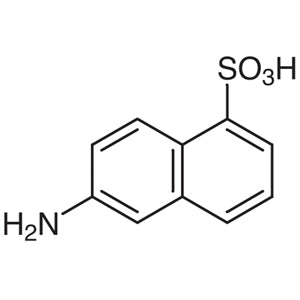
6-Amino-1-naphthalenesulfonicAcid TCI A0347
Regular price From Rp 955.500,00Regular price -
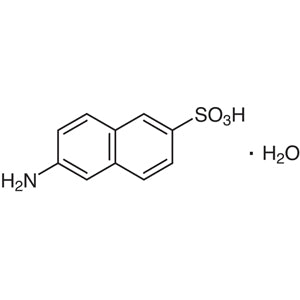
6-Amino-2-naphthalenesulfonicAcidMonohydrate TCI A0348
Regular price From Rp 1.405.950,00Regular price -
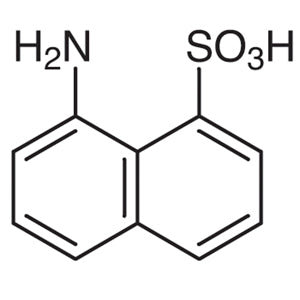
8-Amino-1-naphthalenesulfonicAcid TCI A0350
Regular price From Rp 1.008.000,00Regular price