


TCI D3706 Dihydrogen Di-mu-chlorotetrakis(di-tert-butylphosphinito)dipalladate, CAS 386706-31-6, is a binuclear palladium complex built around di-tert-butylphosphinito ligands and bridging chloride units. In the laboratory it serves as a versatile palladium precatalyst for transition-metal-catalysed transformations, including carbon–carbon bond-forming cross-couplings, carbon–heteroatom bond formation, and phosphorylation and hydrophosphorylation reactions. Its role is to deliver a palladium centre already paired with electron-rich phosphorus ligands within a single solid compound, so reaction set-up becomes more compact and results are easier to reproduce from one experiment to the next.
The properties that make this complex a frequent choice begin with its stability toward air and moisture relative to palladium–phosphine systems that must be prepared fresh inside a glovebox. The di-tert-butylphosphinito-based ligand framework is strongly electron-donating and sterically demanding, a combination that improves the ability of the palladium centre to undergo oxidative addition with difficult substrates while also accelerating release of the product. The chloride-bridged dimeric structure makes the material a solid that can be weighed directly on the bench, removing the need to handle a separately generated ligand–metal mixture before each run.
In Indonesian laboratories this type of precatalyst fits research and development groups in synthetic organic chemistry, organometallic chemistry, and pharmaceutical or fine-chemical process work, where cross-coupling steps are assembled routinely and glovebox access is not always available for every experiment. Because the compound is a weighable, comparatively robust solid, it suits university research groups, government research institutes, and industrial R&D units that need reproducible palladium catalysis from a shelf-stable reagent.
- Carbon–carbon cross-coupling reactions: the pre-formed palladium–phosphinito pairing supplies an active catalytic species directly, giving consistent coupling performance without generating the ligand–metal combination in situ before every run.
- Carbon–heteroatom bond formation: the strongly electron-donating di-tert-butylphosphinito ligands assist oxidative addition into demanding substrates, supporting couplings that join carbon centres to heteroatom-bearing partners under palladium catalysis.
- Phosphorylation reactions: this complex is used as the palladium source for installing phosphorus-containing groups, where the phosphinito ligand environment provides a catalyst centre already suited to phosphorus chemistry.
- Hydrophosphorylation reactions: the same precatalyst supports palladium-mediated addition of phosphorus–hydrogen bonds across substrates, allowing the reaction to be assembled from one weighable solid rather than a freshly prepared system.
- Method development and reaction screening: bench stability toward air and moisture makes it practical to weigh out repeat portions for parallel trials, improving reproducibility when comparing conditions across successive experiments.
| Brand | TCI |
|---|---|
| CAS number | 386706-31-6 |
| Molecular formula | — |
| Purity | — |
| Category | Chemistry > Catalysis and Inorganic Chemistry > Transition Elements [Catalysis and Inorganic Chemistry] |
| Pack sizes | supplied in standard TCI catalogue pack sizes; please confirm the size required when ordering |
| Physical form | solid, chloride-bridged dimeric palladium complex that can be weighed directly on the bench |
| Storage | keep in the tightly closed original container, protected from air and moisture |
Store the material in its original tightly closed container in a cool, dry, well-ventilated area, away from heat sources and incompatible chemicals, and keep the container closed whenever the compound is not being weighed. Although this complex is more tolerant of air and moisture than palladium–phosphine systems prepared fresh in a glovebox, it should still be protected from prolonged exposure to humidity for best catalytic performance. Handle in a fume hood using standard laboratory personal protective equipment, including safety glasses, gloves, and a laboratory coat, and avoid generating or inhaling dust. Use clean, dry spatulas and glassware for transfers, label any secondary containers clearly, and follow the manufacturer's safety data sheet together with local institutional rules for handling and disposal of palladium-containing residues.
—
Produk Terkait
-
Bis(tri-tert-butylphosphine)palladium(0) TCI B3161
Regular price From Rp 2.650.200,00Regular price -
[1,1'-Bis(di-tert-butylphosphino)ferrocene]palladium(II)Dichloride TCI B3160
Regular price From Rp 6.758.850,00Regular price -
Chloro[(tri-tert-butylphosphine)-2-(2-aminobiphenyl)]palladium(II) TCI C2734
Regular price Rp 7.209.300,00Regular price -
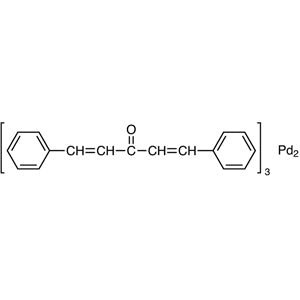
Tris(dibenzylideneacetone)dipalladium(0) TCI T2184
Regular price From Rp 2.545.200,00Regular price -
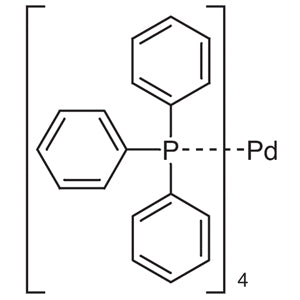
Tetrakis(triphenylphosphine)palladium(0) TCI T1350
Regular price From Rp 1.405.950,00Regular price -
Bis[1,2-bis(diphenylphosphino)ethane]palladium(0) TCI B3224
Regular price Rp 2.306.850,00Regular price -
[1,1'-Bis(diphenylphosphino)ferrocene]palladium(II)DichlorideDichloromethaneAdduct TCI B2064
Regular price From Rp 2.068.500,00Regular price -
Bis(tricyclohexylphosphine)palladium(II)Dichloride TCI B2055
Regular price From Rp 2.147.250,00Regular price

![95408-45-0 [1,1'-Bis(di-tert-butylphosphino)ferrocene]palladium(II) Dichloride - AMI Scientific](http://amiscientific.com/cdn/shop/files/TCI2510B3160_a4c0b85c-059a-4cb6-9b5d-8c432346ca89.jpg?v=1767431571&width=533)
![Chloro[(tri-tert-butylphosphine)-2-(2-aminobiphenyl)]palladium(II) (CAS 1375325-71-5) - TCI C2734 - AMI Scientific](http://amiscientific.com/cdn/shop/files/TCI2510C2734.jpg?v=1767098705&width=533)
![31277-98-2 Bis[1,2-bis(diphenylphosphino)ethane]palladium(0) - AMI Scientific](http://amiscientific.com/cdn/shop/files/TCI2510B3224_8c85b882-6dd5-4a37-880a-a8e8601dc8ca.jpg?v=1767431836&width=533)
![95464-05-4 [1,1'-Bis(diphenylphosphino)ferrocene]palladium(II) Dichloride Dichloromethane Adduct - AMI Scientific](http://amiscientific.com/cdn/shop/files/TCI2510B2064_55725750-1d93-4607-a5e5-5c490594863a.jpg?v=1767330765&width=533)
