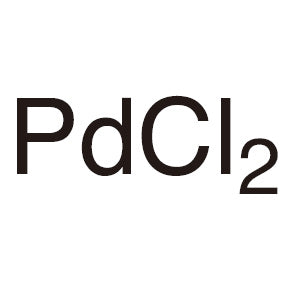
[1,1'-Bis(diphenylphosphino)ferrocene]palladium(II) Dichloride Dichloromethane Adduct is a highly specialized chemical compound used in catalytic reactions, particularly in C-H activation. This material serves as a crucial reagent in modern organic synthesis, enabling efficient and selective transformations of carbon-hydrogen bonds. Its role in the laboratory is to facilitate complex chemical reactions with minimal side reactions, making it an essential tool for researchers working in catalysis and inorganic chemistry. The compound is widely applied in the development of new synthetic methodologies and is valued for its ability to enhance reaction efficiency without altering the core structure of the target molecule.
This compound is preferred due to its unique molecular structure, which combines a ferrocene core with phosphine groups, enhancing both stability and catalytic activity. Its high reactivity and selectivity make it ideal for a wide range of applications, including cross-coupling reactions and hydrogenation processes. The presence of dichloromethane as a solvent adduct further contributes to its solubility and compatibility with various reaction conditions. These properties ensure that it remains a reliable and effective catalyst in both academic and industrial research settings.
In Indonesian laboratories, this compound is commonly used in chemical research, especially in catalysis and organic synthesis. It is a key component in studies aimed at developing more efficient and sustainable chemical processes. Researchers in universities and research institutions rely on its performance to achieve high yields and selectivity in their experiments. Its application is particularly prominent in projects focused on C-H activation, making it a vital resource for advancing chemical innovation in the region.
TCI brochures (PDF)
- Palladium Catalysts for Cross-Coupling Reaction 2025-05-01 · p. 1
- C-H Bond Activation Reaction 2025-06-20 · p. 4
- Transition Metal Catalysts 2026-04-10 · p. 14
- Suzuki-Miyaura Cross Coupling Reaction 2025-12-01 · p. 23
Related TCI products
- TCI B2026 40691-33-6 Bis(tri-o-tolylphosphine)palladium(II) Dichloride
- TCI B1668 14220-64-5 Bis(benzonitrile)palladium(II) Dichloride
- TCI B1667 13965-03-2 Bis(triphenylphosphine)palladium(II) Dichloride
- TCI B2042 14588-08-0 Bis(triphenylphosphine)palladium(II) Diacetate
- TCI P1489 7647-10-1 Palladium(II) Chloride
- TCI B3160 95408-45-0 [1,1'-Bis(di-tert-butylphosphino)ferrocene]palladium(II) Dichloride
- C-H Activation Reactions: This compound is ideal for C-H activation due to its high catalytic efficiency and ability to selectively activate carbon-hydrogen bonds, making it suitable for complex organic transformations.
- Cross-Coupling Reactions: Its unique structure allows it to facilitate efficient cross-coupling reactions, which are essential in the synthesis of a wide range of organic compounds.
- Hydrogenation Processes: The compound’s catalytic properties make it effective in hydrogenation reactions, where it helps in reducing double bonds with high selectivity.
- Organic Synthesis Research: It is widely used in research settings to develop new synthetic methodologies and improve reaction efficiency in organic chemistry.
- Catalytic Studies in Academic Institutions: Its reliability and performance make it a preferred choice for academic research focused on catalysis and inorganic chemistry.
| Brand | TCI |
|---|---|
| CAS number | 95464-05-4 |
| Molecular formula | — |
| Purity | — |
| Category | Chemistry > Catalysis and Inorganic Chemistry > C-H Activation [Catalysis] |
| Pack sizes | Available in various quantities as per supplier specifications |
| Physical form | Solid or powder, depending on the formulation |
| Storage | Store in a cool, dry place away from moisture and light |
This compound should be stored in a cool, dry environment, away from moisture and direct light to maintain its stability and effectiveness. It is recommended to use airtight containers to prevent exposure to air and moisture, which can degrade its catalytic properties. Due to its high reactivity, it should be handled with care using appropriate personal protective equipment, such as gloves and safety goggles. It is important to ensure that the compound is not exposed to incompatible substances, as this could lead to unwanted chemical reactions. In laboratory settings, it should be stored in a designated chemical storage area that is accessible only to authorized personnel. Proper labeling and documentation are essential to ensure safe handling and use in all experimental procedures.
—
Product Categories
- Catalysis and Inorganic ChemistryC-H Activation [Catalysis]Palladium Compounds [C-H Activation]
- Catalysis and Inorganic ChemistryTransition Elements [Catalysis and Inorganic Chemistry]Palladium [Catalysis and Inorganic Chemistry]
- Catalysis and Inorganic ChemistryCross-coupling Reaction using Transition Metal Catalysts [C-C Bond Formation]Palladium Catalysts [Cross-coupling Reaction using Transition Metal Catalysts]
- Synthetic ReagentsC-C Bond Formation [Synthetic Reagents]Cross-coupling Reaction using Transition Metal Catalysts [C-C Bond Formation]
- Synthetic ReagentsC-X(Non-Halogen) Bond Formation [Synthetic Reagents]C-H Bond Activation Reaction [Synthetic Reagents]
Produk Terkait
-
Bis(tri-o-tolylphosphine)palladium(II)Dichloride TCI B2026
Regular price From Rp 2.121.000,00Regular priceRp 1.498.350,00Sale price From Rp 2.121.000,00 -
Bis(benzonitrile)palladium(II)Dichloride TCI B1668
Regular price From Rp 2.942.100,00Regular priceRp 2.072.700,00Sale price From Rp 2.942.100,00 -
Bis(triphenylphosphine)palladium(II)Dichloride TCI B1667
Regular price From Rp 1.618.050,00Regular priceRp 1.146.600,00Sale price From Rp 1.618.050,00 -
Bis(triphenylphosphine)palladium(II)Diacetate TCI B2042
Regular price From Rp 2.942.100,00Regular priceRp 2.072.700,00Sale price From Rp 2.942.100,00 -
Palladium(II)Chloride TCI P1489
Regular price From Rp 3.127.950,00Regular priceRp 2.202.900,00Sale price From Rp 3.127.950,00 -
[1,1'-Bis(di-tert-butylphosphino)ferrocene]palladium(II)Dichloride TCI B3160
Regular price From Rp 6.811.350,00Regular priceRp 4.778.550,00Sale price From Rp 6.811.350,00 -
Bis(tricyclohexylphosphine)palladium(II)Dichloride TCI B2055
Regular price From Rp 2.199.750,00Regular priceRp 1.554.000,00Sale price From Rp 2.199.750,00 -
[1,2-Bis(diphenylphosphino)ethane]palladium(II)Dichloride TCI B2016
Regular price From Rp 2.121.000,00Regular priceRp 1.498.350,00Sale price From Rp 2.121.000,00