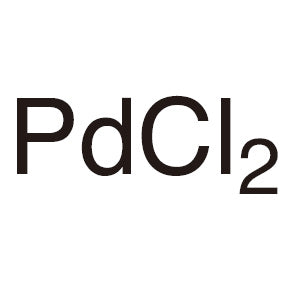
Palladium(II) Chloride (TCI P1489), with CAS number 7647-10-1, is a key chemical compound used in catalytic reactions and C-H activation processes. It plays a crucial role in organic synthesis by facilitating reactions that require the activation of carbon-hydrogen bonds. This compound is widely utilized in laboratory settings for its ability to accelerate chemical reactions without altering the structure of the main molecular components. Its versatility makes it an essential reagent for researchers working in catalysis and inorganic chemistry.
Palladium(II) Chloride is known for its high density and solubility in organic solvents such as ethyl acetate and acetone. These properties make it ideal for applications requiring high reactivity and concentration. Additionally, it has the ability to form complexes with various ligands, which expands its utility in chemical synthesis. The compound is chemically stable under certain conditions but is highly reactive towards water and organic compounds. This reactivity necessitates careful handling and storage to maintain its effectiveness.
In Indonesian laboratories, Palladium(II) Chloride is extensively used in organic chemistry and catalysis research. Its application is particularly relevant for institutions and researchers focused on developing new synthetic methods and catalytic processes. The compound's performance in controlled environments supports advanced research and innovation in chemical sciences, making it a valuable resource for academic and industrial laboratories.
- Organic synthesis reactions benefit from Palladium(II) Chloride's ability to activate carbon-hydrogen bonds, enabling complex molecule formation through efficient catalytic mechanisms.
- C-H activation processes rely on this compound's reactivity to facilitate selective bond-breaking, which is critical in creating novel chemical structures with high precision.
- Coupling reactions are enhanced by the compound's capacity to act as a catalyst, promoting the formation of carbon-carbon bonds under controlled conditions.
- Isomerization processes utilize Palladium(II) Chloride to rearrange molecular structures efficiently, offering a reliable method for structural transformation.
- Substitution reactions benefit from its high reactivity, allowing for the replacement of functional groups in organic compounds with minimal byproduct formation.
| Brand | TCI |
|---|---|
| CAS number | 7647-10-1 |
| Molecular formula | — |
| Purity | — |
| Category | Chemistry > Catalysis and Inorganic Chemistry > C-H Activation [Catalysis] |
| Pack sizes | Available in various quantities as per supplier specifications |
| Physical form | Solid powder |
| Storage | Store in a dry, cool, and well-ventilated area away from moisture and organic solvents |
Palladium(II) Chloride should be stored in a dry, cool, and well-ventilated area to prevent moisture exposure, which can lead to degradation. It is recommended to use airtight containers made of glass or polyethylene to ensure chemical stability. Due to its reactivity with water and organic compounds, it should be kept away from these substances during storage. Laboratory personnel should wear appropriate personal protective equipment, including gloves and safety goggles, when handling this compound. Proper ventilation is essential to minimize inhalation risks. Regular monitoring of storage conditions ensures the compound remains effective for its intended applications.
—
Produk Terkait
-
TCI B5774 5,10-Bis(4,4,5,5-tetramethyl-1,3,2-dioxaborolan-2-yl)naphtho[1,2-c:5,6-c']bis([1,2,5]oxadiazole)
Regular price Rp 10.255.350,00Regular price -
Dihydroiodide TCI B6569
Regular price From Rp 1.936.200,00Regular price -
Trifluoromethanesulfonate TCI B7003
Regular price From Rp 1.936.200,00Regular price
![5,10-Bis(4,4,5,5-tetramethyl-1,3,2-dioxaborolan-2-yl)naphtho[1,2-c:5,6-c']bis([1,2,5]oxadiazole) - TCI B5774 - AMI Scientific](http://amiscientific.com/cdn/shop/files/TCI2510B5774.jpg?v=1769180228&width=533)