Palladium(II)(π-cinnamyl) Chloride Dimer from TCI is a dimeric palladium complex. Each palladium atom is bound to a cinnamyl ligand, a derivative of the allyl group, and the two metal centres are linked by bridging chloride atoms. In synthetic chemistry laboratories, this complex is known as a versatile palladium precatalyst. When combined with phosphine or N-heterocyclic carbene ligands, it forms active palladium(0) species. These species catalyse cross-coupling reactions and C–H bond activation, which chemists use to build complex organic molecular frameworks.
Researchers choose this complex because it is a well-defined palladium source and is relatively easy to handle compared with some Pd(0) precursors. Under reaction conditions, the cinnamyl ligand is released fairly readily, so the active catalyst forms efficiently with a wide range of supporting ligands. This flexibility lets researchers screen many ligand combinations from a single palladium source. The complex is also a stable solid, which makes it easier to weigh out in small amounts. This allows more precise catalyst stoichiometry and makes results easier to compare from one experiment to the next.
In Indonesia, palladium-catalysed reactions are now part of synthetic chemistry research at universities, research institutes and industrial development laboratories. Research groups working on organic synthesis, medicinal chemistry and new materials can use this precatalyst to explore cross-coupling and C–H activation methods. Because a single, consistent palladium source can be paired with different ligands, it suits both teaching-oriented research projects and more advanced methodology studies that need reproducible catalyst performance across many reactions.
TCI brochures (PDF)
- C-H Bond Activation Reaction 2025-06-20 · p. 4
- Transition Metal Catalysts 2026-04-10 · p. 14
- Suzuki-Miyaura Cross Coupling Reaction 2025-12-01 · p. 22
Related TCI products
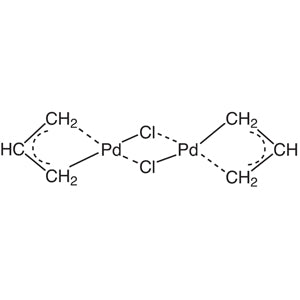
- TCI A1479 12012-95-2 Allylpalladium(II) Chloride Dimer
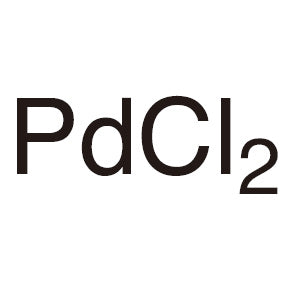
- TCI P1489 7647-10-1 Palladium(II) Chloride
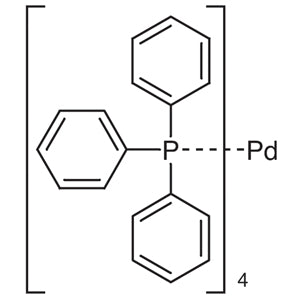
- TCI T1350 14221-01-3 Tetrakis(triphenylphosphine)palladium(0)
- TCI B3160 95408-45-0 [1,1'-Bis(di-tert-butylphosphino)ferrocene]palladium(II) Dichloride
- TCI B2064 95464-05-4 [1,1'-Bis(diphenylphosphino)ferrocene]palladium(II) Dichloride Dichloromethane Adduct
- TCI B2055 29934-17-6 Bis(tricyclohexylphosphine)palladium(II) Dichloride
- Cross-coupling reactions: the complex acts as a precatalyst that forms active palladium(0) species with phosphine or N-heterocyclic carbene ligands, enabling carbon–carbon and carbon–heteroatom bond formation.
- C–H bond activation: with suitable supporting ligands, it generates palladium catalysts for direct C–H functionalisation, a strategy for building complex organic frameworks in fewer synthetic steps.
- Ligand screening studies: because the cinnamyl ligand is released readily under reaction conditions, researchers can test many ligand combinations against one well-defined palladium source and compare them fairly.
- Synthesis of complex organic molecules: the active catalyst it forms helps assemble elaborate molecular frameworks used in medicinal chemistry, natural product research and functional materials development.
- Reaction method development and optimisation: as a stable solid that can be weighed precisely in small amounts, it supports accurate catalyst loading and reproducible results across repeated experiments.
| Brand | TCI (product code P2017) |
|---|---|
| CAS number | 12131-44-1 |
| Molecular formula | — |
| Purity | — |
| Category | Chemistry > Catalysis and Inorganic Chemistry > C-H Activation [Catalysis] |
| Pack sizes | available in the pack sizes offered by TCI for this product code |
| Physical form | solid |
| Storage | keep tightly closed and store as stated on the TCI label and safety data sheet |
Store Palladium(II)(π-cinnamyl) Chloride Dimer in its original, tightly closed container, in a cool, dry place away from direct light, heat sources and incompatible substances. Follow any temperature or inert-atmosphere instructions on the TCI label and safety data sheet. After each use, reseal the container promptly to limit exposure to air and moisture. Handle the compound in a well-ventilated area or fume hood. Wear suitable gloves, safety glasses and a lab coat, and avoid creating or breathing in dust. Use clean, dry spatulas and weighing vessels to prevent contamination. Collect palladium-containing residues separately and dispose of them in line with local regulations for heavy-metal chemical waste.
—
Product Categories
- Catalysis and Inorganic ChemistryC-H Activation [Catalysis]Palladium Compounds [C-H Activation]
- Catalysis and Inorganic ChemistryTransition Elements [Catalysis and Inorganic Chemistry]Palladium [Catalysis and Inorganic Chemistry]
- Catalysis and Inorganic ChemistryCross-coupling Reaction using Transition Metal Catalysts [C-C Bond Formation]Palladium Catalysts [Cross-coupling Reaction using Transition Metal Catalysts]
- Synthetic ReagentsC-C Bond Formation [Synthetic Reagents]Cross-coupling Reaction using Transition Metal Catalysts [C-C Bond Formation]
Produk Terkait
-
Allylpalladium(II)ChlorideDimer TCI A1479
Regular price From Rp 2.359.350,00Regular priceRp 1.665.300,00Sale price From Rp 2.359.350,00 -
Palladium(II)Chloride TCI P1489
Regular price From Rp 3.127.950,00Regular priceRp 2.202.900,00Sale price From Rp 3.127.950,00 -
Tetrakis(triphenylphosphine)palladium(0) TCI T1350
Regular price From Rp 1.458.450,00Regular priceRp 1.035.300,00Sale price From Rp 1.458.450,00 -
[1,1'-Bis(di-tert-butylphosphino)ferrocene]palladium(II)Dichloride TCI B3160
Regular price From Rp 6.811.350,00Regular priceRp 4.778.550,00Sale price From Rp 6.811.350,00 -
[1,1'-Bis(diphenylphosphino)ferrocene]palladium(II)DichlorideDichloromethaneAdduct TCI B2064
Regular price From Rp 2.121.000,00Regular priceRp 1.498.350,00Sale price From Rp 2.121.000,00 -
Bis(tricyclohexylphosphine)palladium(II)Dichloride TCI B2055
Regular price From Rp 2.199.750,00Regular priceRp 1.554.000,00Sale price From Rp 2.199.750,00 -
Bis(triphenylphosphine)palladium(II)Diacetate TCI B2042
Regular price From Rp 2.942.100,00Regular priceRp 2.072.700,00Sale price From Rp 2.942.100,00 -
Bis(tri-o-tolylphosphine)palladium(II)Dichloride TCI B2026
Regular price From Rp 2.121.000,00Regular priceRp 1.498.350,00Sale price From Rp 2.121.000,00